A Walking Visit to Sé Catedral de Silves, Algarve
Luiz and the Caravelis Team
Why this walk feels so special
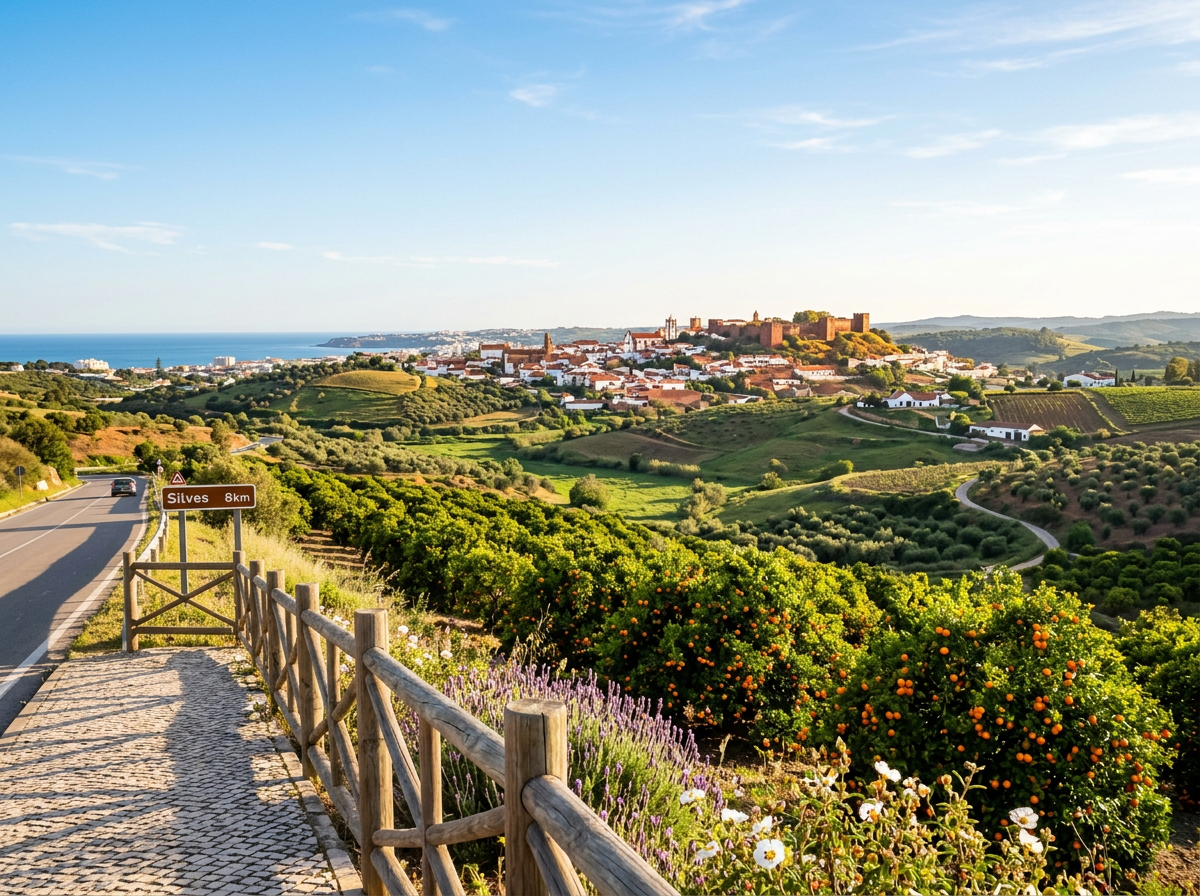
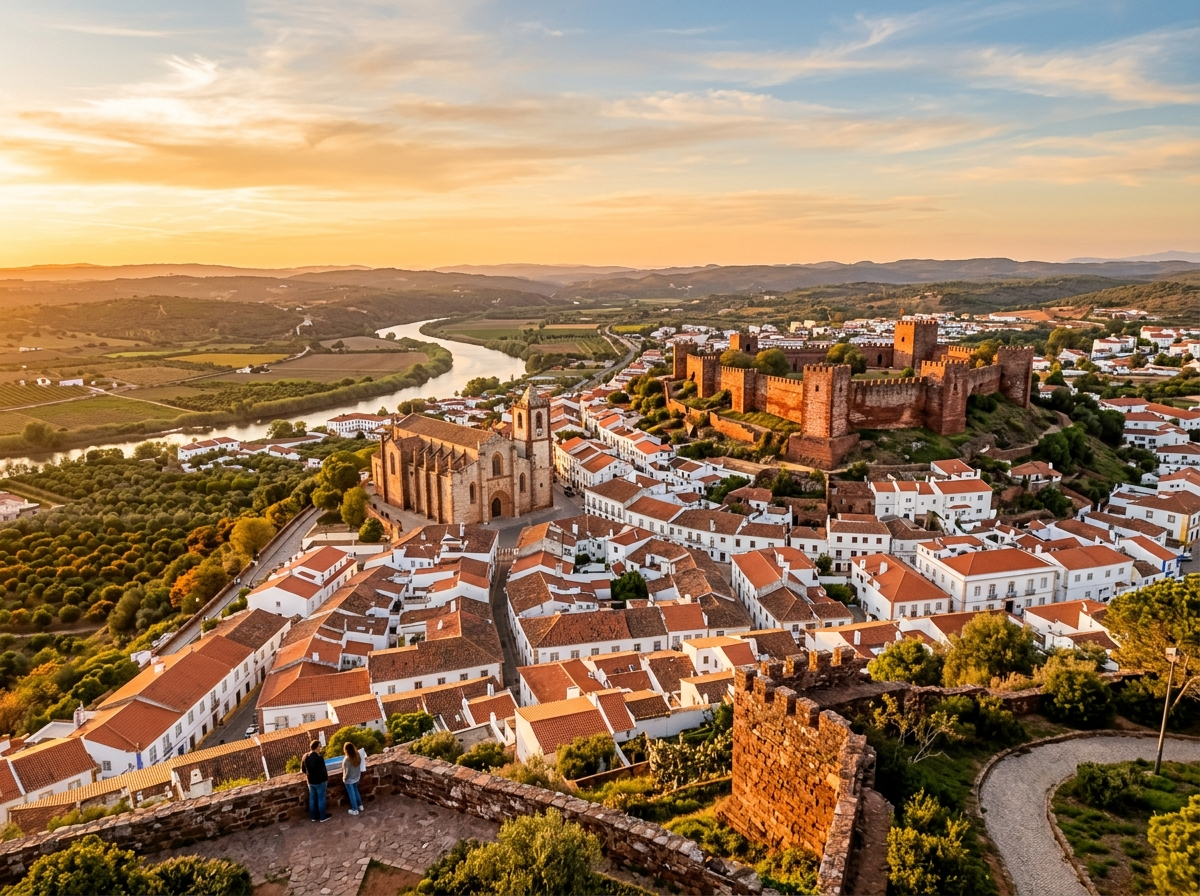
If you are staying in Armação de Pêra and fancy a day away from the sand for a few hours, Silves is one of those places I always love to recommend. The drive inland is short, but the mood changes beautifully: the coast gives way to orchards, rolling countryside and, at the top of the hill, a town of red stone, old walls and deep history.
And right at the heart of that old town sits Sé Catedral de Silves, one of the most meaningful places to visit in the Algarve if you enjoy walking somewhere slowly and letting a place reveal itself bit by bit. This is not the kind of sight you rush through with a camera in one hand and a map in the other. It is a place for lingering, for noticing, and for imagining the many lives that have gathered here.
What makes the cathedral so compelling is not just its architecture, although that is reason enough to go. It is the way the building holds layers of time at once. The cathedral was built in Gothic form on the site of the former Grand Mosque of Silves, and that single fact changes the way you experience the whole walk.
Before church bells, there would have been the rhythms of a Muslim city. Before chapels and altars, there was another sacred space, shaped by another faith, another language and another vision of the world. Standing here, you are not only looking at a cathedral; you are walking into one of the clearest expressions of how the Algarve has always been a meeting point of cultures.
I think that is why Silves stays with people. The town does not simply present history in neat layers. It lets you feel it underfoot, in the slope of the streets, in the old stone, in the relationship between the Castelo de Silves and the cathedral, and in the way the city still crowns the hill above the Rio Arade.
Long before the Algarve became known for beach holidays, golf courses and seaside promenades, Silves was a major centre of power and culture. In the Islamic period, it was known as one of the intellectual capitals of Al-Gharb, the western part of al-Andalus, and its confidence was such that it could be spoken of in the same breath as Granada. Poets, scholars, traders and officials passed through here. Ideas moved through these streets just as surely as goods moved along the river.
That older name, Al-Gharb, also matters for another reason. It is where the modern word Algarve comes from. So when you visit Silves, you are not stepping into some side note of regional history. You are standing close to the roots of the whole region's identity.
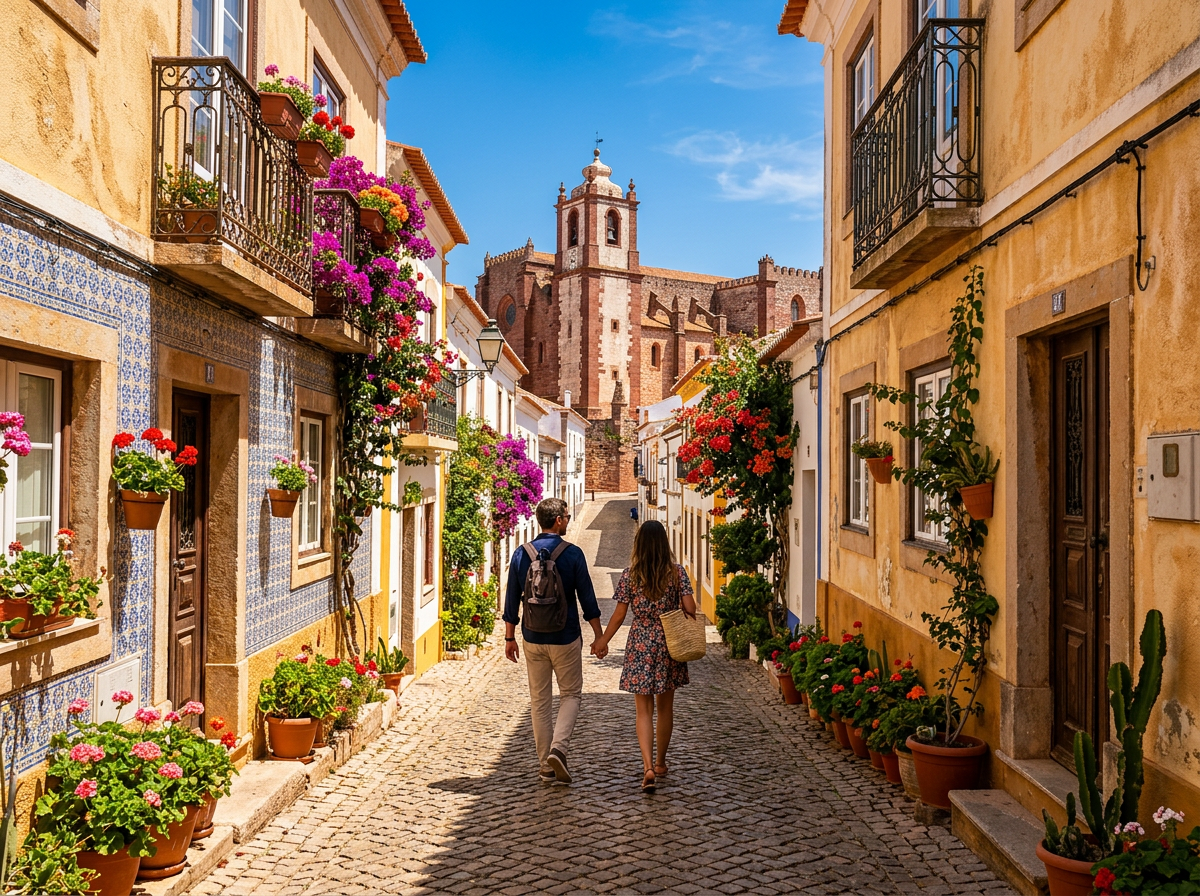
What I particularly love about visiting the cathedral on foot is that the approach prepares you for it. You do not arrive in a dramatic sweep. You rise towards it gradually, along streets that tighten and open, past small details that make Silves feel lived-in rather than staged: painted doorframes, quiet squares, patches of shade, a tiled façade, a café terrace with locals talking over coffee.
The walk makes the cathedral feel earned. By the time you reach the square, you already understand something important about Silves: this was a city built to be seen from below and approached with awareness. The hill matters. The skyline matters. And the cathedral, just like the castle, belongs to that upward movement.
Local tip: If you can, visit Sé Catedral de Silves either in the morning or later in the afternoon. The light on the red stone is gentler, the uphill walk is more comfortable, and the whole city feels calmer.
In this guide, I will take you through the walk as I would suggest it to a guest: slowly, warmly and with plenty of room for small detours. Think of it as a half-day outing from the coast, with history at its centre and enough time left over for lunch, a coffee, and perhaps a wander around the castle before heading back towards the sea.
If you enjoy places that feel textured rather than polished, Sé Catedral de Silves will be a highlight. It is handsome without being showy, solemn without feeling distant, and full of stories that reward a curious visitor. All you really need is a pair of comfortable shoes, some water, and a willingness to look closely.
The walk up through Silves
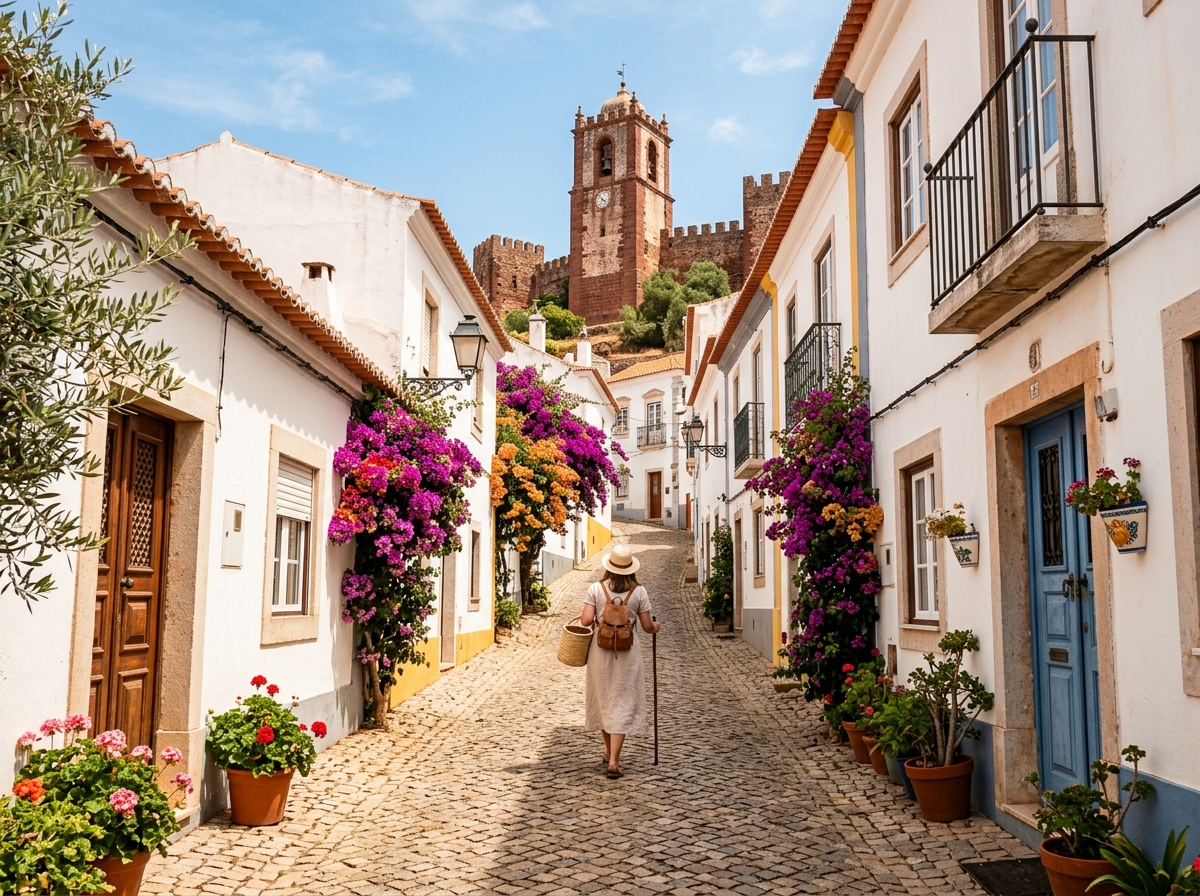
One of the pleasures of visiting Sé Catedral de Silves is that the approach becomes part of the experience. Rather than thinking only about the cathedral itself, I always suggest treating the whole town as a prelude. The route uphill helps you understand why Silves mattered so much for so long.
Starting near the lower town
A lovely way to begin is near the riverfront, where Silves feels softer and more open. The Rio Arade no longer carries the same commercial importance it once did, but it still gives the town a sense of orientation. If you start lower down, you can feel the relationship between river, trade and hilltop power almost immediately.
The first few minutes are easy and unhurried. You may hear swallows above, a scooter passing, cups clinking from a café, or local voices floating out of open windows. There is something wonderfully everyday about Silves, and that is part of its charm.
If you like, this is a good moment to pause for a coffee and perhaps a pastel de nata before you climb. I often think a historic walk is best when it begins without hurry. A quick espresso, a few minutes people-watching, and then the town starts to draw you in.
As you move away from the flatter streets, the town begins to narrow and fold around you. The pavements may give way to cobbles, and the route starts to rise. There is no need to rush; in fact, it is better if you do not.
Following the slope towards the hilltop
The walk up to the cathedral is not difficult, but it is enough of a climb to remind you that Silves was built with strategy in mind. This was a city of outlooks and defended positions, not a settlement that simply spread across a plain. The hill shapes everything.
On the way up, look for the colour palette that makes Silves so distinctive. There is whitewash, of course, but there is also the warm reddish tone of local stone, sun-faded shutters, old wooden doors and the occasional flash of blue from azulejos. Even the shadows seem richer here because of the colour of the walls.
What I love most is the feeling of moving through a town that still belongs to itself. You are not walking through a polished open-air museum. You are passing homes, courtyards, laundry lines, plants on steps, and corners that seem to hold the heat of the day.
Every now and then, the view opens and you catch a glimpse of the surroundings beyond the old centre. This is worth paying attention to. The cathedral does not stand in isolation; it belongs to a wider landscape of orchards, river valley and distant hills.
That wider setting helps explain why Silves became so important in earlier centuries. It had agricultural wealth, river access, and a commanding position. When you are walking rather than driving straight to the top, these things become easier to feel.
A simple route to enjoy on foot
You do not need a complicated plan, but a loose walking sequence can make the visit feel more relaxed. This is the rhythm I usually recommend for first-time visitors.
Begin in the lower part of Silves, close to the river or central streets, and take a few quiet minutes to settle into the town.
Stop for coffee if you like, then wander uphill at an easy pace, following the streets towards the cathedral and the Castelo de Silves.
Pause once or twice on the climb to look back over rooftops and notice how the town sits above the landscape.
Reach the cathedral square first and spend time with the exterior before going inside.
After your visit, continue to the castle or nearby viewpoints so the cathedral remains part of a bigger story.
This order matters more than it may seem. If you go straight into the cathedral without first feeling the hill and the streets, you miss part of what makes the building so moving. The walk lets the city introduce itself.
It is also worth remembering that the route upward would once have carried many kinds of people: merchants, clergy, officials, craftsmen, worshippers, and perhaps travellers arriving from elsewhere in the region. Today your experience is quieter, but the sense of movement towards an important civic and sacred centre remains intact.
When the cathedral finally appears more fully, it does so without fuss. There is no grand theatrical reveal in the modern sense. Instead, it arrives as a weight of stone and presence, grounded in the square and shaped by the buildings around it.
Local tip: Wear shoes with a bit of grip. The walk through Silves is part of the pleasure, but the cobbled streets and slopes can feel slippery, especially on very smooth stone.
If the day is warm, keep to the shade where you can and carry water. Like many inland towns in the Algarve, Silves can feel much hotter than the coast, especially in summer. Even so, the heat often adds something to the mood: it sharpens the contrast between sunlit streets and the cool interior waiting ahead.
By the time you reach the top, you may feel that slight slowing of breath that comes from a modest climb. To me, that is perfect. It puts you in the right state to enter a historic building: more attentive, more grounded, and a little more aware of the body in space.
First impressions of Sé Catedral de Silves
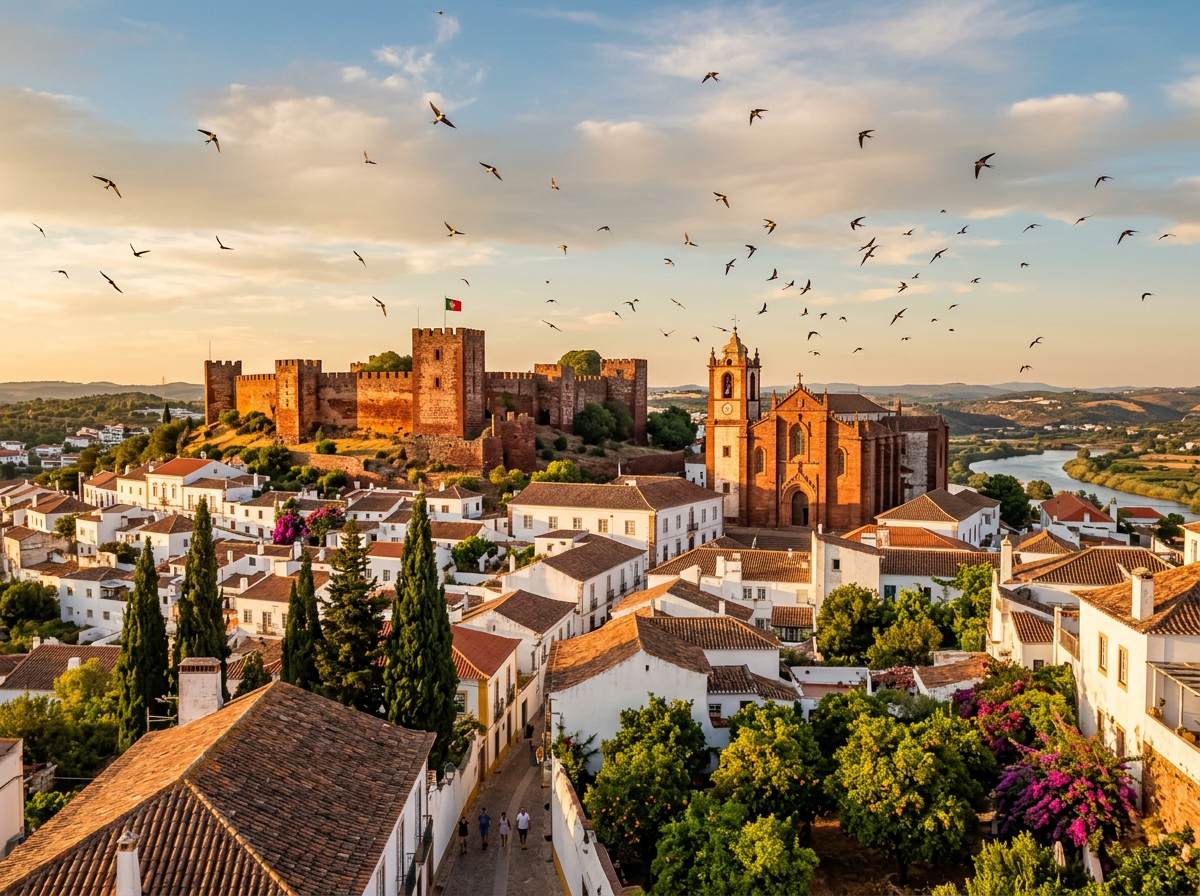
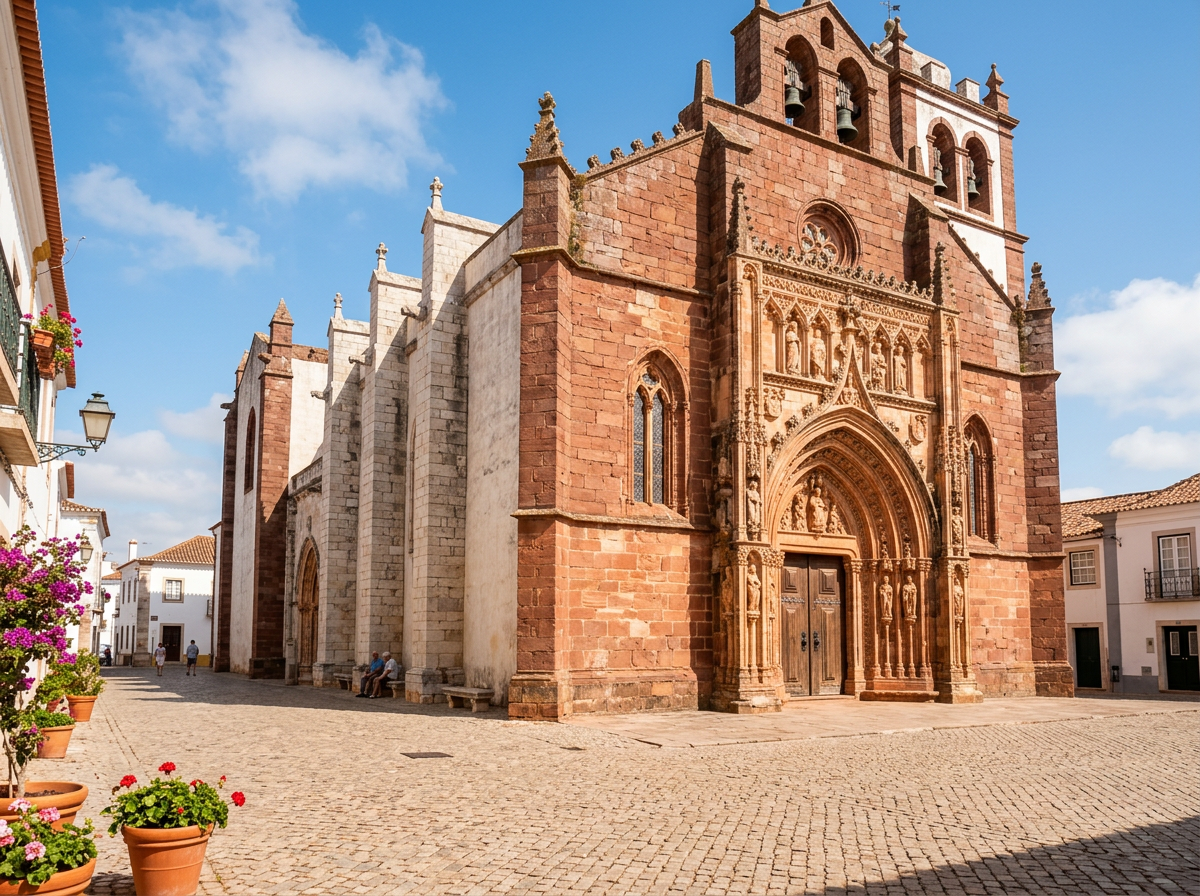
When you arrive at Sé Catedral de Silves, the first thing you may notice is that it does not try to charm you in an easy way. It is not delicate, sugary or over-decorated. Instead, it has a serious, almost restrained beauty that feels entirely right for Silves.
Reading the exterior
The cathedral's exterior carries the strength of the hilltop setting. Built largely in the local reddish stone, it seems to rise out of the city rather than merely sit in it. On a bright day, the façade can look almost golden in places and deep rust-red in others.
This changing colour is part of its magic. Morning light softens the building, while the stronger afternoon sun can bring out the sharper edges and weathered surfaces. If you enjoy architecture, take a little time to circle visually before stepping inside.
The overall impression is Gothic, but not in the flamboyant way some visitors may expect. There is dignity here rather than display. The pointed forms, the mass of the walls and the upright rhythm of the structure speak clearly, even without a great deal of ornament.
That relative simplicity can be surprisingly moving. It allows the cathedral's history to come forward. You are not distracted by decoration at every turn; instead, you are invited to notice form, material and atmosphere.
Look at the stone closely if you can. Time has softened some edges and darkened certain surfaces, and there is a wonderful sense of endurance in that. The building has lived through centuries of change, repair, devotion and damage, including the shocks that earthquakes brought to so many historic places in Portugal.
What survives is not a frozen monument but a building that has adapted. That matters. It means the cathedral feels human in scale, even when it expresses something grander than individual human life.
The square and the space around it
The square outside the cathedral deserves your attention as much as the façade itself. This is where the building breathes. It is also where you can best appreciate how closely the cathedral belongs to the wider ensemble of historic Silves.
Stand still for a moment and notice how the cathedral and the Castelo de Silves seem to speak to each other across the hilltop. One represents sacred and episcopal authority, the other military and political power. Together they remind you that medieval cities were organised around visible symbols of control, belief and identity.
I often suggest walking a slow half-circle rather than standing in one fixed spot. The angle changes the proportions. From one position, the cathedral may feel compact and austere; from another, more monumental than you first thought.
This is also the best place to remember what once stood here before the cathedral. The site of the former Grand Mosque of Silves was never random. Sacred buildings tend to occupy meaningful places in a city's topography, and this site carried significance long before the present church took shape.
That continuity is one of the most powerful parts of the visit. Religious identity changed. Political control changed. The architecture changed. Yet the site continued to matter deeply.
Details worth noticing before you go in
Before you cross the threshold, slow down and look for a few details that are easy to miss if you are focused only on getting inside.
The texture of the stone, especially where weather and age have softened the surface.
The pointed Gothic forms that give the building its vertical, devotional character.
The way the cathedral feels both fortified and spiritual, entirely suited to a hilltop city with a strong defensive past.
The relationship between the cathedral, the nearby streets and the broader skyline of Silves.
The difference in temperature, sound and pace between the sunny square outside and the stillness waiting within.
Architecturally, the cathedral may not overwhelm in the first instant, and that is precisely why many people grow to love it. It rewards patience. The more time you give it, the more character it reveals.
It also helps to keep in mind that Sé Catedral de Silves is meaningful not only as an object of architecture, but as evidence of a changing civilisation. This was once a city of major Islamic learning and refinement. Later, it became a Christian cathedral city. The building holds both those truths, even if one is visible in structure and the other in memory.
Local tip: Try not to head straight for the door. Spend five or ten minutes outside first. In Silves, understanding the setting is the key to understanding the building.
If you have children or travelling companions who are not especially interested in architecture, the square is also a useful pause point. Let everyone reset here, take in the view, and then enter together. The cathedral is best appreciated when the visit feels calm rather than rushed.
And if you happen to hear bells, swallows or just the hush of the town around you, let that become part of your first impression too. Historic places are never only visual. Sound, warmth, space and movement all shape what you remember.
Inside the cathedral: stone, silence and memory
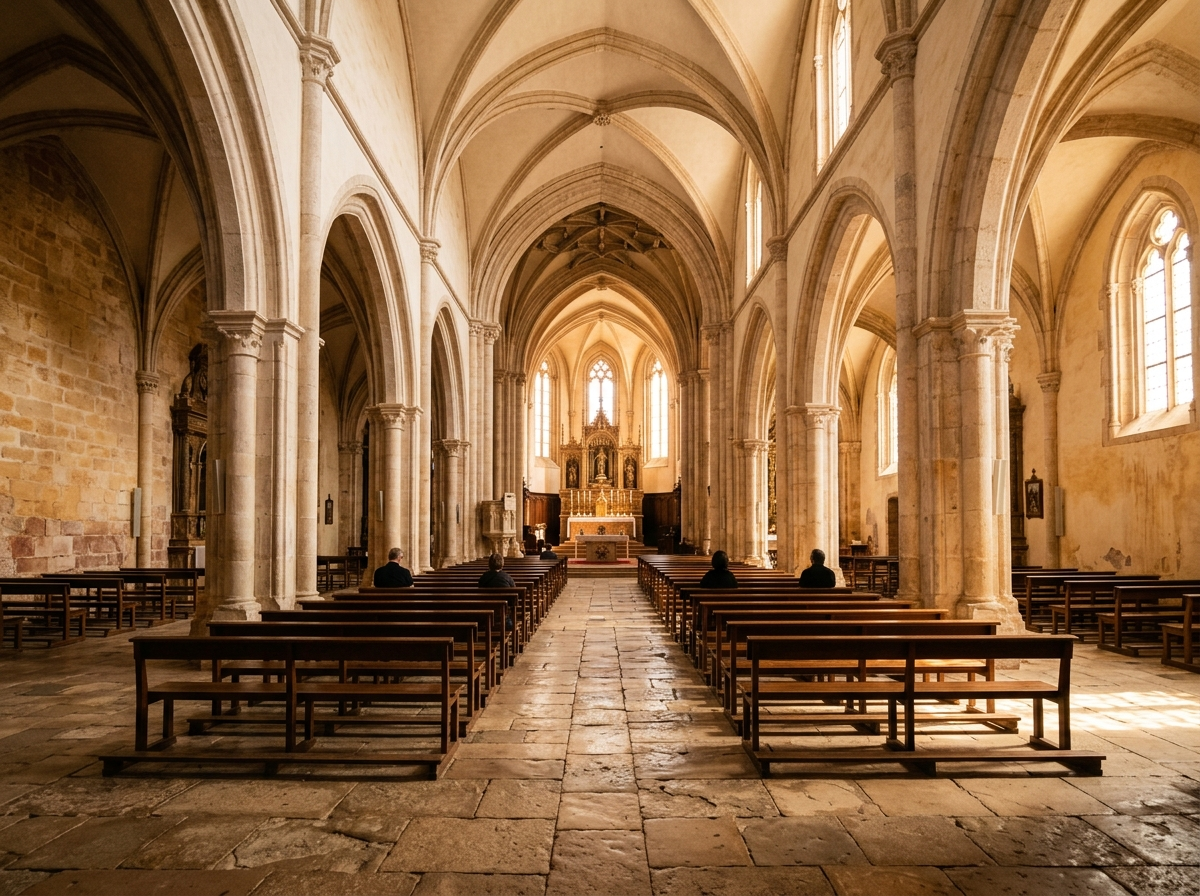
Stepping inside Sé Catedral de Silves is one of those transitions that can change your whole mood in a second. After the glare and warmth outside, the interior feels cool, shaded and composed. The hush is usually immediate.
The first feeling of the nave
What I remember most each time is the sense of restraint. The cathedral does not overwhelm with glitter or theatrical drama. Instead, it offers volume, stone, and a calm rhythm of arches and space.
That restraint suits the building. It draws your attention to the essentials: height, symmetry, mass, and the way light falls. Even if you are not someone who usually visits churches, it is hard not to respond to the quiet order of the interior.
The nave encourages a slower pace almost without asking. People naturally lower their voices, lengthen their pauses and start looking upward. This is where the uphill walk pays off, because you arrive ready to be still.
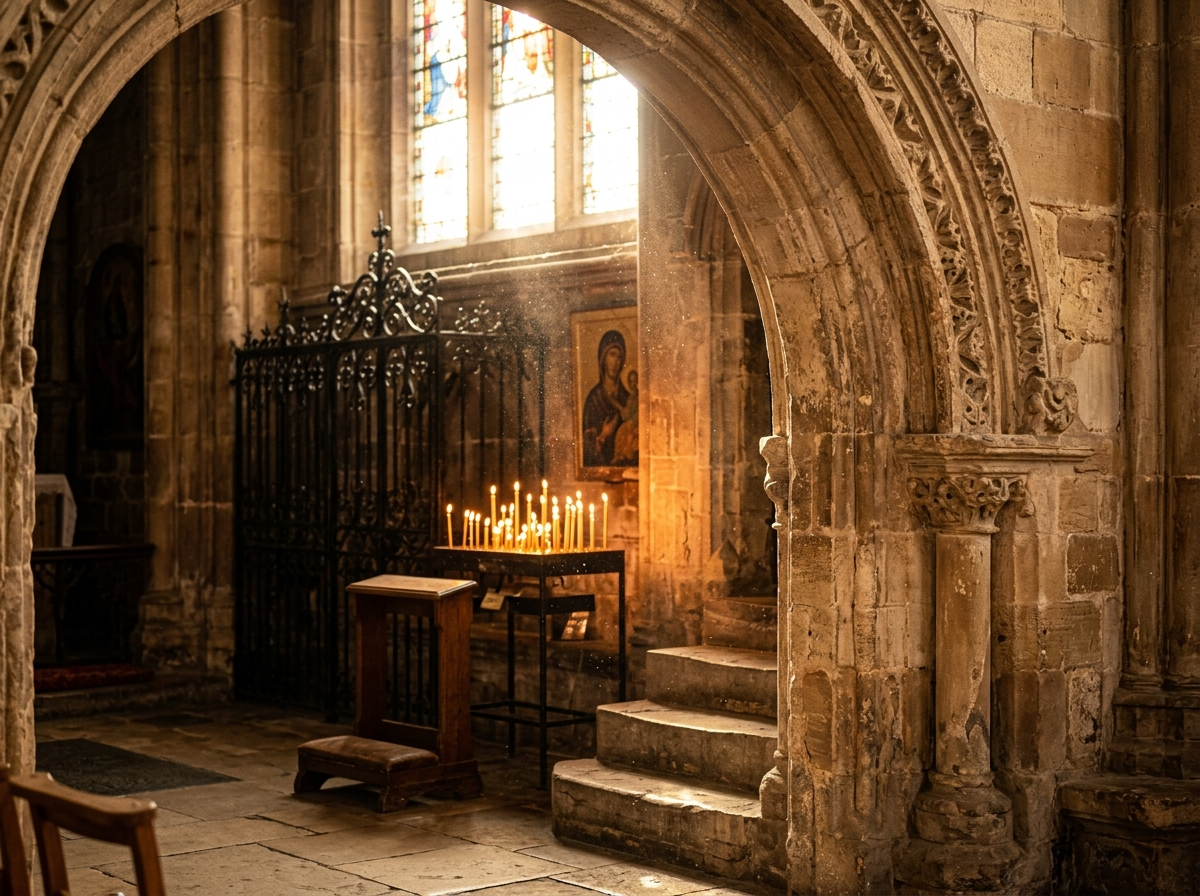
You may notice how the light never fully floods the space. Instead, it settles in patches and gradients, catching stone here, an altar there, a side chapel in partial shadow. This sort of light is wonderfully good at making history feel present.
I would suggest not trying to identify every feature immediately. First, simply stand for a minute or two and let your eyes adjust. The cathedral becomes more interesting once you stop trying to consume it quickly.
What to look for once your eyes adjust
After that first pause, begin to move slowly through the interior. Notice the proportions and the way the structure guides the eye. There is something unmistakably Gothic in the aspiration upward, yet the building also carries the evidence of later changes and repairs.
Historic churches are rarely pure examples of a single moment in time, and this one is no exception. Sé Catedral de Silves was shaped over centuries, and the result is a building that feels layered rather than rigidly uniform. To me, that makes it more interesting, not less.
As you walk, look for side chapels, funerary monuments, carved details and the traces of devotion left by generations of worshippers. These elements often speak in a quieter voice than the main architectural lines, but they are where the human scale enters the story.
There can be something unexpectedly intimate about old tomb slabs or worn stone surfaces. They remind you that a cathedral is not only a statement of authority. It is also a place of mourning, prayer, ceremony and memory.
Pay attention too to the way the building carries scars and repairs. Earthquakes, weather and time have all touched the cathedral. The result is not pristine perfection, but a kind of honest durability.
The coolness of the interior after the heat outside.
The rhythm of arches and columns that gives the space a measured, contemplative feel.
The subtle changes in light, especially where windows and chapels create pockets of brightness.
The presence of funerary stones and memorials, which connect grand history to individual lives.
The sense that the building is both sacred space and historical document.
Remembering the mosque beneath the cathedral's story
For many visitors, the most striking part of being inside is not something visibly labelled on the walls. It is the knowledge that this cathedral was built on the site of the former Grand Mosque. Once you hold that in mind, the experience deepens.
You begin to understand the site as a place of continuity as much as change. Different communities have prayed here. Different rulers have shaped the city around it. Different sounds, languages and rituals have filled this same ground.
That historical continuity is deeply moving because it resists simplistic stories. It would be easy to describe the transition from mosque to cathedral in purely political terms, and politics certainly mattered. But on a human level, the site also tells a story about the persistence of sacred geography.
Some places keep their importance even when everything around them changes. This is one of those places. A city may change hands, names and faiths, yet certain locations remain central to how people orient themselves physically and spiritually.
If you visit with this in mind, the cathedral becomes more than a Christian monument. It becomes a lens through which to read the whole history of Silves. You are no longer looking at a single chapter, but at a site where several chapters overlap.
This is especially powerful in the Algarve, where the Islamic past is sometimes flattened into decorative references or reduced to a footnote. In Silves, that past feels much more immediate. The city layout, the hilltop power, the old walls, the story of scholarship and trade, and the cathedral's very location all bring it back into focus.
Silence as part of the visit
If there is one thing I would encourage inside Sé Catedral de Silves, it is to leave space for silence. You do not need to be religious for that to matter. Silence is how buildings like this begin to speak.
Sit for a while if seating is available. Watch how others move through the space. Notice the respectful hush, the echo of footsteps, the way a small sound can seem to travel farther than expected.
In a world full of quick images and short attention spans, this is one of the pleasures of the cathedral: it asks almost nothing from you except presence. You do not need specialist knowledge to appreciate it. You only need time.
I sometimes think that is why the visit works so well as part of a walking day. Walking has already slowed you down. By the time you enter, your pace matches the building.
Local tip: If the cathedral is quiet, sit for five minutes before leaving. Many people remember that stillness just as much as the architecture itself.
When you are ready to move on, do not leave too quickly. Give yourself one last look back down the nave. Historic interiors often reveal themselves differently on the way out. You notice a shaft of light, a detail above a doorway, or a side chapel you missed on the way in.
That final backward glance is part of the experience. It lets the cathedral settle into memory not as a checklist stop, but as a place you actually inhabited for a little while. And in a town as storied as Silves, that feels exactly right.
The wider story of Silves: from Al-Gharb to the present
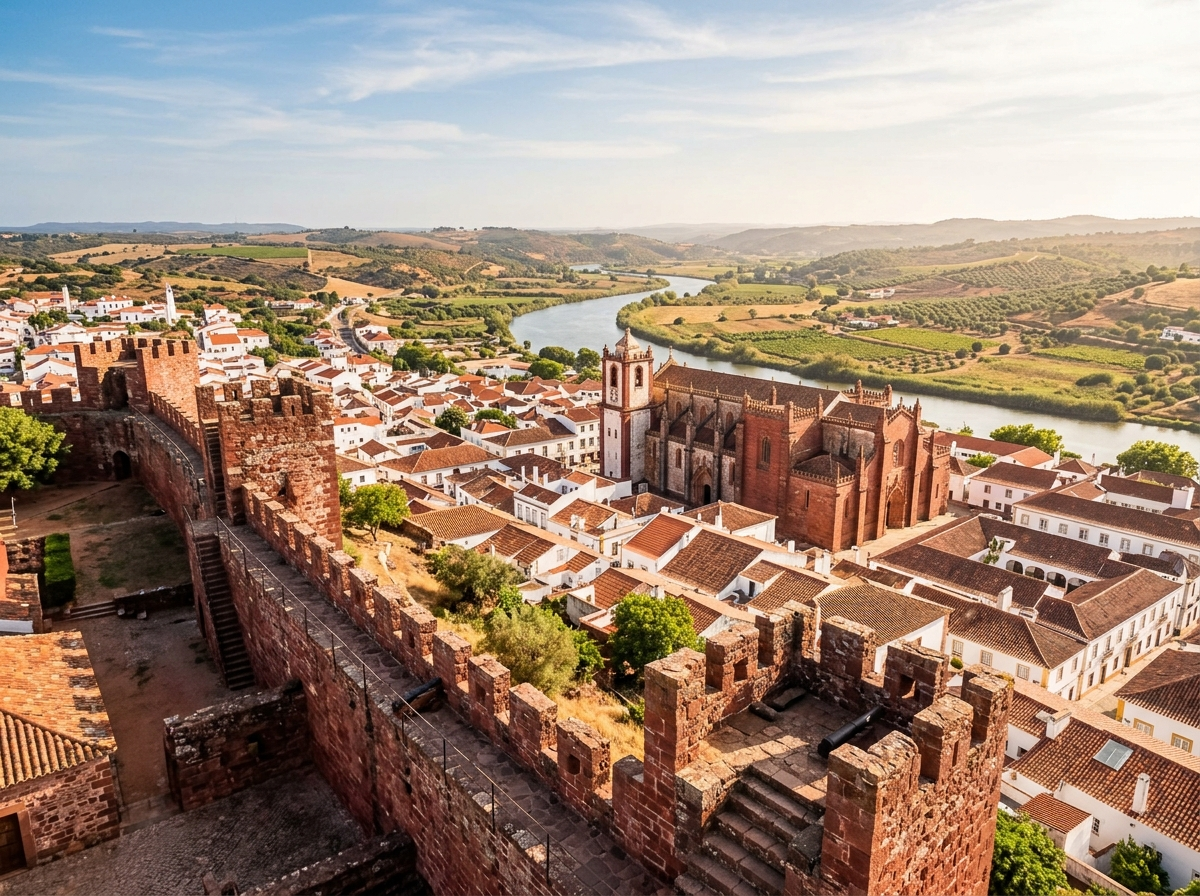
Once you have seen the cathedral, it becomes much easier to understand why Silves has such a powerful pull. The building is not simply a highlight in the town; it is a doorway into a much larger story. To really appreciate Sé Catedral de Silves, it helps to read it together with the city around it.
When Silves was a great city of Al-Gharb
There was a time when Silves was one of the most important urban centres in the far west of the Iberian Peninsula. Under Islamic rule, it flourished as a place of administration, trade, agriculture and culture. This was not a remote provincial outpost, but a city with confidence and intellectual standing.
When people say that Silves was an intellectual capital of Al-Gharb, and that it could rival Granada in prestige and cultural energy, they are pointing to a city that mattered far beyond its walls. Scholars, poets and learned figures were part of its life. The river connected it to wider networks, while the fertile land around it helped sustain prosperity.
The name Al-Gharb itself, meaning the west, survives in the modern word Algarve. So a walk through Silves is also a walk towards the origins of the region's name. For visitors who know the Algarve mainly through beaches and seaside towns, that can be a revelation.
It is one thing to know abstractly that the region has a Moorish past. It is another to stand in a city where that past once shaped an entire urban culture. In Silves, the story feels grounded, specific and visible.
The cathedral's site helps make that history tangible. A Gothic cathedral on the site of the former Grand Mosque is more than an architectural fact. It is a compressed history of conquest, continuity, adaptation and memory.
Cathedral and castle together
If you have time, do not separate the cathedral from the Castelo de Silves. The two belong together. Visiting one without the other is possible, of course, but the real power comes from seeing how they relate.
The castle gives you the political and defensive story of the city. The cathedral gives you the spiritual and cultural story, refracted through later Christian rule. Together, they create one of the most satisfying historical pairings in the Algarve.
From the castle area, the town opens out in a different way. You can look over rooftops, towards the countryside, and across the older urban fabric. Seen from above, the cathedral becomes part of a whole rather than a single monument.
This relationship between buildings is important. Medieval and early modern cities were composed through power, ceremony and visibility. The hilltop setting allowed both the castle and cathedral to project meaning into the landscape.
That projection still works on visitors today. Even if you arrive with only a casual interest in history, the arrangement of the city makes you feel that something significant happened here. The architecture is doing interpretive work before you have read a single information panel.
Places to add to your walking visit
If your energy allows, it is worth turning the cathedral visit into a broader wander through old Silves. You do not need to pack the day with sights, but a few nearby stops can deepen the experience.
Castelo de Silves, for the larger historical frame and superb views.
The streets around the cathedral, where the old town's scale and texture are most rewarding.
The local archaeological museum if it fits your interests, especially if you enjoy seeing how the city's deeper past is interpreted.
A shaded café for something simple after your visit, whether that is a cold drink, coffee or a light lunch.
I also recommend allowing time for unplanned moments. The beauty of Silves is that it often appears in small things: a cat asleep on a wall, a doorway framed by plants, a burst of bougainvillea, a tiled nameplate, a view between rooftops. These details soften the grandeur of the cathedral and make the town feel companionable.
If you stay for lunch, this is a good town in which to enjoy the Algarve at a gentler pace. Depending on where you eat, you might find dishes that root you back in the region, such as cataplana, grilled fish, or sardinhas assadas in season. Historic walking is always better, in my opinion, when it ends with something delicious.
And if you want to round things off with a local flavour, a tiny taste of medronho may appear on some menus inland, though it is certainly stronger than it looks. Keep it for the end of the visit rather than the beginning of a walk uphill.
Local tip: If you only have time for two major stops in Silves, make them the Sé Catedral and the Castelo de Silves. Together they tell the story of the town far better than either one does alone.
The lovely thing about all this is that Silves never feels oversized. Even with a rich history, it remains manageable on foot. You can have a genuinely meaningful visit without turning the day into an exhausting march from one attraction to another.
That manageable scale is part of why I so often suggest Silves to guests staying by the sea. It offers depth without difficulty. You can leave the beach behind for a few hours, enter a much older Algarve, and still return to the coast in time for sunset.
Practical tips for a lovely day from Armação de Pêra
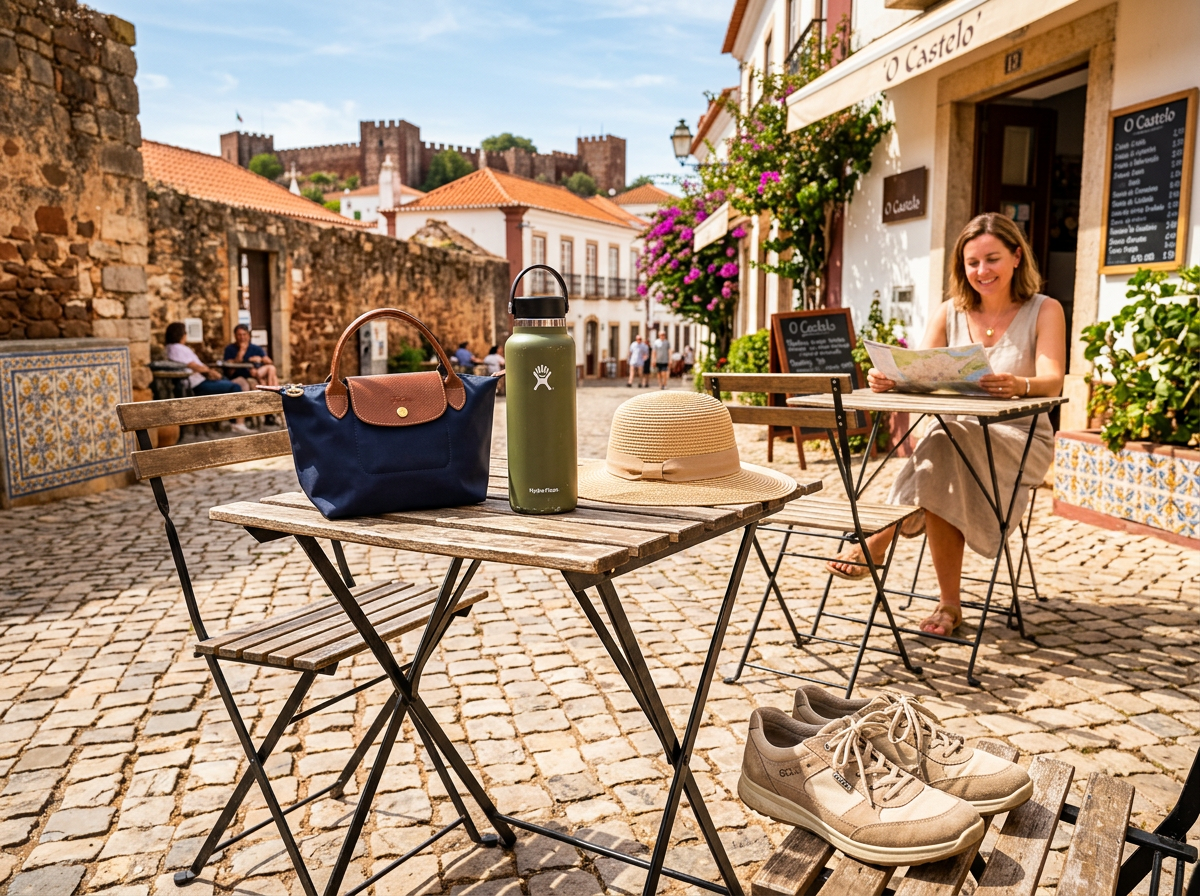
One of the best things about a visit to Sé Catedral de Silves is how easily it fits into a stay on the coast. From Armação de Pêra, you can make this a relaxed half-day outing rather than a major expedition. That makes it ideal if you want a change of scenery without giving up your whole day.
Best time to visit
If I were choosing for comfort and atmosphere, I would go in the morning or in the late afternoon. Inland heat can be strong, especially in summer, and the uphill walk is far more pleasant when the sun is lower. The softer light also flatters the cathedral's stone and the town's reddish tones.
Spring and autumn are especially lovely for this outing. The temperatures are gentler, the walking is easier, and Silves tends to feel spacious rather than intense. In winter, the mood can be beautifully quiet, though it is always wise to check current opening times before you set off.
As with any active church, it is sensible to behave respectfully inside. Keep voices low, dress with a little consideration, and remember that for many people this is still a place of worship rather than simply a heritage site.
What to bring and what to expect
You do not need much for this walk, which is part of its appeal. A few simple things will make the visit more comfortable.
Comfortable shoes for cobbled streets and gentle uphill sections.
Water, especially in warmer months.
Sun protection, since the approach has bright exposed stretches.
A little patience, because this is a place best enjoyed slowly.
A camera or phone, if you like, but do not let it replace actually looking.
If anyone in your group has reduced mobility, it is worth planning carefully. The old town is rewarding but uneven, and the hill can be tiring. Still, even a shorter visit focused on the cathedral area can be very worthwhile if paced gently.
A simple half-day plan from the coast
If you like a clear plan, this is an easy and enjoyable way to shape the outing.
Leave Armação de Pêra after breakfast and drive inland to Silves at a relaxed hour.
Start in the lower town, take coffee and perhaps a pastel de nata, then walk uphill through the old streets.
Spend time outside and inside Sé Catedral de Silves, allowing for pauses rather than rushing.
Add the Castelo de Silves if you have time and energy.
Stay for lunch in town, then return to the coast for an easy afternoon or sunset by the sea.
This balance works beautifully because it gives you both sides of the Algarve in one day. You spend the morning with red stone, medieval streets and the memory of Al-Gharb, then return to sea air, beach light and the softer rhythm of the coast.
Back in Armação de Pêra, that contrast can feel especially satisfying. A stroll near Praia dos Pescadores, a relaxed dinner, or simply sitting out with the evening light after your visit to Silves is a lovely way to let the day settle.
Why this visit pairs so well with a coastal stay
The Algarve is often presented in fragments: beach here, history there, food somewhere else. In reality, its pleasures belong together. A walking visit to Sé Catedral de Silves reminds you that the region is not only a coastline but a cultural landscape shaped by centuries of exchange.
That is why I think this outing suits our guests so well. You can spend one day enjoying the beach and another following the older inland story. Both experiences enrich each other.
After a day exploring Silves, it is a pleasure to come back to the comfort of the coast. If you are planning your Algarve stay, our Caravelis holiday homes in Armação de Pêra make an easy base for both seaside days and inland discoveries. Penthouse 1 offers a sea-view terrace with jacuzzi and BBQ, Beachfront Apartment 4F has a sea-view balcony just moments from the sand, and Beach Apartment 7G gives you a sunny 7th-floor stay close to the beach. Whenever you are ready, we would love to welcome you for your own mix of coast, history and Algarve sunshine.
Planning your Algarve holiday?
Browse our properties in Armação de Pêra and book direct for the best rates.