An Algarvian’s Guide to Praia da Senhora da Rocha, Algarve
Luiz and the Caravelis Team
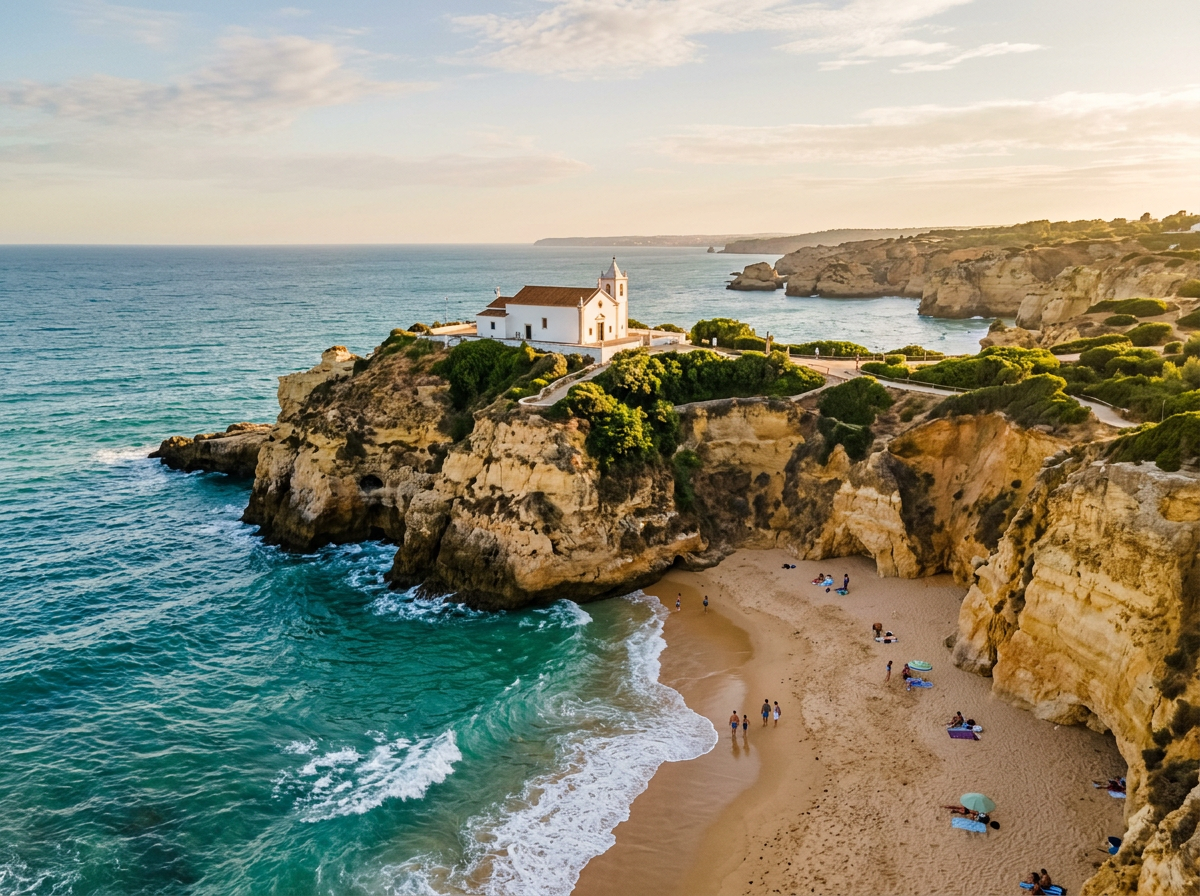
Why Praia da Senhora da Rocha still feels special
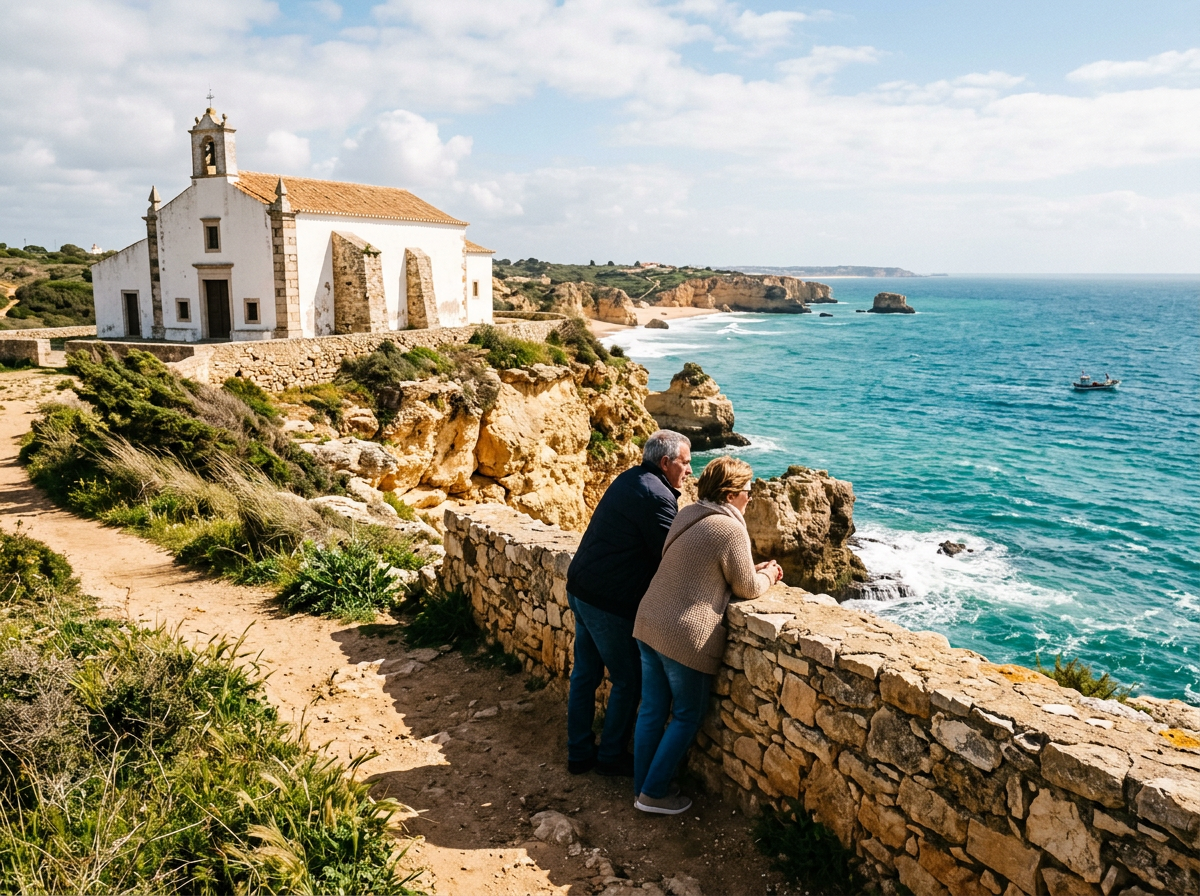
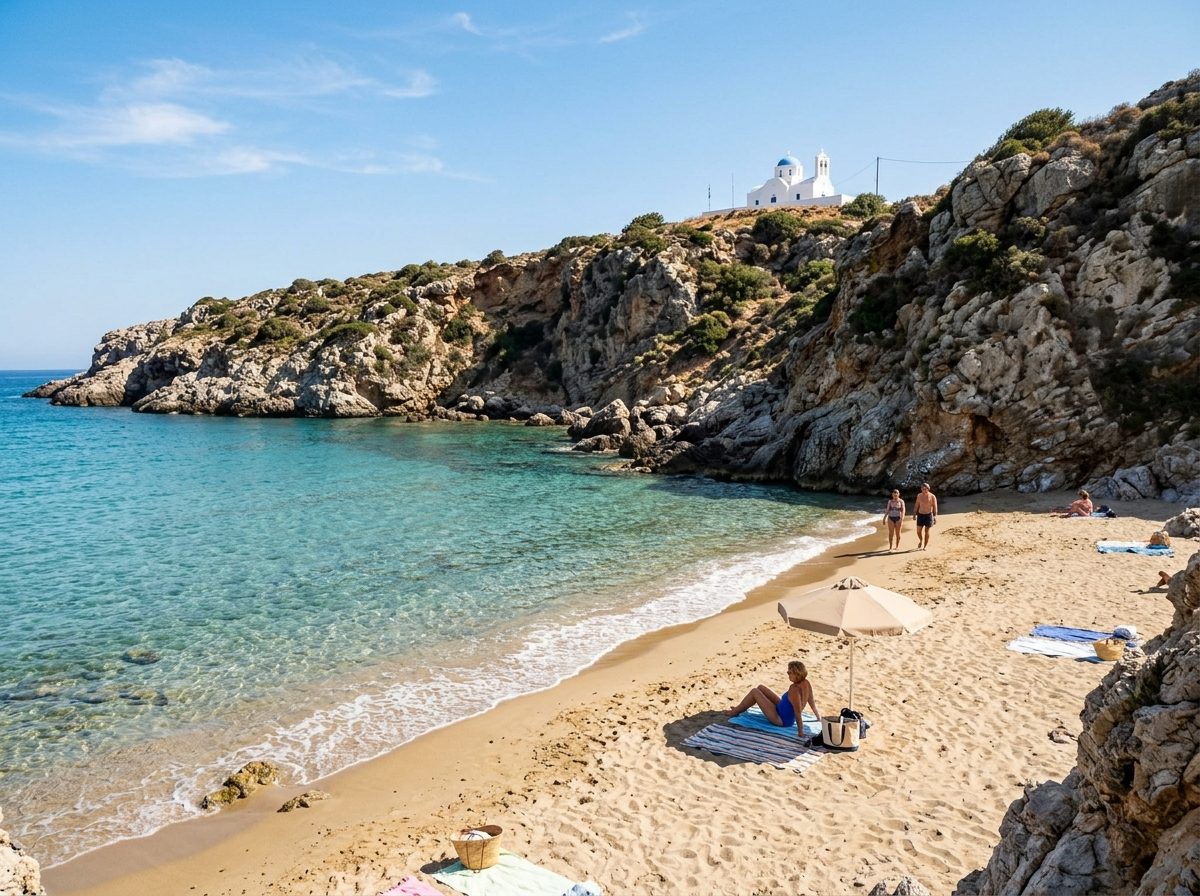
If a guest staying in Armação de Pêra asks me which nearby beach has that instant Algarve magic, I almost always mention Praia da Senhora da Rocha. It is close enough for an easy outing, yet striking enough to feel like a real discovery. You arrive thinking you are simply going to the beach, and then the cliffs, the sea and that tiny chapel on the headland somehow make the whole place feel bigger than a normal beach day.
There are beaches in the Algarve that impress by sheer size, and there are beaches that win you over slowly with atmosphere. Senhora da Rocha does both in a very Algarvian way. It has the honey-coloured cliffs that people dream about, the clear water people photograph, and a sense of old coastal life that still lingers if you slow down enough to notice it.
From Armação de Pêra, the journey east is short and easy, which is part of its charm. You leave behind the broad sands and seafront rhythm of town, and within a little while the coastline begins to fold and rise. The views become more sculpted, the coves more tucked away, and suddenly you understand why so many visitors fall in love with this stretch of the Algarve.
The first thing most people notice is the colour. On a bright day, the cliffs really do glow a warm gold, sometimes almost the colour of toasted bread, sometimes pale like honey in sunlight. Against the white chapel and the deep blue Atlantic, it is one of those landscapes that looks composed, as if nature had a very steady hand when putting it together.
What I love most is that it never feels like a beach that has been over-explained. It is famous, yes, and certainly one of the Algarve’s most photographed cliff-beaches, but it still keeps a little mystery. You come for the picture-postcard view, then you stay for the texture of the place: the wind on the headland, the smell of warm rock, the little tunnel through the cliff, the sound of waves bouncing back from the stone.
The approach from Armação de Pêra
If you set off from town after breakfast, the mood changes quickly. One moment you are near Praia dos Pescadores, where the old fishing tradition still feels close to the surface of daily life, and the next you are heading towards one of the prettiest cliff-backed beaches on this side of the coast. It is not some grand expedition, which is exactly why locals like to recommend it.
I often tell people not to rush the final few minutes. When you get close, pause before charging straight down to the sand. Let your eyes adjust to the headland, the chapel, the stairways, the shadows in the rock and the way the sea wraps around the cove.
This is a place that rewards arriving with a little curiosity. Even the breeze seems different here. On some mornings it feels fresh and salty, on others soft and warm, carrying the smell of dry grass and sun-heated stone from the top of the cliffs.
Visitors sometimes expect a grand, sweeping strand like the one in central Armação de Pêra. Instead, Praia da Senhora da Rocha feels more intimate and theatrical. The cliffs frame the beach, the headland gives it a centre, and the chapel turns the whole scene into something you remember long after your holiday has ended.
What makes it feel so Algarvian
The Algarve has many lovely beaches, but not all of them feel equally rooted in place. Some are pure holiday scenery. Senhora da Rocha, by contrast, feels connected to older rhythms: fishing, faith, weather, stone, and the quiet practicality of living beside the Atlantic.
That is what I mean when I say it feels Algarvian. It is beautiful, but not polished into blandness. It is photogenic, but not only for photographs. It still belongs to the coast rather than simply performing for it.
On any given day, you may see families with cool bags and parasols, couples taking far too many photos and then laughing about it, seasoned walkers peering over the cliffs, and older Portuguese visitors who head first to the chapel before they even think about the beach. That mix tells you a lot. A place that welcomes both devotion and day-trips usually has something real at its core.
The setting is dramatic without feeling remote.
The chapel gives the beach a landmark you recognise instantly.
The cliffs are classic Algarve limestone, full of warm colour and texture.
The sea can look gentle and glassy, then lively and wild the next day.
The atmosphere still feels local, especially outside the busiest hours of summer.
Local tip: If you can, visit twice rather than once. Come early for the soft light and quiet feeling, then return another day near sunset. The same beach can seem like two different places.
Whenever I bring friends or recommend it to guests, I notice the same reaction. There is usually a moment of silence when they first see the headland properly. That, to me, is always a good sign. Beaches you admire are easy to find; beaches that make you pause are rarer.
The chapel, the headland and the old soul of the place
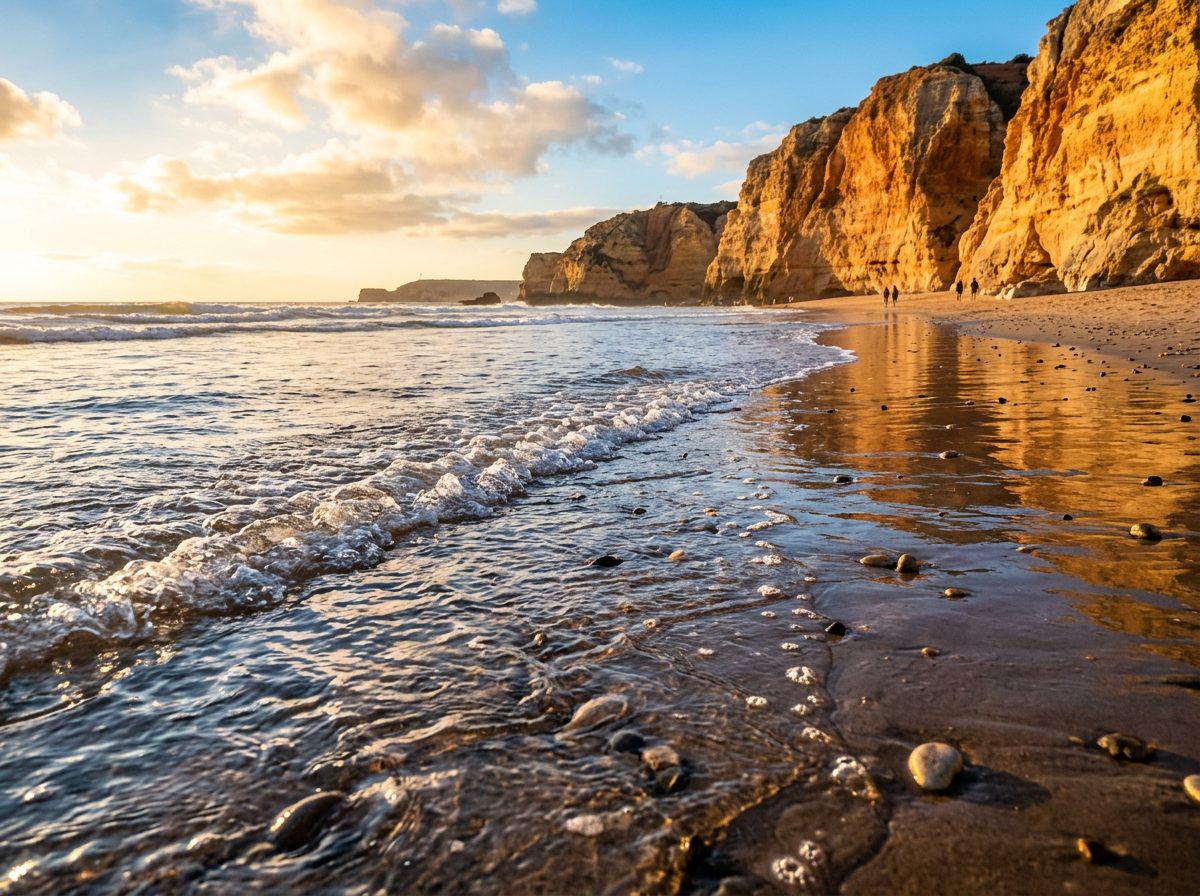
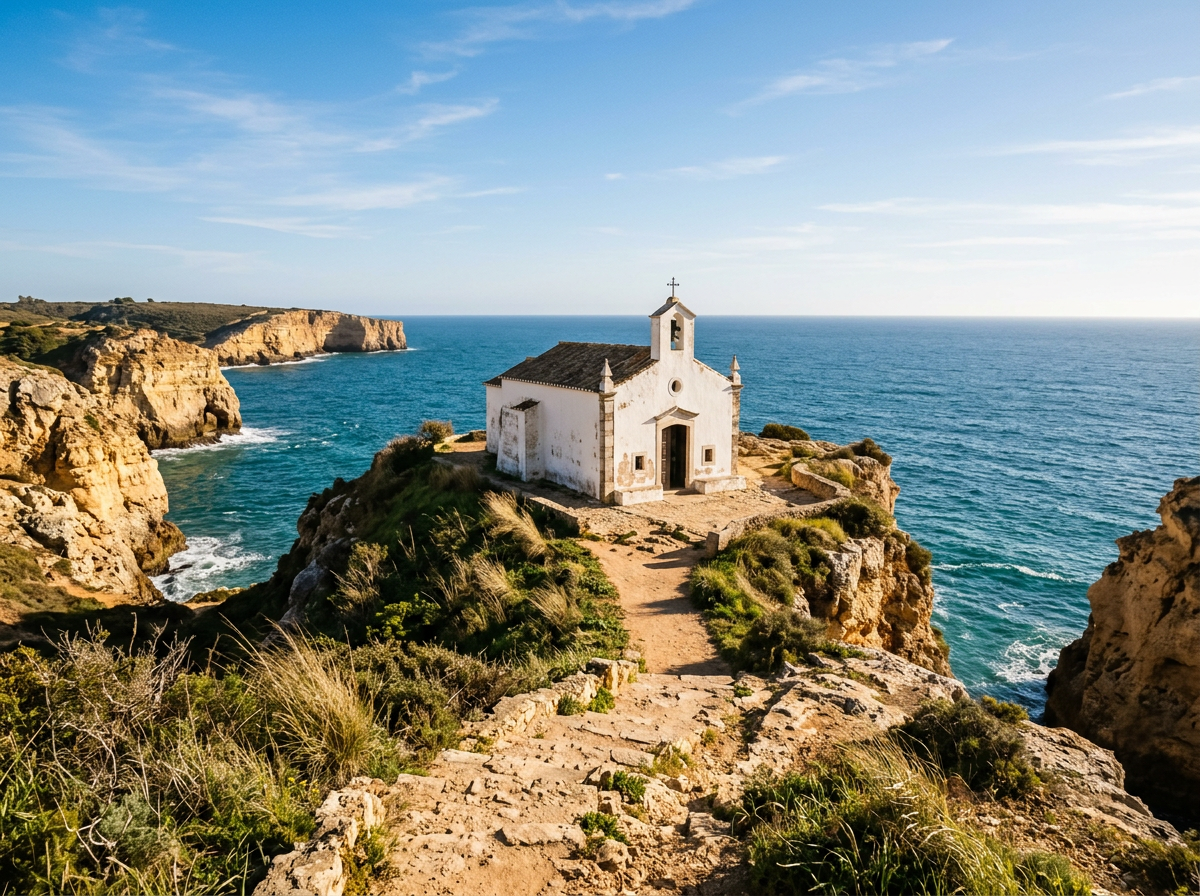
The tiny white chapel of Nossa Senhora da Rocha is what makes this beach instantly recognisable. Perched on the headland just above the sea, it looks almost improbably neat against the rough shapes of the cliffs. It is modest rather than grand, and perhaps that is exactly why it feels so moving.
I have always liked places where beauty and simplicity meet. This chapel does that perfectly. There is no need for spectacle when the setting is already so powerful.
Stand on the headland for a few minutes and you begin to understand the emotional pull of the site. The sea opens out in front of you, the cliffs drop away below, and the little building seems to hold its place through wind, salt and time with remarkable calm. Even when the beach is busy, there is often a strange stillness up there.
A small chapel with a very big presence
The history of the exact site stretches back far beyond a simple beach visit, and that sense of age is part of the atmosphere. The chapel is associated with long-standing devotion to Our Lady of the Rock, and generations of people have looked to this headland as a place of protection, prayer and watchfulness. On a coast where lives once depended so heavily on the sea, such places mattered deeply.
You do not need to be religious to feel that weight. Anyone can appreciate what it means for a community to anchor memory in a landscape. When you see the chapel against the sky, you are not just looking at a pretty building; you are looking at a point where geography and belief met, and never really parted.
There is also something very Algarve about the way faith appears here: whitewashed walls, bright light, restraint, and a kind of humble dignity. It reminds me of small churches inland near Silves, where simple façades and the occasional touch of azulejos carry centuries of local life without fuss. The region has always known that not everything meaningful needs to be ornate.
In summer, many visitors treat the chapel as a viewpoint, and that is perfectly natural. But if you step aside for a moment and let the more hurried people pass, you may notice others approaching with quiet intention. Some cross themselves, some stand in silence, and some simply look out to sea as if greeting something older than themselves.
That combination of tourism and living tradition is one of the reasons I never tire of the place. It has not become a stage set. It is still used, still remembered and still folded into the emotional map of the coast.
Why the headland matters as much as the sand
Many people come to beaches and spend the whole day looking only at the waterline. Here, I always encourage guests to look up and around. The headland is not just a backdrop; it is the key to understanding the beach.
The limestone has been shaped over time into ledges, hollows, faces and folds that catch the sun differently from hour to hour. In the morning, the surfaces can look smooth and pale. By late afternoon, every crease throws a shadow, and the cliffs suddenly seem more muscular and complex.
There is also a lovely contrast between the built and the natural. The chapel’s clean white shape sits above layers of weathered rock that have endured far longer than any human structure. Yet instead of clashing, the two seem to belong together.
From up top, you appreciate how protected the cove can feel. The beach below nestles into the land rather than sprawling across it. On clear days, the water shifts from turquoise near the shore to deeper blue beyond the rocks, and the whole scene looks almost painted.
For me, this is where Senhora da Rocha wins people over. It gives you a beach, certainly, but it also gives you a place to stand and think. That matters more than many travellers realise.
Stories you can feel, even if you do not know every detail
Locals are used to hearing visitors ask about the chapel, and there is something rather lovely about that. A beach prompts a question, and a question opens a door to history. You may hear different versions of local stories, some told with family memory, some with a touch of legend, but they all circle the same truth: this headland has long been a place of meaning.
Along the Algarve coast, faith and seafaring were never far apart. Fishermen, sailors and families often turned to small chapels and saints for comfort and protection. It is easy to imagine people from nearby communities visiting this headland before or after days shaped by unpredictable weather and hard work at sea.
That old relationship with the Atlantic still helps explain the mood here. The sea is beautiful, yes, but it has never been merely decorative. Even now, if you have spent time around Praia dos Pescadores in Armação de Pêra, you understand that the coast carries memory as well as leisure.
There is a humility in places built around that awareness. They do not pretend the sea is always soft. They know it can nourish, delight, unsettle and command respect, often in the same afternoon.
Notice how the chapel sits slightly apart, almost like a sentinel above the water.
Look at the strata in the cliff; the rock itself tells a long story of formation and erosion.
Listen to the change in sound between the open headland and the sheltered cove below.
Watch how people behave near the chapel; even hurried visitors often lower their voices without realising it.
Local tip: If you walk up to the chapel, do it slowly and give the place a little courtesy. Even if you are simply there for the view, you are stepping into a site that means something to many Portuguese families.
That courtesy, I think, improves the visit. The beach becomes more than scenery. It becomes a meeting point between landscape, history and everyday life, which is one of the loveliest things the Algarve can offer when you go beyond the obvious.
Sea, cliffs and the light that photographers chase
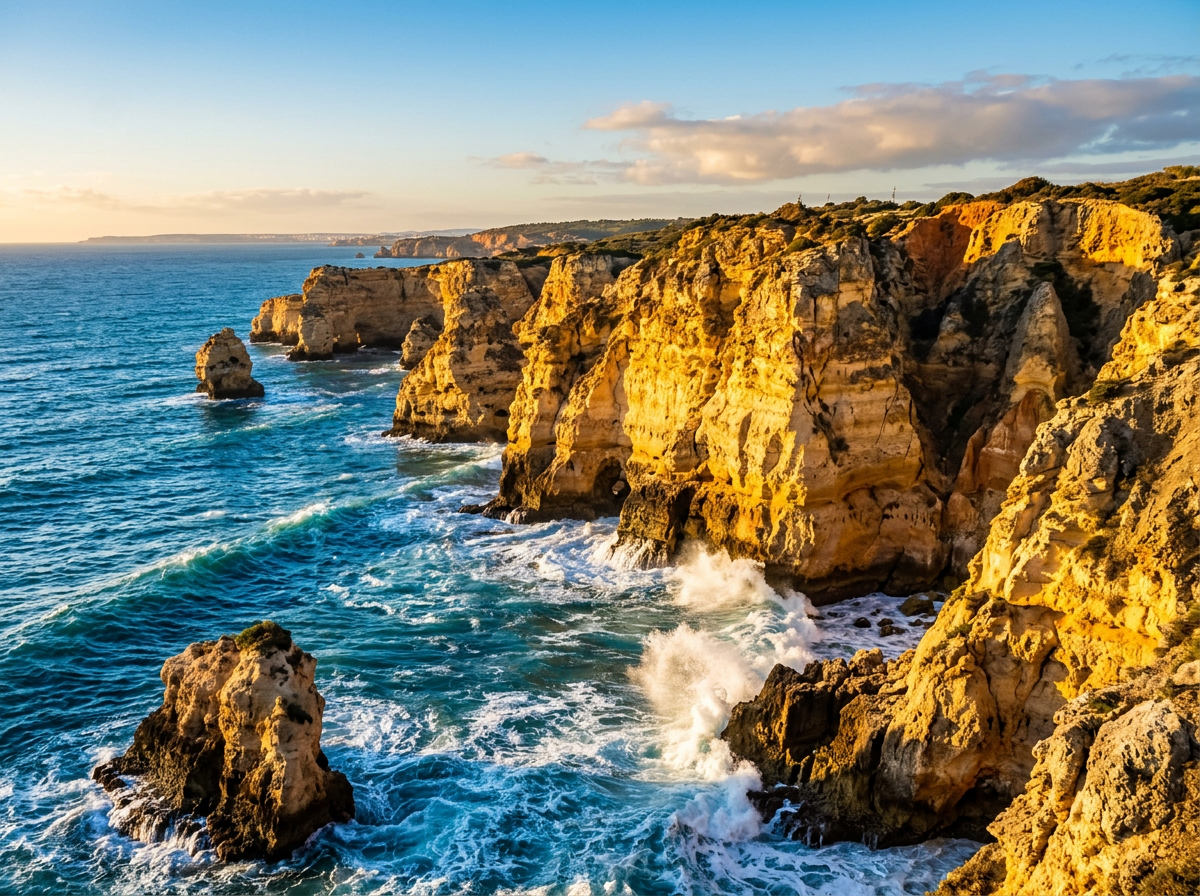
People often ask whether Praia da Senhora da Rocha is really as beautiful as it looks in photographs. My answer is yes, but with a small correction: it is usually better in person. Photos capture the colours and the chapel, but they cannot quite hold the movement of light on the cliff face, the sound of the swell near the rocks or the pleasure of walking between shade and sun as you explore the headland.
The cove has that classic Algarve interplay of shelter and openness. Down on the sand, you feel enclosed by the cliffs in a comforting way. Look outward, though, and the Atlantic feels wide and alive.
What the sea is like through the day
On calm summer mornings, the water can be wonderfully inviting. The sea often looks cleaner and gentler earlier in the day, before the wind builds or the beach grows busy. If you like a peaceful swim, that is when I would go.
By midday in high season, the beach can feel quite lively, especially because it is so well known. Families settle in properly, umbrellas bloom across the sand and the energy rises. That is not a bad thing, but if you prefer quiet over bustle, it helps to time your visit well.
Late afternoon is another favourite of mine. The light softens, some day-trippers begin to leave, and the cliffs turn richer in colour. On a good day, the beach feels calmer then, as if it is exhaling after the busiest hours.
Of course, the Atlantic always gets the final say. Conditions change, and not every day is ideal for a long swim. Even on beautiful-looking days, always check the sea state, the beach flags and what local lifeguards advise during the main bathing season.
One reason I like this beach for mixed groups is that everyone can enjoy it differently. Some will swim immediately, some will simply paddle and sit by the waterline, and some will spend half the time gazing at the cliffs. It is the kind of place where nobody has to force the same pace.
Why the cliffs photograph so well
The cliffs here are a gift to anyone with a camera, but they are equally lovely if you are simply the sort of person who notices colour and form. Their warm, layered limestone catches sunlight in a way that flatters every hour differently. Hard noon light makes the scene bright and bold; lower light reveals more texture, shadow and depth.
In the morning, the colours can seem freshly washed, especially after a breezier night. By late afternoon, the famous honey-coloured cliffs deepen into warmer tones, and the white chapel glows rather than glares. This is usually when visitors take the photographs they end up keeping.
What many people miss is that the beach offers several distinct viewpoints. The obvious one is from the headland beside the chapel, looking down over the cove. But the sand itself gives you a different perspective, where the cliffs tower more dramatically and the chapel appears almost delicate above them.
If you walk a little and look back, you will notice that the proportions keep changing. From one angle, the headland dominates. From another, the beach feels tucked into a cradle of rock. That variety is one of the reasons the place has become such a favourite for photographers and dreamers alike.
I often suggest putting the phone away for at least ten minutes before taking pictures. It sounds odd, but it works. If you first absorb the place properly, you usually end up framing it more thoughtfully later.
Early morning gives softer light, fewer people and a calmer feeling.
Late afternoon often gives the richest cliff colours and a gentler atmosphere.
From the headland you get the postcard view.
From the sand you feel the scale of the cliffs.
From the path towards Praia Nova you get lovely side angles many people miss.
The little tunnel and the link to Praia Nova
One of the most charming details here is the passage through the rock that connects this area with Praia Nova. It turns a simple beach visit into a small adventure. Children love it, adults love it just as much, and everyone feels faintly pleased to discover that the landscape has one more layer than expected.
I have always thought the tunnel adds to the beach’s sense of intimacy. It reminds you that this coast is full of secretive folds and surprising routes. You are never far from another cove, another ledge, another change in viewpoint.
Praia Nova itself is well worth a look if you have the energy to explore a little beyond your towel. It shares the same broad geological character but has its own mood. Moving between the two gives you a better feel for how this stretch of coast is assembled, not as one long beach but as a sequence of sculpted inlets.
For some people, that small amount of exploration is what transforms the outing. Rather than arriving, swimming and leaving, they begin to engage with the coastline more actively. It is the difference between seeing a place and getting to know it.
Local tip: Wear proper sandals or shoes if you plan to wander between viewpoints. The beach itself invites bare feet, but the paths and rocky sections are easier and safer with a bit more grip.
There is also a useful lesson here for first-time visitors to the Algarve. Some of our best coastal spots reveal themselves in layers. At first glance, Senhora da Rocha is simply beautiful. Stay a little longer, explore a little further, and it becomes far more memorable.
A word on safety and respect for the cliffs
The beauty of Algarve cliffs sometimes makes people forget they are natural formations, not carved terraces designed for convenience. Always keep a sensible distance from edges, avoid climbing where you should not, and never settle yourself directly under unstable-looking cliff sections. This is true all along the coast, from here to Benagil, Carvoeiro and beyond.
I do not say that to alarm anyone, only to encourage good habits. The coast is best enjoyed with confidence and common sense together. Respect the rock, and it usually rewards you with a much better day.
How I would spend a day here like a local
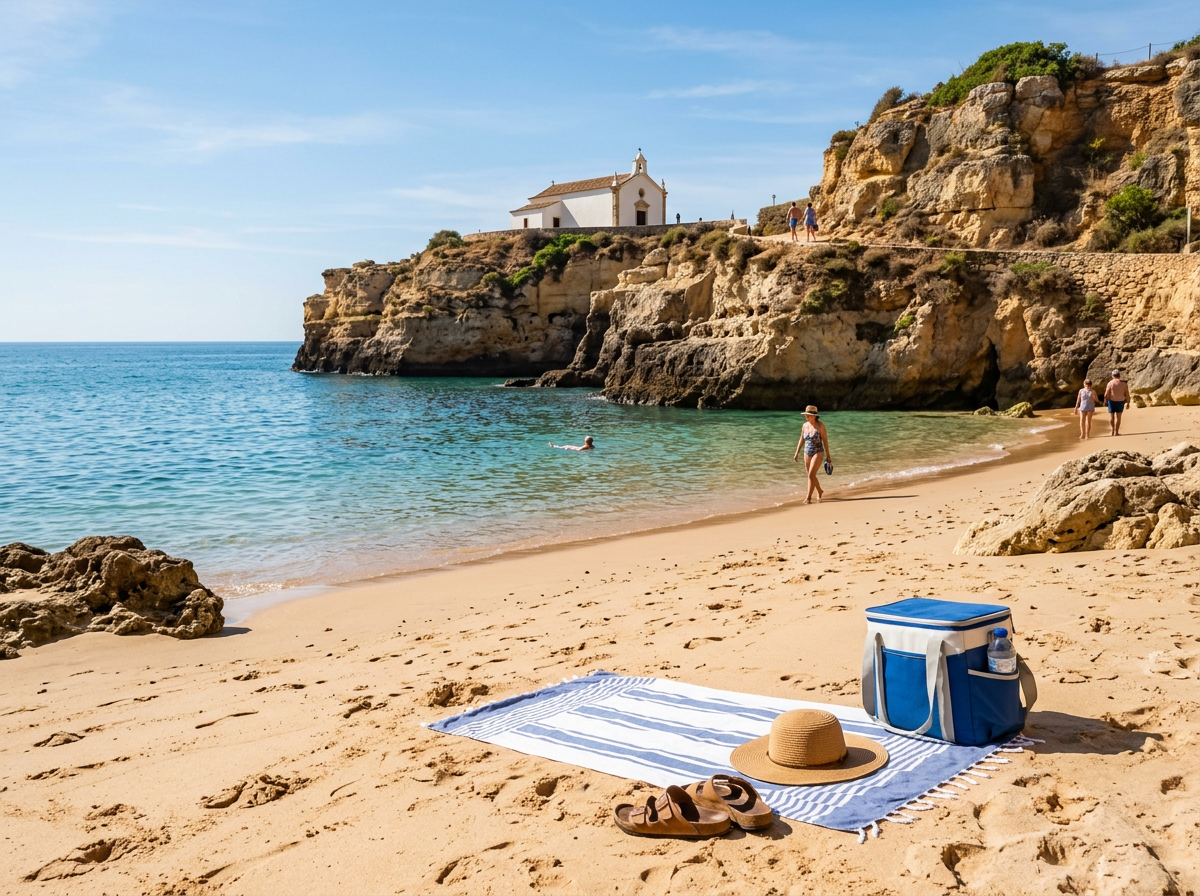
If you are staying in Armação de Pêra, one of the joys of visiting Praia da Senhora da Rocha is how easy it is to turn it into a beautifully unhurried day. You do not need military planning. You just need a little timing, some water, sunscreen and a willingness to let the beach set the tempo.
My ideal version begins with a slow breakfast rather than a rushed departure. Have your coffee, pick up a pastel de nata, enjoy the morning light over town and then head out before the busiest part of the day. Starting calmly somehow suits this beach.
Setting out from town
I usually recommend leaving Armação de Pêra in the morning, especially in summer. Parking is easier, the air feels fresher and the first glimpse of the cliffs is more rewarding before the sun is at its harshest. If you are the sort of traveller who enjoys the quiet before the main beach crowd arrives, you will thank yourself.
Back in town, there is often already a pleasant bustle along the seafront near Praia dos Pescadores. Fishermen’s heritage still gives that part of Armação an identity of its own, and it makes a lovely contrast with the more sculpted cove you are about to visit. I like holidays that show two sides of a place in the same day.
Once you arrive at Senhora da Rocha, do not race straight to the sand. Walk up to the headland first if the light is good. The beach will still be there in ten minutes, but that first panoramic view is part of the ritual.
A simple day plan that works beautifully
Arrive in the morning and begin at the viewpoint near the chapel.
Take in the headland before carrying bags and umbrellas down to the beach.
Swim early while the water and mood are often at their calmest.
Read, rest or people-watch for an hour rather than trying to fill every minute.
Explore towards Praia Nova when you feel like stretching your legs.
Pause for lunch nearby and keep it simple: grilled fish, salad, bread and something cold to drink.
Return for a late-afternoon look if you want the cliffs at their warmest and most photogenic.
Head back to Armação de Pêra for an evening walk or relaxed dinner by the sea.
That sort of day may sound almost too simple, but that is exactly the point. The beach does not need to be over-managed. Some places improve when you stop trying to optimise them.
If you are travelling with children, the tunnel and the dramatic setting usually add enough adventure to keep the day interesting. If you are travelling as a couple, it is one of those rare beaches that feels both romantic and easy-going. If you are on your own, it has enough visual interest and movement that you never feel at a loose end.
Different ways to enjoy it
For couples, I would lean into the scenery. Take the walk to the headland, sit a little away from the busiest cluster of beachgoers and come back later in the day when the light softens. The place has a gentle romance to it without needing any performance.
For families, I would keep things flexible. Bring snacks, avoid the hottest middle hours if you can, and let the day unfold in phases: swim, rest, explore, repeat. Beaches that offer a little change of scene tend to work better for children, and the headland gives you exactly that.
For solo travellers, this is one of my favourite nearby beaches because it combines beauty with enough activity to feel sociable. You can spend time alone without feeling isolated. A swim, a short walk, a few photographs and a good lunch nearby can make for a wonderfully satisfying day.
For older travellers, comfort matters most. Go early, move slowly, choose your footwear wisely and make the headland your first stop while you have the freshest energy. There is no need to conquer every path in order to enjoy the place deeply.
Bring more water than you think you need.
Pack a light layer if you plan to linger later in the day when the breeze freshens.
Use sun protection well; the reflected light from sand and pale rock can be strong.
Keep your plan loose; this beach is best enjoyed without over-scheduling.
Local tip: If you are visiting in peak summer, do not treat noon as the only possible beach hour. Early morning and late afternoon are often the most enjoyable times, especially if you want a gentler, more local-feeling atmosphere.
By the end of the day, I always feel that Senhora da Rocha gives more than it asks for. It does not require a strenuous hike, a boat trip or a full-blown expedition. It simply asks you to arrive with enough time to notice where you are.
What to eat nearby and what to pair with your visit
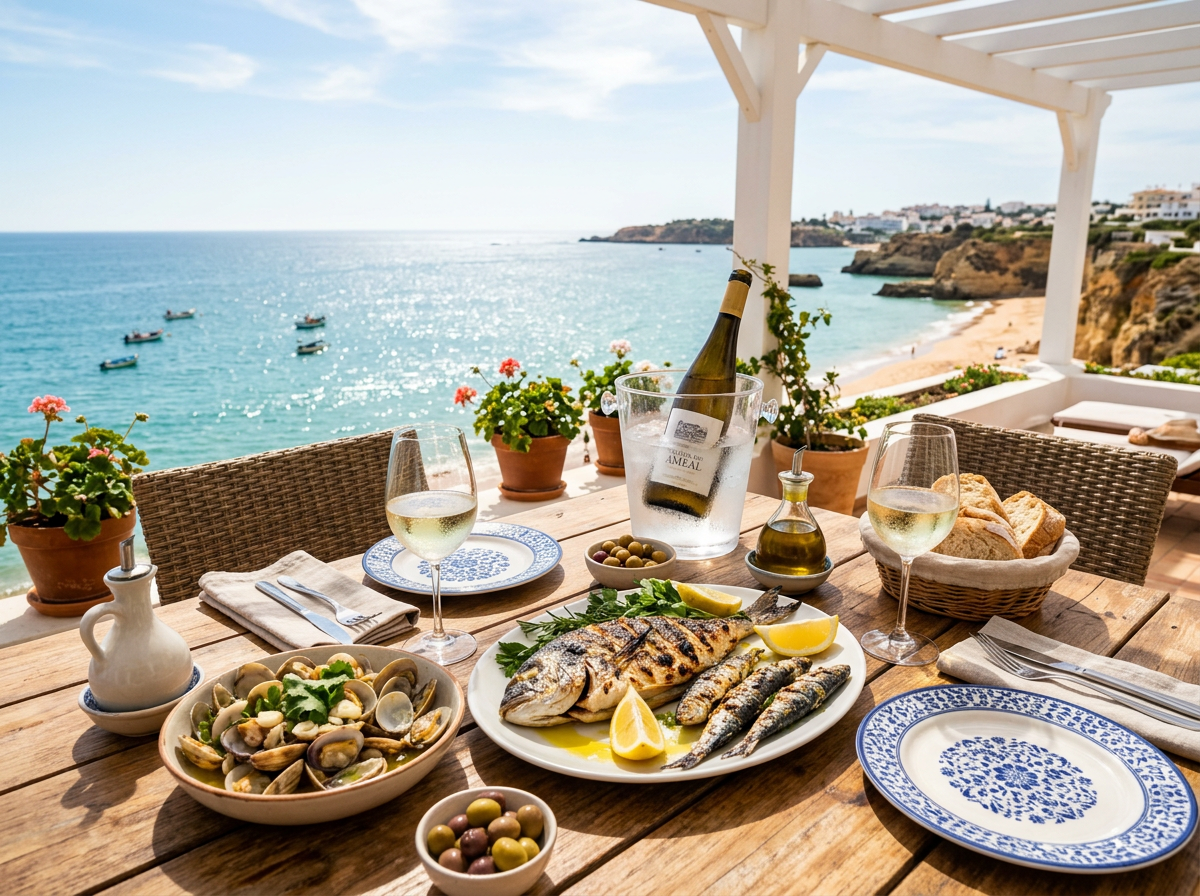
No proper Algarve beach day is complete without something good to eat afterwards. Salt water sharpens the appetite, and Praia da Senhora da Rocha sits in one of those parts of the coast where a simple lunch can feel like a reward for doing almost nothing at all. For me, that is one of the great pleasures of being here.
Lunch the Algarve way
After a morning swim, I usually want food that tastes of the region rather than anything too heavy or fussy. This is prime territory for fresh fish, salads, bread, olives and chilled drinks. If you spot sardinhas assadas on a menu in the right season, it is hard to argue with them.
If you are staying longer and want something more leisurely, a proper cataplana is one of the Algarve’s great comforts. Rich without being clumsy, fragrant with the sea, and best shared slowly, it is exactly the sort of dish that suits a day built around sun and salt air. Just make sure you are not expecting a quick in-and-out lunch if you order it; the whole point is to give it time.
For a sweeter note, I am never against a second pastel de nata later in the day, especially with coffee once the sun softens. And if your evening stretches on after dinner, a small glass of medronho has its place too, though I would always save that for later rather than before another swim.
Food around here tends to work best when you follow the local spirit: straightforward, fresh and not overcomplicated. The coast does not need much embellishment, and neither does lunch.
Lovely nearby pairings if you have more time
Senhora da Rocha is an easy outing on its own, but it also pairs beautifully with other nearby stops if you want to build a fuller day. The trick is not to cram in too much. The coastline deserves breathing room.
If you want to keep the day coastal, you can continue west towards Benagil, where the sea caves have become world famous for obvious reasons. I usually advise seeing that area with patience and realistic expectations, because popularity can change the mood quickly. Senhora da Rocha often feels calmer and more personal by comparison.
Further along, Carvoeiro and Algar Seco offer another beautiful perspective on Algarve rock formations. They are different in mood from Senhora da Rocha, more built-up and more visited in parts, but still undeniably lovely. If you enjoy cliff scenery, it is easy to understand why travellers connect these places in the same mental map.
If you want to balance coast with culture, head inland to Silves. After a day among cliffs and salt air, the warm red stone of Castelo de Silves gives you a completely different Algarve mood: historic, grounded and quietly atmospheric. I often suggest this contrast to guests who want more than beach-hopping.
And if you are visiting with children or simply enjoy lighter, playful attractions, keep an eye out for whether the FIESA sand sculpture festival is on during your stay near Pêra. It makes an easy companion to beach days in this part of the Algarve. One day you admire cliffs carved by nature; another day you admire sculptures shaped by hand.
Keep it simple: Senhora da Rocha plus lunch and an evening in Armação de Pêra.
Go scenic: Senhora da Rocha followed by Benagil, Carvoeiro or Algar Seco.
Add culture: beach in the morning, then Silves and Castelo de Silves later.
Travel with children: combine a beach day with FIESA if it is running.
How locals think about summer flavour
There is a particular smell to the Algarve in summer evenings: charcoal, grilled fish and sea air mingling somewhere between the beach and the town. If you have ever wandered a summer food event or caught the spirit of the Festival da Sardinha elsewhere in the region, you will know what I mean. Even when you are nowhere near the official festival, that flavour of summer is very much part of coastal life.
That is another reason I like sending people to Senhora da Rocha rather than only to the headline-name beaches. It still connects naturally to the everyday pleasures of the region. You can spend the morning under cliffs, the afternoon at ease, and the evening eating something local without needing a grand plan.
For travellers doing a longer Algarve road trip, I sometimes describe this beach as a lesson in scale. It shows how much beauty can fit into a relatively small cove. Later, if you find yourself driving towards larger coastal icons or all the way to places like Cabo de São Vicente for a bigger sunset drama, you may notice that Senhora da Rocha stays in your mind not because it is the most extreme, but because it feels complete.
Local tip: Resist the urge to turn every beach day into a checklist. Choose one good meal, one extra stop at most and enough empty time to enjoy where you are. The Algarve rewards depth more than speed.
That balance is really the secret. This beach is not just about a photograph from the headland. It is about the whole arc of the day that surrounds it: the coffee beforehand, the swim, the warm stone underfoot, the fish at lunch and the quiet drive back as the light begins to soften.
Practical notes, small courtesies and where to stay
For all its beauty, Praia da Senhora da Rocha is easy to enjoy when you know a few basics. Most of them are simple common sense, but they make the difference between a lovely outing and an unnecessarily flustered one.
What I always tell guests before they go
Go early in peak season if you want easier parking and a calmer start.
Bring sturdy footwear if you plan to explore the headland or paths beyond the sand.
Carry water and shade; the cliffs create beauty, not endless shelter.
Check sea conditions and beach flags before swimming.
Be respectful near the chapel; it is a viewpoint, but it is also a place of devotion.
Keep away from cliff edges and avoid lingering in unsafe spots beneath unstable rock.
Leave no trace; this coastline stays beautiful when people treat it kindly.
Those little courtesies matter. They protect both you and the place itself. Beaches like this rely on visitors understanding that beauty is not an invitation to behave carelessly.
I would also add one softer piece of advice: leave a little room in your schedule for changing your mind. If the beach is busier than you hoped, stay for the view and return later. If the light is too harsh for photographs, swim first and climb back up later. The best Algarve days are often the least rigid.
Why this beach stays in your memory
When I think about the beaches I recommend most warmly, I realise they are not always the biggest, the trendiest or the most famous. They are the ones that feel layered. Praia da Senhora da Rocha has that quality in abundance.
It is visually striking, of course, and that alone would be enough for many people. But it also has history, texture and a genuine sense of place. The tiny chapel on the headland turns a pretty cove into something more personal and more lasting.
Even now, after seeing it many times, I still enjoy that first moment of arrival. The cliffs catch the light, the sea opens up and the chapel sits quietly above it all as if it has been waiting for you. Some places announce themselves loudly; this one simply stands there and lets you come to it.
Local tip: If you leave the beach already thinking about when you might return, that usually means you chose well. Senhora da Rocha has that effect on people.
A lovely base back in Armação de Pêra
If this kind of Algarve day sounds like your idea of a holiday, Caravelis holiday homes in Armação de Pêra make an easy and comfortable base for exploring the coast. You might choose Penthouse 1 for its sea-view terrace, jacuzzi and BBQ, Beachfront Apartment 4F for its sea-view balcony just moments from the sand, or Beach Apartment 7G for its sunny seventh-floor setting near the beach.
Whichever apartment suits your style, you will be well placed to enjoy morning swims, long lunches and beautiful outings to places like Praia da Senhora da Rocha. If you are planning your next escape, we would love to welcome you to Caravelis in Armação de Pêra, Algarve.
Planning your Algarve holiday?
Browse our properties in Armação de Pêra and book direct for the best rates.