How to Order Cataplana de Mariscos Like an Algarvian
Luiz and the Caravelis Team
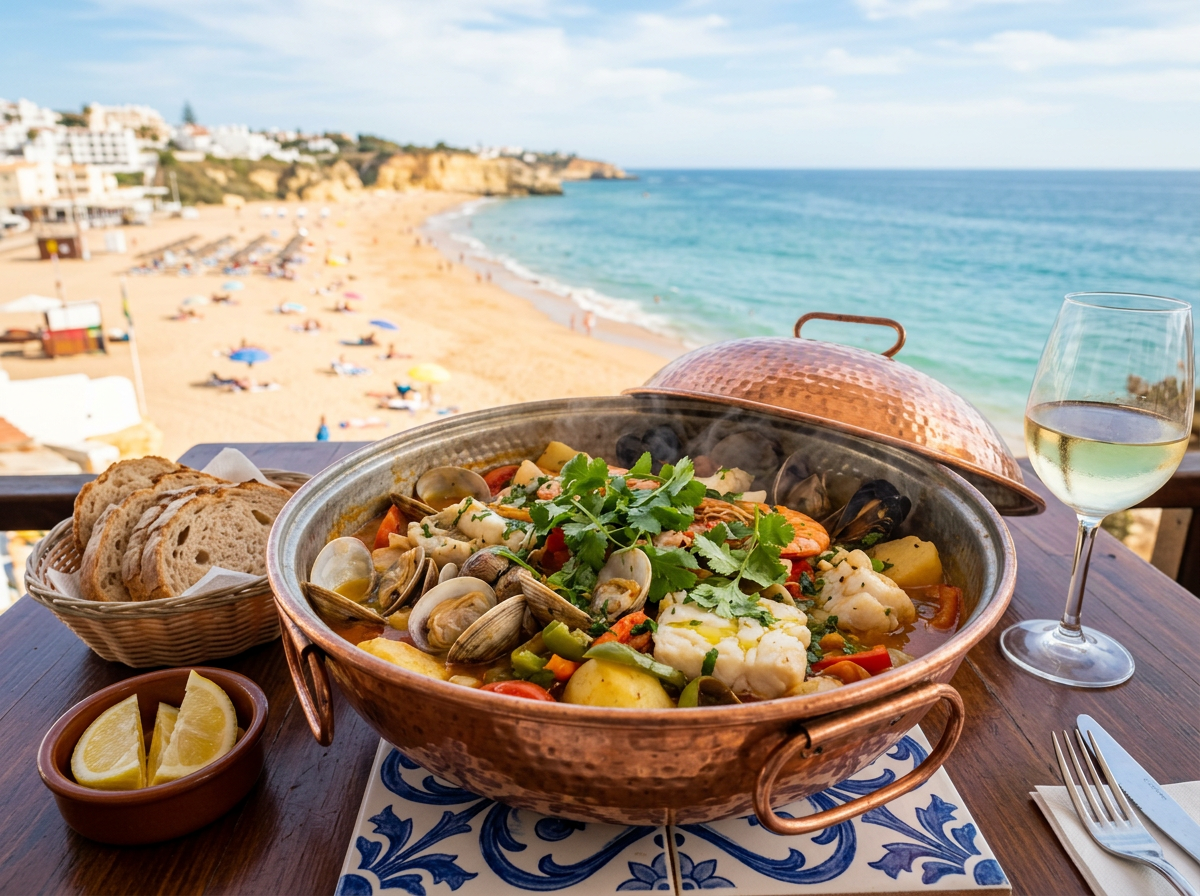
Why cataplana is the taste of the Algarve
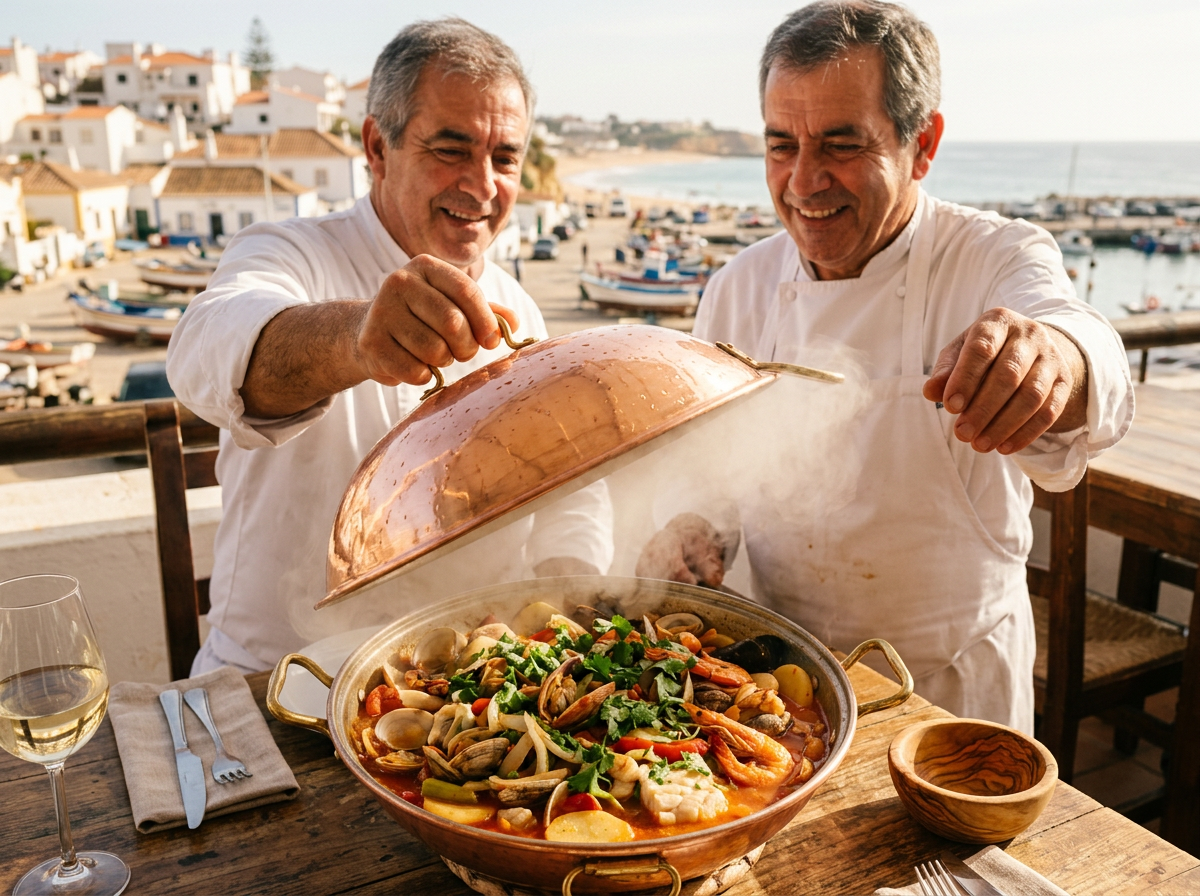
When friends come to stay in Armação de Pêra, there is one question that arrives almost as quickly as the sun cream comes out of the suitcase: where should we go for a proper cataplana de mariscos? I always smile, because it is exactly the right question. If you want to understand the Algarve through one dish, this is where I would start.
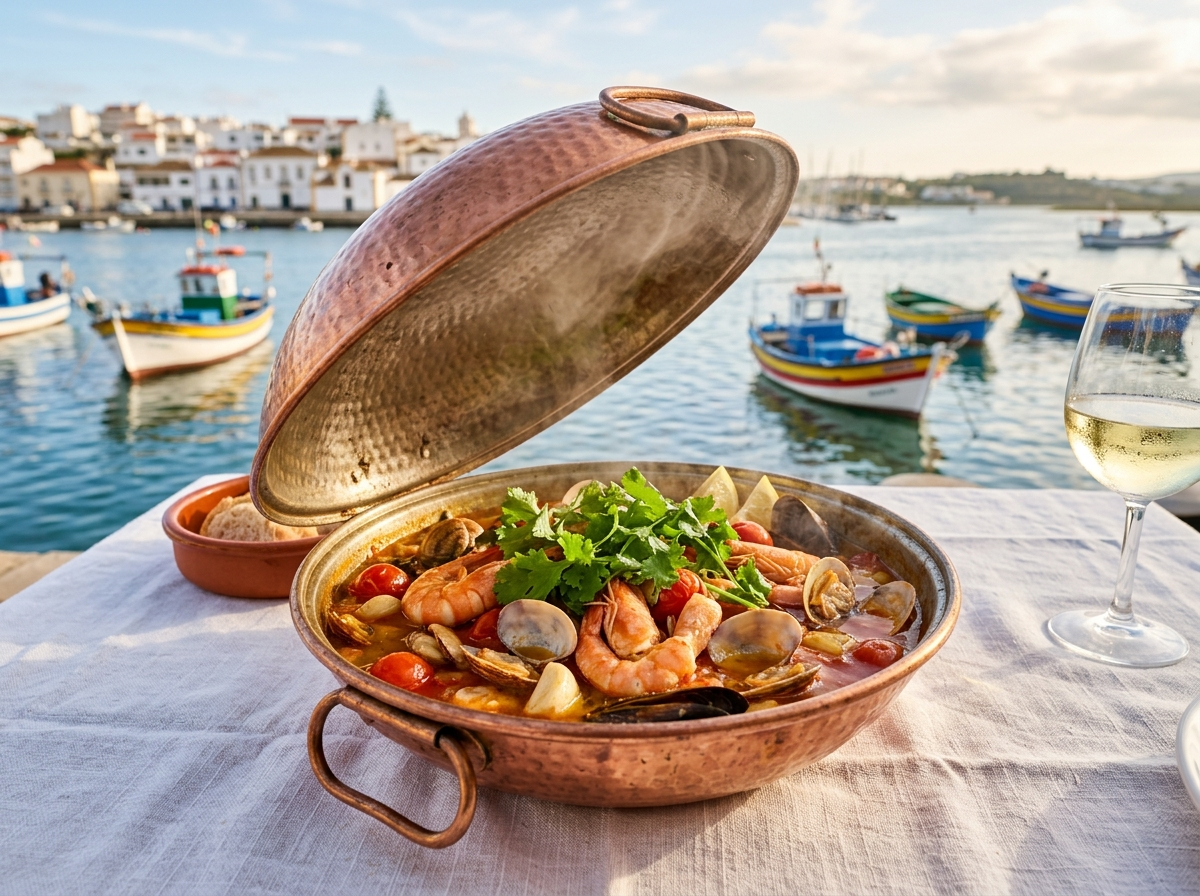
Cataplana de mariscos is the kind of meal that feels like a whole postcard on a plate, or rather in a pan. Think of clams, prawns, shellfish and tender white fish steamed together with garlic, tomato, white wine, olive oil and a final burst of coentros, the fresh coriander that gives the broth its bright, herbal lift. It is savoury, briny, comforting and somehow still light enough to suit a hot day by the sea.
The thing that makes it special is not only the recipe but the vessel itself. A cataplana is the beautiful rounded copper pan, shaped a little like a shell, that clamps shut and traps steam inside. That closed cooking method matters. It lets the shellfish open gently, the fish stay moist, and the broth gather all those sea-sweet flavours into something you will want to mop up with bread right to the last spoonful.
Here in the Algarve, the dish makes immediate sense. This is a coast shaped by fishing, salt air, harbours, market stalls, and families who know how to make simple ingredients taste generous. In Armação de Pêra, with the beach stretching wide and the old fishing quarter near Praia dos Pescadores, cataplana does not feel like restaurant theatre. It feels like a natural expression of place.
That is why the best cataplana is never only about the ingredients list. It is about where you are sitting, how long lunch is allowed to linger, and whether the breeze smells faintly of the Atlantic. A really memorable one should feel relaxed and convivial. It should arrive with steam escaping as the lid opens, and it should make the whole table go quiet for a moment before everybody starts serving themselves.
One lovely thing to know before you order is that there is no single rigid version. Some kitchens lean more towards shellfish, others add chunks of local white fish, others make the tomato more pronounced, and some use a little more wine than others. In one place you might taste more garlic and coriander; in another, the broth may be softer and sweeter. That variation is not a flaw. It is part of the charm.
The pan itself carries a bit of history too. Many people in southern Portugal connect the shape and cooking style to older Moorish influences in the region, and whether you are talking to a chef, a market seller or a proud local grandmother, you will hear slightly different stories. What everyone agrees on is simpler: the cataplana belongs deeply to the Algarve, and it deserves a little respect.
More than a meal
One reason travellers fall in love with this dish is that it captures the Algarve so neatly. The sea gives the shellfish and fish. The inland fields and gardens bring tomatoes, onions, peppers and herbs. The region’s easy way of eating shows up in the format: a generous pan designed to be shared, with no need for fuss. It is a social dish, a family dish, a holiday dish, and a slow afternoon dish all at once.
If you are lucky enough to eat it with feet-in-the-sand views, all the better. There is something especially right about ordering cataplana after a swim, hair still a bit salty, looking out over the beach while the kitchen takes its time. I always think it tastes best when the day has already included sea water, sunshine and absolutely no rushing.
That setting is part of why Armação de Pêra is such a good place to learn how to order it properly. You can spend the morning on the beach, stroll the promenade, and sit down for lunch or an early supper without needing a complicated plan. Places near Praia dos Pescadores and along the seafront often understand that people are here to enjoy themselves slowly, and cataplana suits that mood perfectly.
Host tip: If a restaurant tells you the cataplana will take around 30 minutes, do not be put off. That wait is usually a very good sign. A proper cataplana is cooked to order, not reheated in a hurry.
It also helps to think of cataplana less as a quick lunch and more as an occasion. Locals do not usually order it the way they might order a grilled sandwich or a simple salad. It is more likely to be chosen when there is time to settle in, talk, share and enjoy the whole rhythm of the meal. In that sense, ordering it like an Algarvian starts before you ever look at the menu. It starts with deciding not to rush.
And that, really, is the first secret. If you approach cataplana with patience and appetite, you are already halfway there. The rest is mostly knowing what to ask, what to expect, and how to enjoy it in a way that feels easy rather than staged.
How to read the menu and know what you are ordering
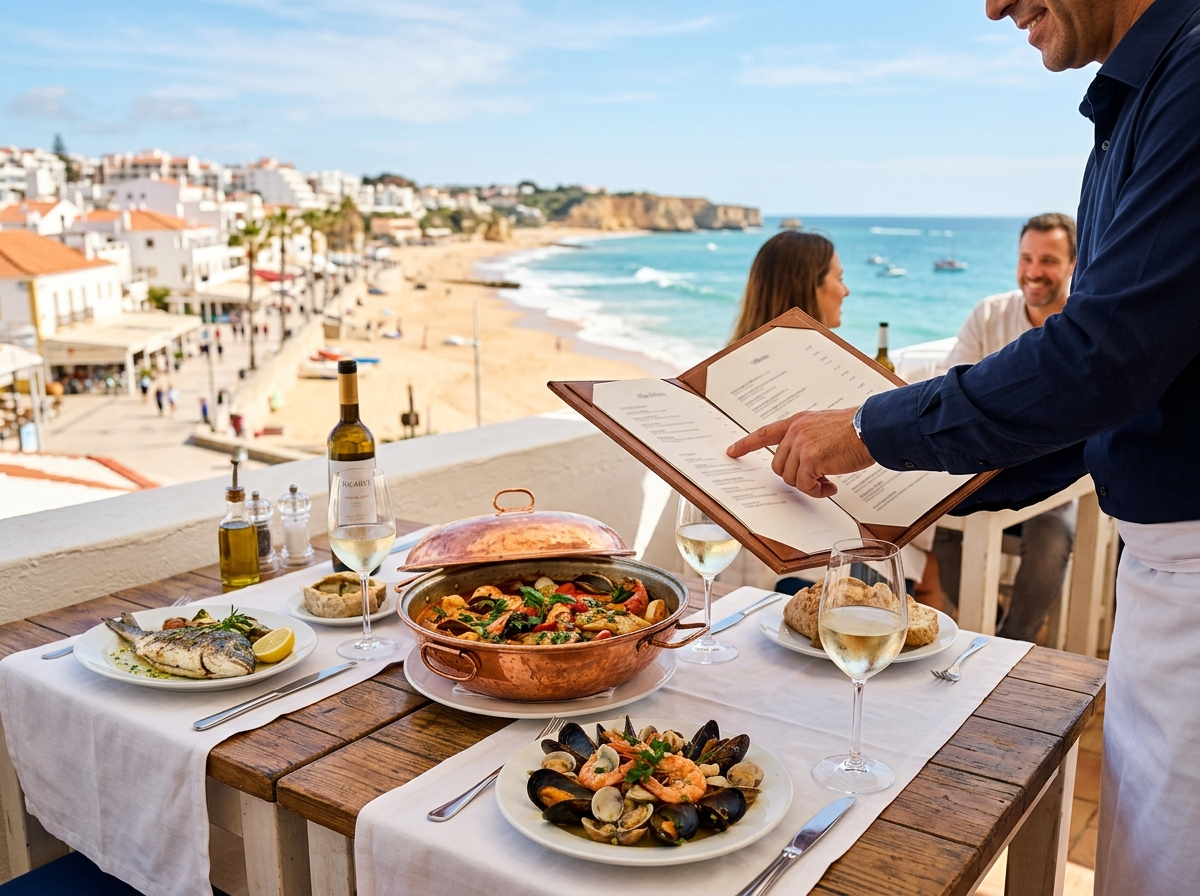
The next secret is wonderfully practical: know the language of the menu. You do not need flawless Portuguese, but a few key words will make the whole experience smoother. It will also help you avoid the most common traveller mistake, which is assuming every cataplana is exactly the same.
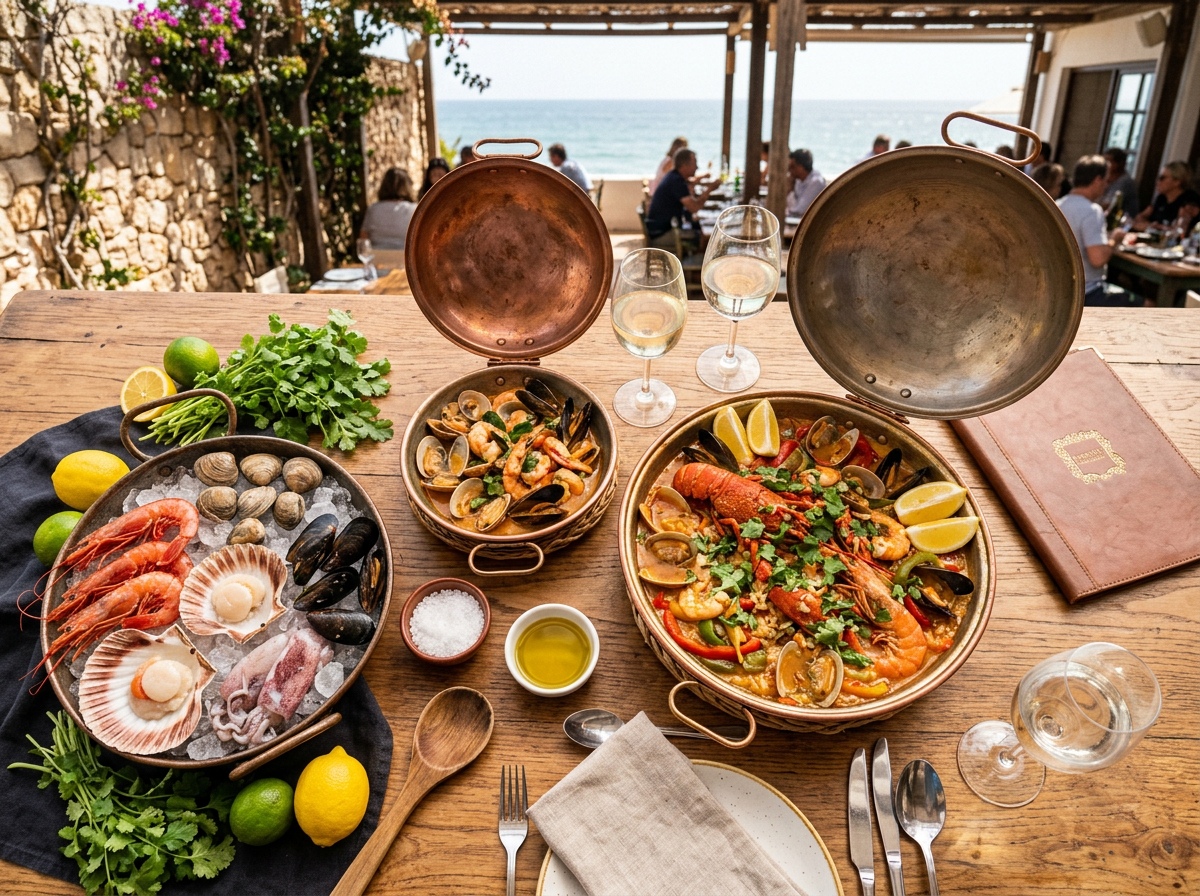
First, remember that cataplana can mean both the pan and the dish cooked in it. On a menu, the word on its own may refer to a style rather than one fixed recipe. So when you see cataplana de mariscos, you are usually looking at a seafood or shellfish-forward version. If you see cataplana de peixe e marisco, that usually means a mix of fish and seafood. Some places offer versions with monkfish, others with pork and clams, and some write their own house variation.
If your dream is the classic seaside pot full of shellfish, white fish and fragrant broth, then cataplana de mariscos or cataplana de peixe e marisco will usually be what you want. The exact balance depends on the kitchen and on what is freshest that day. That is why it is perfectly normal, and often wise, to ask what is in it before ordering.
Useful Portuguese words to spot on the menu
Marisco means seafood or shellfish, often the broad category rather than one ingredient.
Ameijoas are clams, one of the stars of a good Algarve cataplana.
Camarão means prawns or shrimp, depending on size and context.
Mexilhões are mussels.
Lingueirão are razor clams, sometimes included in seafood dishes near the coast.
Peixe means fish.
Tamboril is monkfish, a common choice for heartier cataplana variations.
Coentros are coriander leaves, the fresh herbal finish many locals love.
Molho means sauce, though with cataplana it is really a broth-like sauce that should never be wasted.
Para duas pessoas means for two people, an important phrase because cataplana is often designed for sharing.
One of the biggest practical points is portion size. Cataplana is very often priced and prepared for two people, sometimes more. Even if you are hungry, it is worth confirming. A pan for two can be generous, especially if you also order bread, a salad, olives or a starter. When I am helping guests plan a seafood lunch, I usually suggest starting with the cataplana itself and adding only one or two small extras.
Another important clue is timing. Because the dish is cooked in a sealed pan, it usually takes longer than grilled fish or a simple rice dish. That is normal. In fact, a restaurant that tells you it needs 25 to 40 minutes is often telling you something reassuring: this is being made fresh. If you are starving, nibble some bread and olives rather than changing your order too quickly.
You can also learn a lot from how a menu describes the dish. A short, clear description that mentions shellfish, fish and cooking time can be more encouraging than an over-decorated menu trying to promise everything to everyone. I would not judge a place purely by style, though. In the Algarve, some wonderfully authentic meals are served in very unfussy dining rooms. Focus on freshness, calm confidence and whether the staff can tell you what is in today’s pan.
Season matters as well. The finest cataplanas often reflect what is available and at its best that week. A restaurant near the sea may adjust the mix depending on the catch, and that flexibility is usually a good sign. The more a place treats the dish as alive and seasonal rather than rigidly identical every day of the year, the more likely it is to be worth ordering.
It also helps to know what cataplana is not. It is not a dry mixed grill, and it is not meant to be eaten in a hurry with barely a glance at the sauce. The broth is central. If you love shellfish, but do not care much for the liquid in the pan, you will still probably enjoy the dish, but you will miss half the pleasure. The juices released from the clams, prawns and fish are what turn the whole thing into something greater than the sum of its parts.
If you are unsure whether a restaurant’s version is the one you want, ask gently. A very useful question is whether the dish includes both shellfish and fish, or mostly shellfish. Another good question is whether it is spicy, tomato-led, or finished with coentros. These details help you choose, and they also tell the staff that you care about the dish rather than just ordering it because it is famous.
Host tip: Try asking A cataplana é para quantas pessoas? if you want to check serving size, or Leva ameijoas e camarão? if you want to know whether it includes clams and prawns.
Do not worry if your accent is imperfect. In holiday towns and coastal restaurants, staff are usually used to helping visitors through a menu. The important thing is to ask with friendliness and curiosity. That is already much closer to the Algarvian spirit than pretending to know everything and ending up with the wrong dish.
Once you can recognise the basic menu language, ordering becomes easy. You stop seeing cataplana as one mysterious regional speciality and start seeing the delicious details that make each version distinct. That is where the real fun begins.
How to order cataplana like an Algarvian
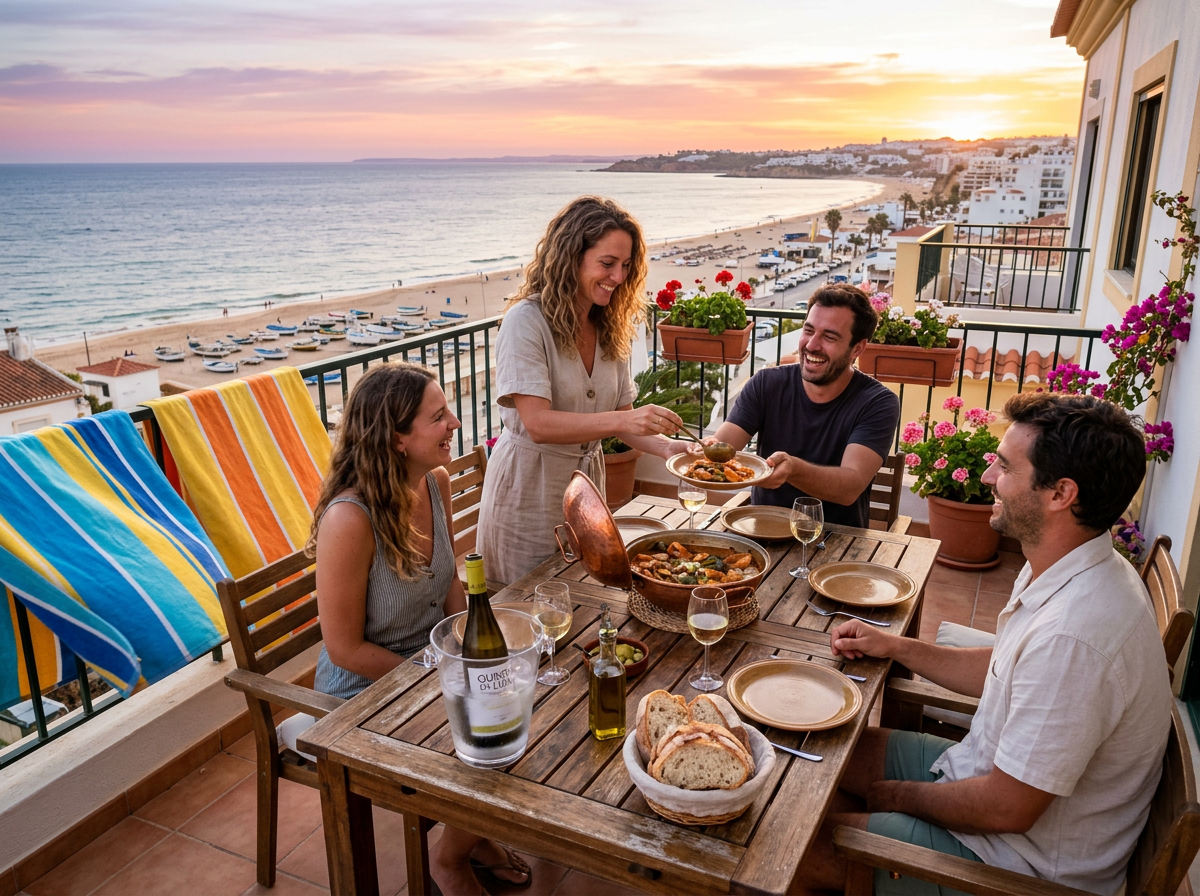
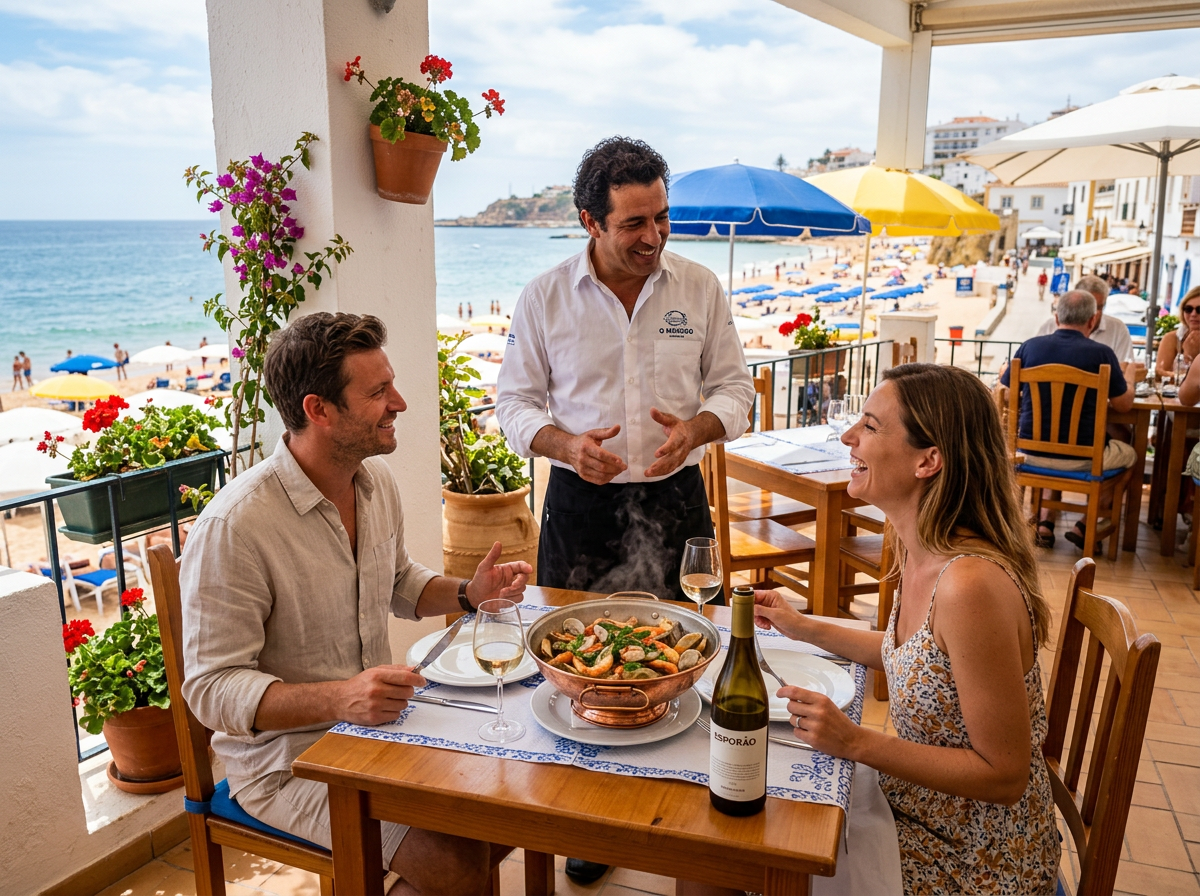
Ordering like a local is not about putting on an act. It is about a handful of sensible habits: greet people properly, ask a couple of useful questions, trust the pace of the kitchen, and order in a way that leaves room for the main event. Cataplana rewards that kind of calm confidence.
Start with the right attitude
In Portugal, a warm greeting goes a long way. A simple Boa tarde in the afternoon or Boa noite in the evening sets the tone immediately. You do not need long speeches. Politeness here is often understated, and that suits the whole cataplana experience perfectly. Smile, be relaxed, and do not launch straight into special requests before you have even sat down.
If the restaurant is busy, especially in summer, it is smart to reserve ahead for dinner or for a long lazy Sunday lunch. In peak holiday weeks around Armação de Pêra, tables with sea views disappear quickly. The best plan is to book, arrive on time, and then let the meal unfold rather than trying to rush it through between other activities.
A simple step-by-step way to order
Check the portion size. Ask whether the cataplana is for one, two or more people. This avoids over-ordering and helps you plan the rest of the meal.
Ask what is in today’s version. Even if the menu gives a description, it is useful to ask which shellfish and fish are included that day.
Confirm the cooking time. That lets you settle in properly and decide whether to order a few nibbles while you wait.
Keep starters light. Bread, olives and perhaps a small salad are usually enough before a generous seafood pan.
Order something simple to drink. A chilled local white wine, a beer, sparkling water or plain water all work well.
Ask for extra bread if you like. The broth is too good to leave behind, and locals know it.
Share without fuss. Cataplana is meant for passing, spooning and enjoying together, not guarding protectively like a private treasure.
That may sound obvious, but it changes the meal completely. The least local way to order is to pile the table with too many starters, demand everything at once, then feel too full by the time the pan arrives. If cataplana is your main goal, treat it as the centrepiece and let the supporting cast stay modest.
Useful phrases that make life easier
Gostávamos de uma cataplana de marisco para duas, se faz favor. We would like a seafood cataplana for two, please.
Quanto tempo demora? How long does it take?
Leva peixe também? Does it include fish as well?
Pode trazer pão? Could you bring some bread?
Pode trazer pratos extra? Could you bring extra plates?
Sem picante, por favor. No chilli, please, if that is important for you.
Tenho alergia ao marisco. I have a shellfish allergy. This is vital to say clearly if it applies.
The phrase se faz favor is especially useful. It is a polite, everyday way to say please, and using it instantly softens your request. At the end of the meal, obrigado if you are male or obrigada if you are female is always appreciated.
Another local habit worth copying is asking for recommendations without overcomplicating things. Instead of building a long list of modifications, you can simply ask which cataplana the restaurant most recommends that day. If the kitchen is proud of a particular version, or if one relies on especially fresh shellfish, that answer can steer you in the right direction.
It is also completely acceptable to share a cataplana as the only main course at the table, especially if two people are eating. If there are three or four of you, you might order a larger one, or one pan plus another seafood dish. Families do this all the time. There is nothing awkward about dividing it up as you go. In fact, the sharing is part of the pleasure.
If you are travelling with children, cataplana can still work very well. Some children love prawns and bread and will happily join in, while others may prefer something simpler from the menu. The key is not to force the dish into being a formal tasting ritual. Let curious eaters try the broth, pick at the fish, and discover what they enjoy. The Algarve’s family-friendly restaurant culture is usually quite relaxed about this.
For anyone with dietary restrictions, the best local-style move is to ask early and clearly, not apologetically. Shellfish allergies obviously matter with cataplana, and fish bones can matter for younger children or nervous eaters. A good restaurant will guide you honestly. What feels most local is not pretending there is no issue. It is handling the issue straightforwardly.
Host tip: The most convincing way to order like a local is not fluent Portuguese. It is simply this: choose well, ask politely, and do not rush the kitchen.
There is one more thing I always mention to guests in summer. If you are planning cataplana after a long beach day, do not wait until you are ravenous at 21:00 with no booking and no plan. In high season, especially around the seafront in Armação de Pêra, the popular tables fill quickly. Decide earlier in the day where you want to go, reserve if you can, and then enjoy the anticipation.
Done this way, ordering cataplana feels easy, almost inevitable. You sit down, you ask the right questions, the order goes in, and the best part is still ahead: the moment the pan arrives and the whole table begins to smell of sea, garlic and wine.
How locals actually eat it once it arrives
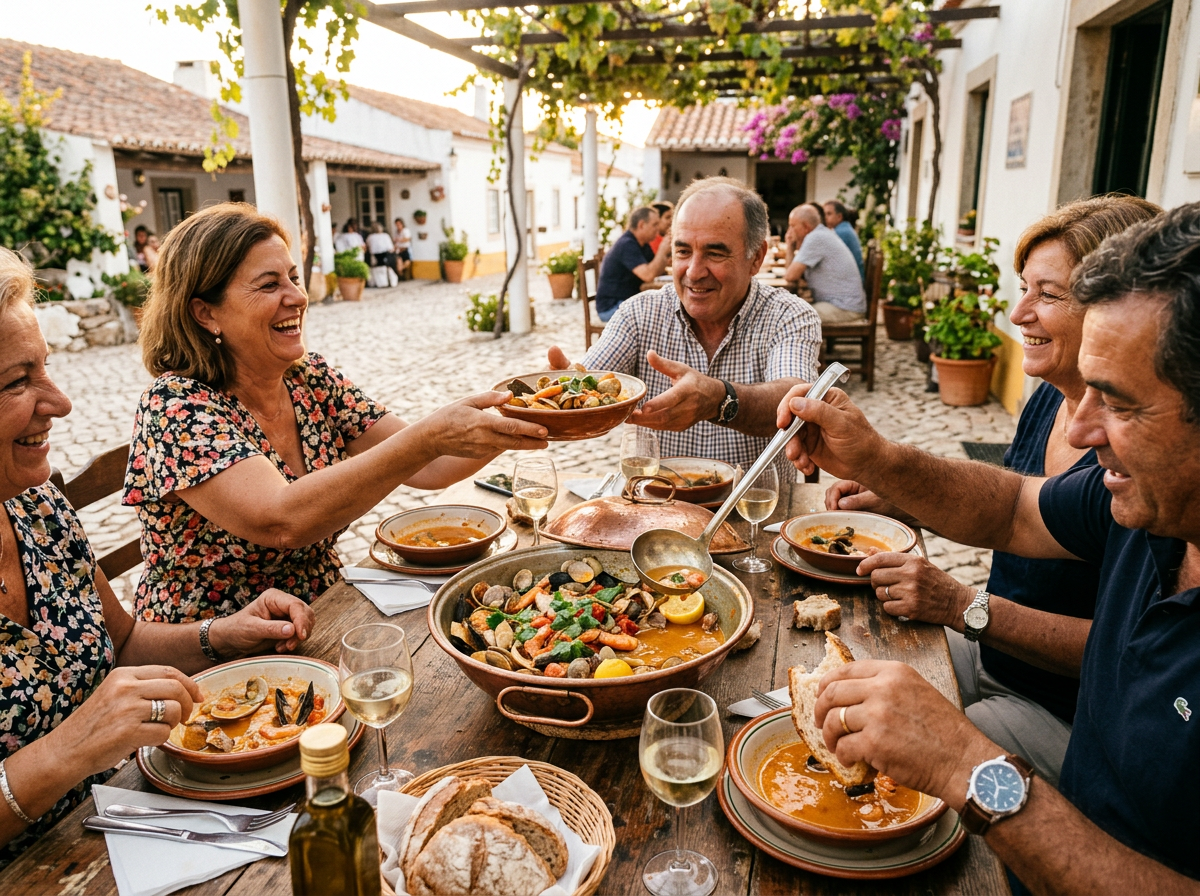
This is the part travellers often enjoy most, because cataplana is a joy to behold. When the pan comes to the table, there is usually a small pause while it is opened. That first puff of steam carries everything that makes the dish irresistible: the sweetness of shellfish, the savoury depth of the broth, the freshness of coriander, and the faint metallic warmth of the copper vessel itself.
If the server opens it for you, let them. There is no prize for wrestling dramatically with the lid yourself. Once it is open, give it a moment. Then spoon the broth and seafood gently into plates or bowls. The trick is not to scoop only the shellfish and fish, leaving the liquid behind. The molho matters every bit as much as the main ingredients.
What to do at the table
Locals tend to eat cataplana in a wonderfully unfussy way. They use cutlery, of course, but in more casual beachside restaurants no one will be shocked if you use your fingers for peeling a prawn or lifting a clam from its shell. Just keep a napkin handy and follow the tone of the place. If it is a simple family restaurant by the sea, relaxed is absolutely fine.
One detail that matters more than people expect is bread. Fresh bread is not an optional extra in spirit, even if it is technically optional on the bill. A few pieces on the side let you soak up the broth as the meal goes on. There is a very particular happiness in dipping bread into a cataplana sauce while the sea is just beyond the terrace.
You may also find that the flavours grow deeper as you eat. The first spoonful can taste bright and saline; a few minutes later the tomato, garlic and wine seem rounder and more blended. This is another reason not to rush. The pan stays warm, the conversation drifts, and the dish reveals itself slowly.
If a bowl for shells appears on the table, use it. If it does not, place shells neatly at the edge of your plate. The whole point is ease, not elegance. A good cataplana meal should feel generous and slightly messy in the best possible way, not stiff or over-managed.
What to drink with cataplana
My favourite pairing is a chilled white wine, especially something crisp and not too oaky. It should support the shellfish rather than compete with it. Plenty of restaurants will suggest a local Algarve white, which is always a good place to start. You want freshness, minerality and enough acidity to keep the broth lively on the palate.
If wine is not your thing, a cold beer works surprisingly well, especially at lunch after the beach. Sparkling water is also lovely, particularly if the day is hot and you want to stay refreshed. What I would usually avoid with cataplana is a heavy red wine. It can make the whole meal feel too weighty and drown the more delicate notes of the seafood.
As for sides, keep them modest. Some places may offer chips, rice or potatoes, and there is nothing wrong with that, but I would usually choose no more than one extra side, if any. A simple tomato salad can be ideal. The dish itself already has enough personality. Too many add-ons can blur the point.
Afterwards, if you still have room, that is the moment for a small sweet or a coffee rather than something enormous. A pastel de nata later in the afternoon, rather than immediately after, can be perfect. If you head inland towards Silves another day, you may also come across medronho, the strong fruit spirit locals sometimes offer as a digestif. It is not for everyone, but it is very Algarve in character: direct, warming and memorable.
And yes, if you happen to stumble into an evening with live music or even a little fado, so much the better. Fado is not something you should expect in every coastal restaurant, but on the right evening it can turn a good meal into a lasting memory. Seafood, night air and music go together beautifully in southern Portugal.
Common mistakes to avoid
Do not order too many starters. Cataplana is filling and deserves your appetite.
Do not panic about the wait. Time in the kitchen is part of the process.
Do not leave the broth behind. That is where much of the magic lives.
Do not assume everyone gets their own pan. Sharing is normal and traditional.
Do not be shy about asking what is in it. Good restaurants expect that question.
Do not schedule the meal too tightly. A proper cataplana rarely suits a rushed timetable.
There is also a small seasonal point that is easy to overlook. In August, restaurant energy in the Algarve can be lively and busy, especially near the beach. That does not mean your meal will be bad, only that you should approach it with a holiday mindset. Be patient, enjoy the atmosphere, and remember that everyone else had the same excellent idea of ordering seafood by the sea.
Lunch or dinner both work beautifully, but they feel slightly different. A lunch cataplana after a swim near Praia dos Pescadores has a sun-drenched, salty-haired ease to it. Dinner brings a different mood: cooler air, golden light over the promenade, perhaps a longer drink beforehand. If I had to choose, I would say lunch feels more classic and dinner feels more romantic. Fortunately, there is no need to choose only once.
Host tip: If you want the best of both worlds, book an early evening table and arrive while the beach is still glowing. You get the sea view, the sunset mood and enough time to enjoy the dish properly.
Cataplana also sits beautifully alongside the rest of Algarve food culture. On one day you might go for sardinhas assadas, the beloved grilled sardines that take centre stage during the Festival da Sardinha. On another, you save your appetite for cataplana. Both dishes celebrate the coast, but they do it differently: one through fire and simplicity, the other through steam, broth and abundance.
Once you have eaten cataplana properly, the local way, you start to understand why people return to it again and again. It is not just delicious. It also teaches you the Algarve’s tempo: generous, sociable, unhurried and deeply tied to the sea.
Where and when to enjoy it around Armação de Pêra
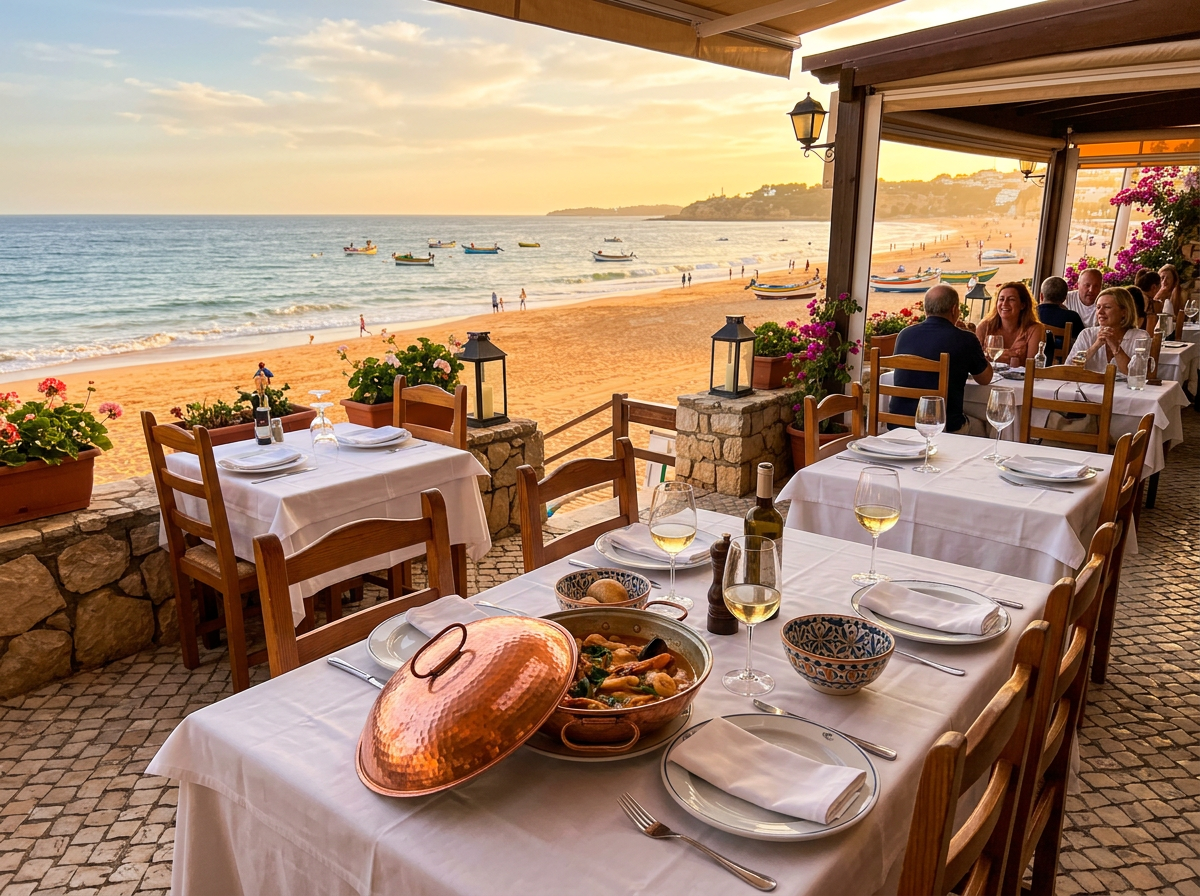
One of the nicest things about staying in Armação de Pêra is how easy it is to build a day around food without making food feel like work. You can keep things very simple: beach in the morning, seafood at lunch, a rest in the afternoon, then a walk along the promenade as the light softens. That rhythm suits cataplana better than any tightly packed itinerary ever could.
A perfect Armação de Pêra day
Start with an early swim near Praia dos Pescadores, when the sand is still cool enough underfoot and the town feels almost sleepy. After a lazy morning, find a relaxed restaurant by the seafront and order your cataplana for lunch. Afterwards, do what the Algarve does best: very little. A coffee, a shaded stroll, maybe another dip in the sea. It is blissfully enough.
If you are staying nearby, the streets of town make this sort of day wonderfully easy. The seafront around Avenida do Rio is ideal for that classic beach-to-table flow, especially if you love being within moments of the sand. This is one reason guests often find themselves returning to the same stretch more than once during a holiday. It simplifies everything in the best way.
Pair cataplana with a coastal wander
If you prefer to make the meal the reward at the end of an outing, there are plenty of lovely nearby options. Spend the morning around Senhora da Rocha, where the tiny chapel on the headland gives you one of those views that make people fall silent for a minute. Then head back towards town for a long seafood lunch. The combination of dramatic coastline and fragrant broth is pure Algarve.
Another favourite route is a boat or walking day that takes in Benagil, Carvoeiro and the striking rock formations of Algar Seco. These places have become famous for good reason, but the trick is not to cram too much into the day. Leave enough space at the end for a proper meal. Cataplana tastes even better when it follows a morning of caves, cliffs and salty air.
If you are up for a different kind of landscape, the Ria de Alvor offers a softer, lagoon-like beauty with birdlife, boardwalks and a quieter pace. It is a wonderful contrast to the dramatic cliff scenery further west. Spend the day outdoors, then return hungry and sun-flushed for a seafood supper. Suddenly the shellfish in your pan feels connected to the whole wider life of the Algarve coast.
For a longer drive, there is always the windblown grandeur of Cabo de São Vicente. That far-southwestern edge of Portugal has a completely different energy: bigger skies, rougher seas, and a sense that Europe is tapering into wildness. It makes for an unforgettable day trip. But if you do it, I would still suggest ending your day back closer to base with cataplana rather than trying to rush a meal on the road.
Do not forget the inland Algarve
Although cataplana belongs to the coast, the broader spirit of Algarve eating includes the inland towns too. A day in Silves, for example, adds another layer to your holiday. Walk up to the beautiful red-stone Castelo de Silves, admire the old streets and azulejos, take your time over lunch or a late coffee, and then return to the coast for seafood in the evening. Sea and history make a very good combination.
Families staying near Armação de Pêra often like combining beach days with seasonal attractions such as the FIESA sand sculpture festival in nearby Pêra. It is one of those outings that works for all ages, especially when children need a break from endless swimming. On a day like that, cataplana makes a brilliant shared dinner, with everyone a little tired, a little sun-kissed and very ready to eat.
That is one of the things I love most about this dish. It slips neatly into almost any kind of Algarve day. You can follow it with a promenade walk, pair it with a castle visit, build it around a beach morning, or make it the finale to a coastal adventure. It is celebratory without being formal, and special without requiring a special occasion.
Host tip: If you know cataplana is on the plan, keep lunch light on the way, bring your appetite, and leave at least two unhurried hours free around the meal.
The only real mistake is trying to squeeze it into the edges of the day as if it were an afterthought. In the Algarve, the best meals are often part of the day’s shape rather than an interruption to it. Make space for cataplana, and it usually rewards you.
How to make it part of your own Algarve holiday
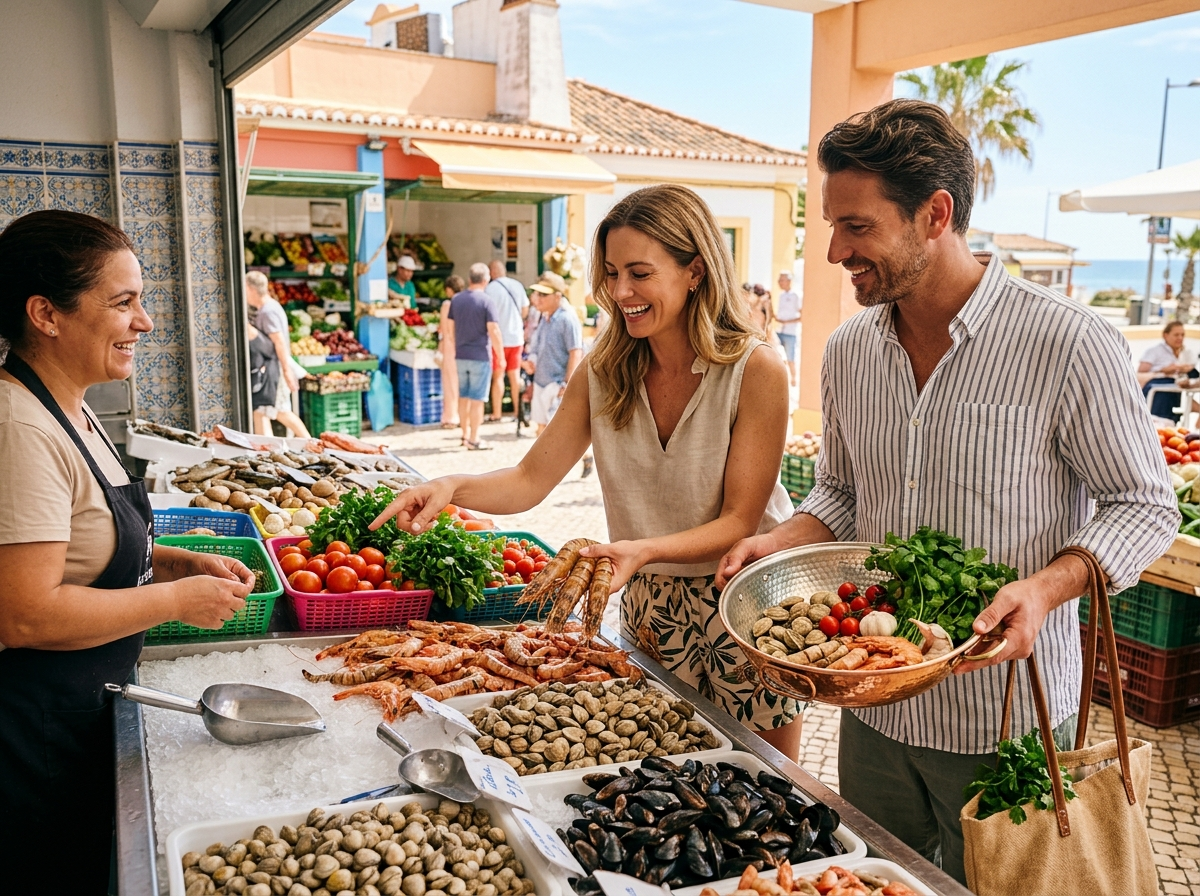
By the time you have eaten your first really good cataplana de mariscos, you may find yourself planning the next one before the holiday is over. That is completely normal. The dish has a way of attaching itself to memories: the glare of midday on the water, the smell of sunscreen and sea salt, the last piece of bread dragged through the sauce, the way everyone at the table goes a little quieter when the pan opens.
My advice is to let that become part of your trip rather than treating it as a one-off box to tick. Have one cataplana by the beach in Armação de Pêra. Try another version on a different day after visiting Carvoeiro or Benagil. Compare the broths, the balance of fish and shellfish, the amount of coriander, the style of the sauce. Suddenly you are not just eating a regional speciality. You are getting to know a region through repetition and detail.
You can even turn it into a little personal ritual. Morning swim, seafood lunch, late afternoon rest, evening walk. Or market visit, inland sightseeing, then back to the coast for cataplana at sunset. Holidays are often happiest when they have a rhythm, and this dish slots beautifully into the rhythm of southern Portugal.
Of course, the place you stay matters too. Having a comfortable base close to the sea changes everything. It means you can go out for cataplana without a long drive home afterwards. It means beach mornings are easy, sunset strolls are easy, and deciding at the last minute to book a seafood dinner feels effortless rather than complicated.
A comfortable base for beach days and long lunches
If you are planning your own cataplana-centred escape, Caravelis holiday homes make a lovely base in Armação de Pêra. Penthouse 1 on Rua das Caravelas is ideal if you love outdoor living, with a sea-view terrace, jacuzzi, BBQ, outdoor dining space and a private secure garage. It is an easy place to come back to after a long lunch by the sea and simply keep the holiday mood going.
If your idea of bliss is being as close to the beach as possible, Beachfront Apartment 4F on Avenida do Rio is a wonderful fit, with a sea-view balcony and the sand only about a minute away. And if you want a bright, easy base with lifts and parking, Beach Apartment 7G on Av. General Humberto Delgado offers a sunny balcony, private gated rear parking and the beach just a little over 200 metres away.
All three apartments make it easy to enjoy the Algarve in the way cataplana asks you to enjoy it: slowly, comfortably and close to the sea. You can swim in the morning, work remotely if you need to, wander out for lunch, return for a rest, then head back out for a sunset stroll. It is exactly the kind of holiday rhythm that suits Armação de Pêra.
So if you are dreaming of that first spoonful of shellfish broth, the scent of garlic and coriander, and a table near the beach where lunch stretches deliciously into afternoon, come and make it happen. Book your stay with Caravelis holiday homes in Armação de Pêra, and enjoy cataplana where it truly belongs: by the Algarve sea.
Planning your Algarve holiday?
Browse our properties in Armação de Pêra and book direct for the best rates.