A Walking Visit to Capela de Santo António in Armação de Pêra
Luiz and the Caravelis Team
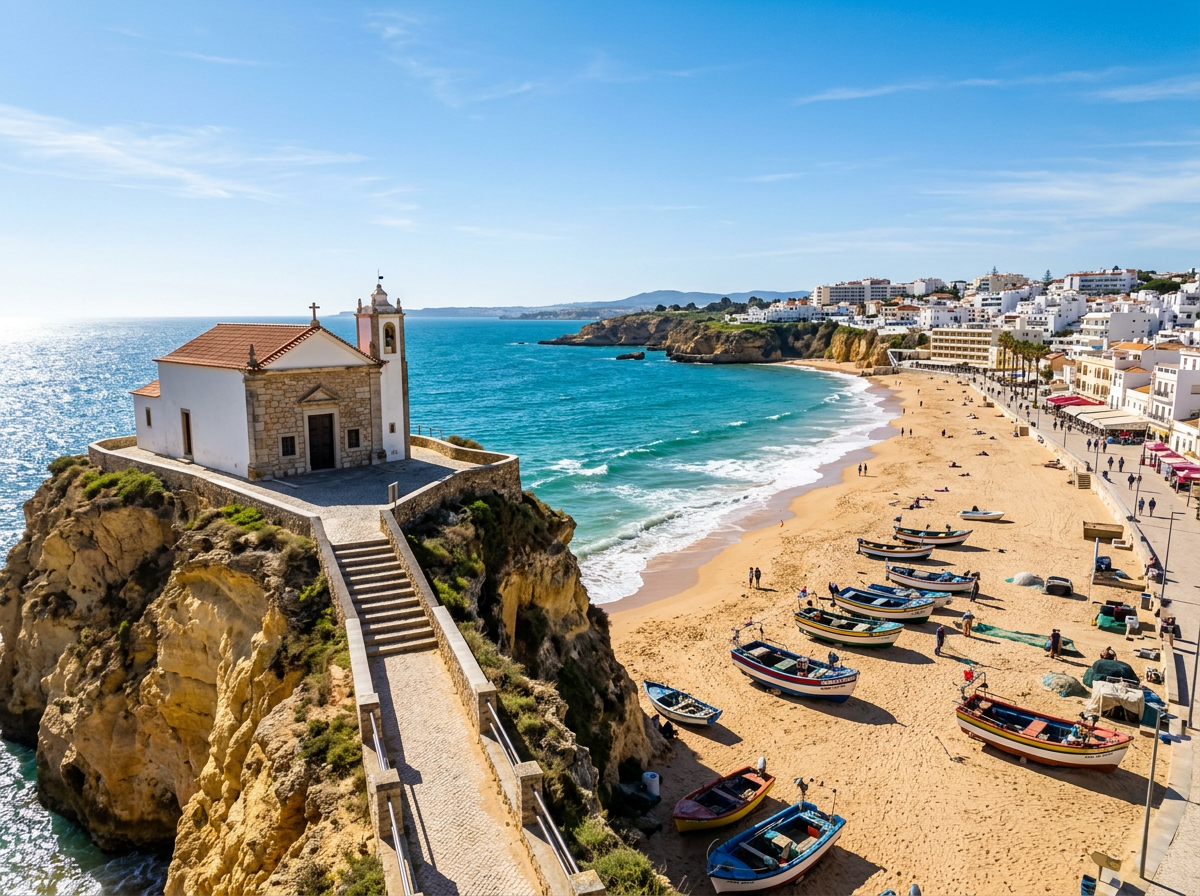
A Small Chapel with a Big Place in the Town
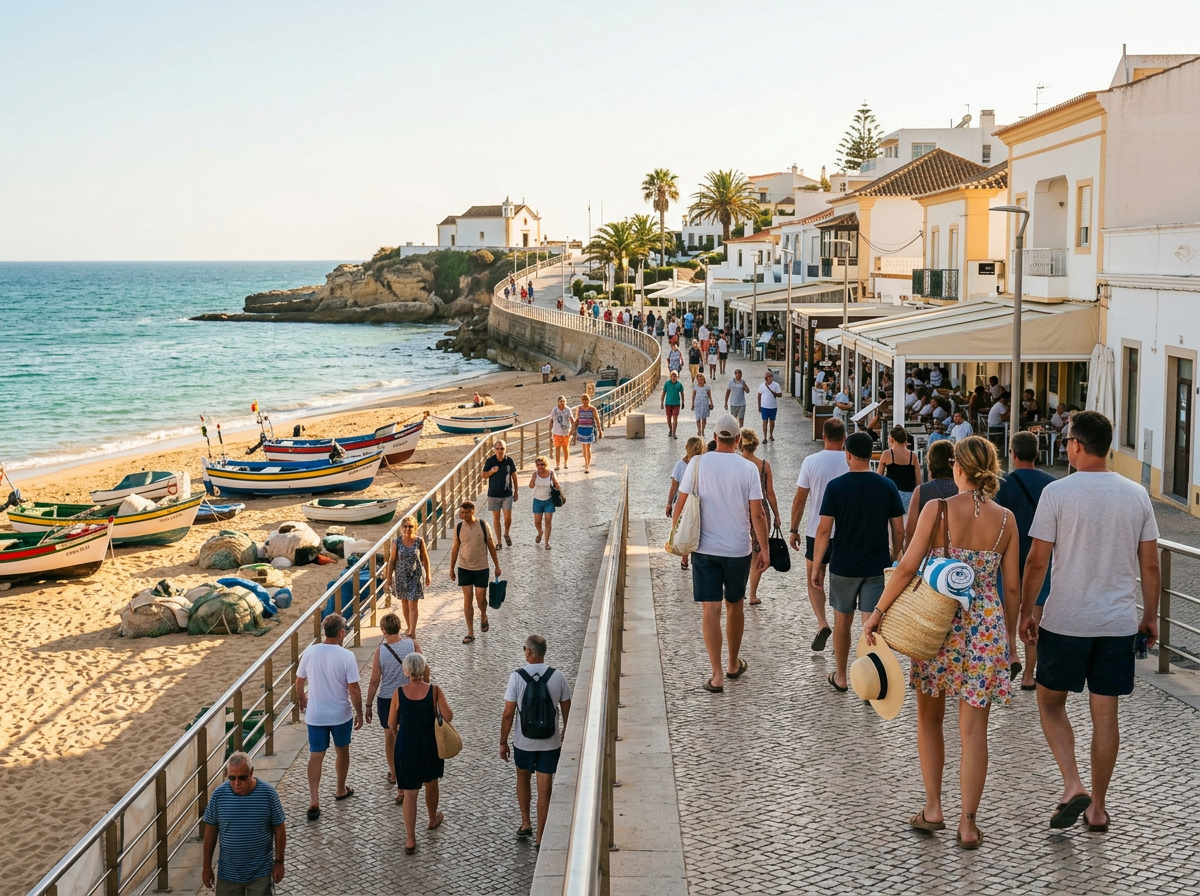
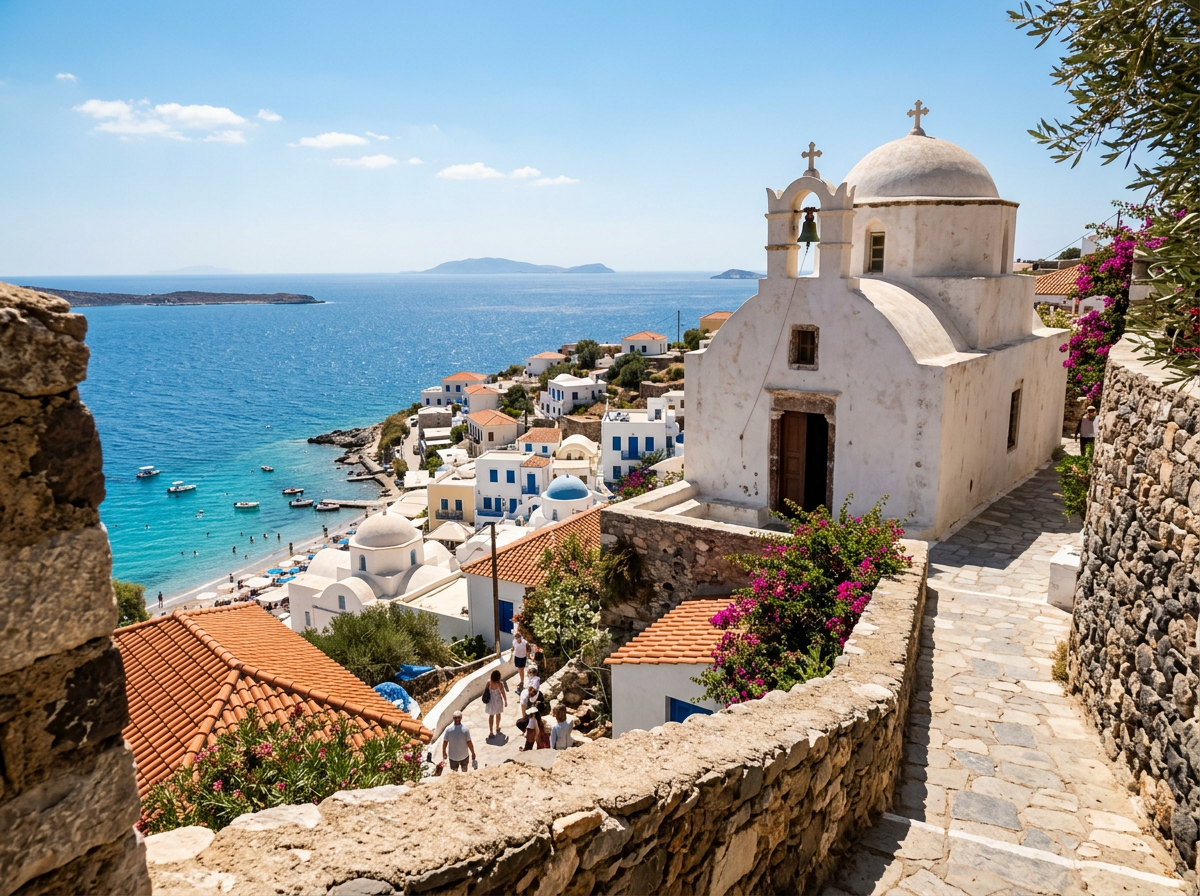
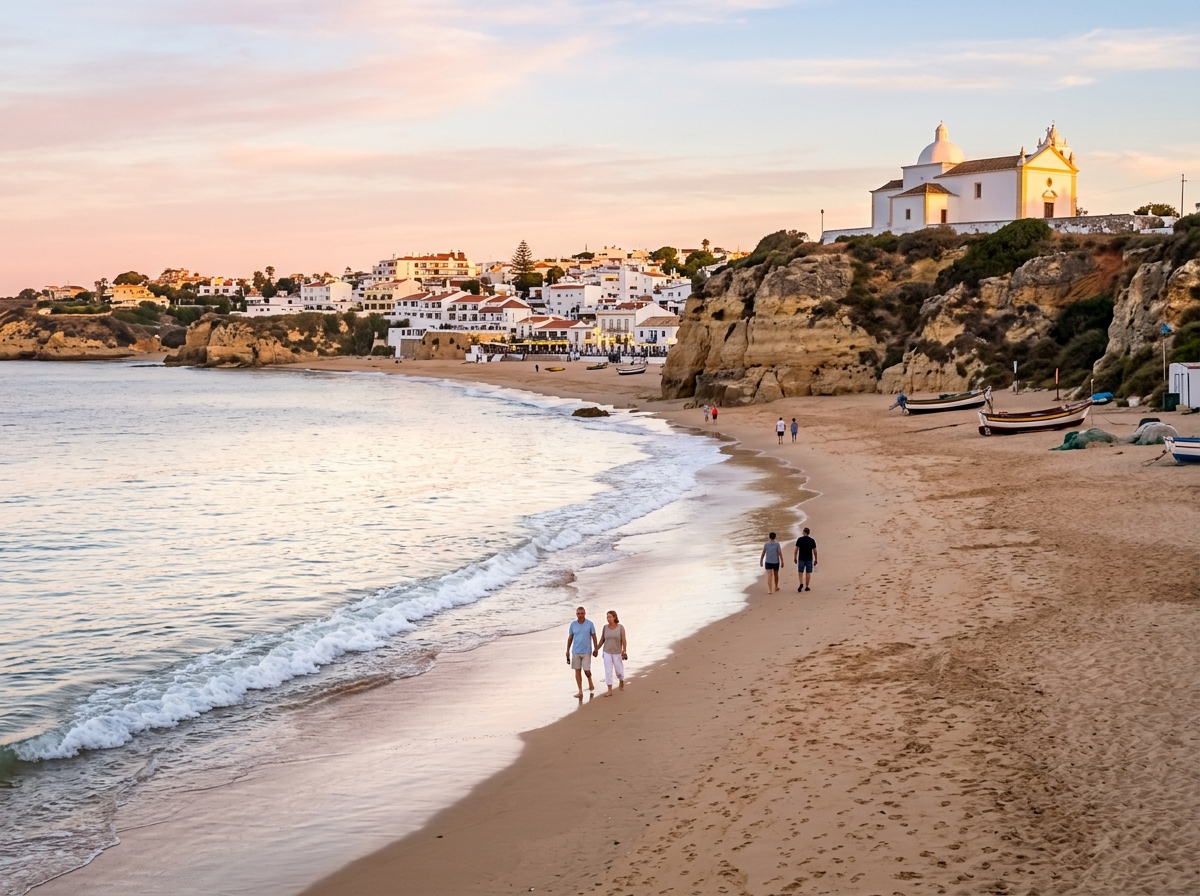
Whenever guests ask me for a walk that truly captures the spirit of Armação de Pêra, I often send them to Capela de Santo António. It is not the biggest sight in town, nor the most theatrical, but that is exactly why it stays with you. This little chapel, poised above Praia dos Pescadores, seems to hold the sea, the town and centuries of local memory in one quiet place.
Part of the pleasure is how naturally the visit fits into an ordinary day. You do not need a car, a full itinerary or even very much time. You simply walk towards the shoreline, let the beach pull you westward, and before long you arrive at a place where the story of the Algarve feels close enough to touch.
The chapel is known as a fishermen's chapel, and its setting tells you a great deal before you have even read a single line about it. It stands on the old fortress walls overlooking the sea, so faith and defence sit side by side. In one glance, you understand that this coast was never only about beauty; it was also about work, risk, weather, return and the hope of protection.
That sense of protection matters here. Local tradition remembers the chapel as a place that once watched over sailors leaving for the cod fisheries, those long and uncertain voyages that were bound up with the Portuguese love of bacalhau. For families left ashore, and for men heading out onto dangerous waters, a chapel like this was not decorative. It was part of the emotional architecture of the town.
Today, the walk there is gentle, sunlit and easy to enjoy, but the meaning of the place has not disappeared. You still feel it in the wind coming off the water, in the fisherman character of Praia dos Pescadores, and in the chapel's modest scale. It reminds you that some of the Algarve's most moving places are not the famous postcard icons, but the ones that remain woven into daily life.
I love taking this walk in the morning, when the beach is beginning to wake and the light is still soft enough to make the sea look almost silver. I also love it late in the day, when the sun lowers and the chapel seems even more rooted in the horizon. At either hour, the route gives you a small but meaningful lesson in how Armação de Pêra grew between the demands of the coast and the consolations of community.
If you are visiting for the first time, it helps to know what makes this stop so special. The chapel is not about ticking off an attraction. It is about seeing how history, devotion and landscape meet in a way that feels deeply Portuguese and very local to this stretch of the Algarve.
- The setting is exceptional, with the chapel perched above the beach and sea.
- The history links the site to the old fortifications and the fishing life of the town.
- The atmosphere is calm and intimate rather than grand or formal.
- The walk is easy to fit into a morning swim, a coffee stop or an evening promenade.
- The view helps you understand why this coast mattered so much to those who lived from it.
Local tip: If you can, visit once in the morning and once near sunset. The chapel does not change, but the light, the tide and the mood of the beach do, and that is part of its charm.
What I appreciate most is that the visit feels earned in the nicest possible way. You reach it on foot, through the lived-in fabric of the town, rather than arriving in a rush. By the time you stand beside it, you have already noticed the promenade, the sea air, the fishermen's beach and the rhythm of local life, so the chapel arrives not as an isolated monument but as the natural heart of a place.
Why this walk works so well
There are some sights you admire and move on from, and others that quietly shape the way you remember a destination. Capela de Santo António belongs to the second kind. Even travellers who are not especially interested in churches or local history tend to respond to it, because the experience is really about atmosphere, position and perspective.
Children often notice the sea first. Photographers notice the line of the coast. History lovers notice the old walls and the idea of a chapel built into a former defensive edge. Food lovers quickly connect the story of the cod fisheries and the fishermen's quarter to the dishes that appear later on their table.
That is what makes this such a satisfying stop in the Algarve. It is small, but it opens many doors of understanding. One walk can lead you into the history of Armação de Pêra, the culture of Portuguese fishing communities, the emotional place of devotion by the sea, and the simple pleasure of seeing the town from one of its most meaningful viewpoints.
If you enjoy places with polish and spectacle, the chapel may surprise you by how modest it feels. Yet modesty is part of its beauty. The Algarve has dramatic cliffs, famous caves and sweeping beaches, but this chapel offers something softer and, in some ways, more lasting: a human scale.
That human scale is one reason I recommend the walk to guests staying for a week as well as those here for only a few nights. It does not demand a whole day, but it leaves an impression that often colours the rest of the stay. After seeing the chapel, people tend to look at the beach, the fishing boats and even a plate of grilled fish with slightly different eyes.
And that, really, is the best sort of local recommendation. Not simply a place to see, but a place that helps the rest of the destination make more sense.
The Walk to Praia dos Pescadores
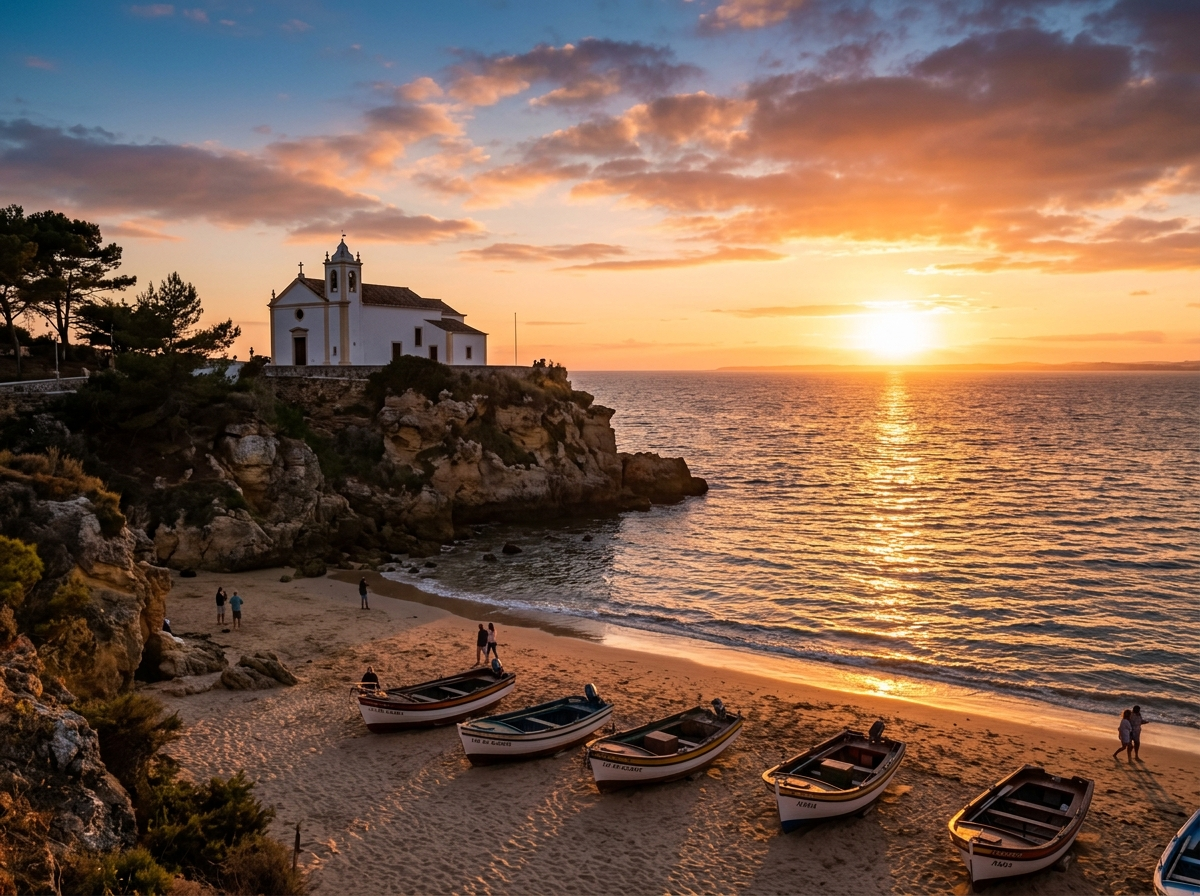
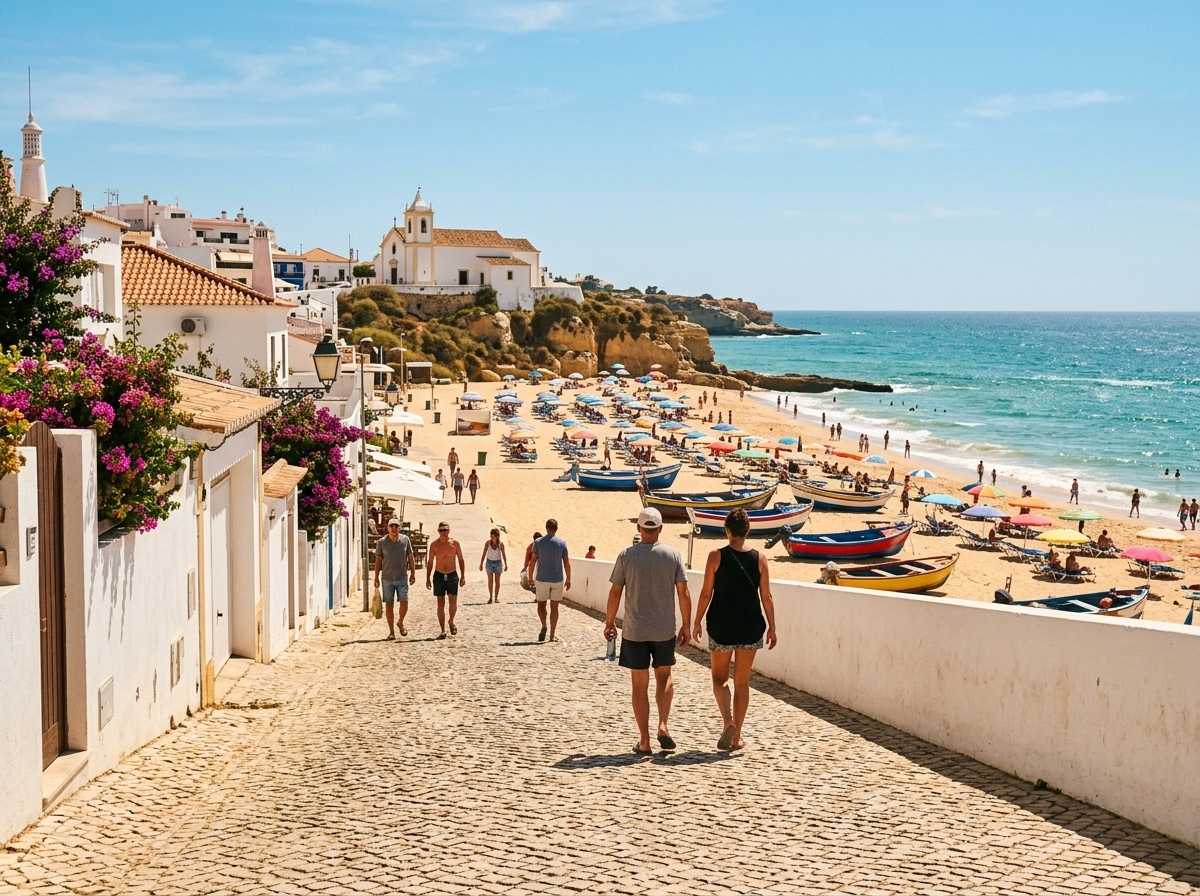
One of the loveliest things about visiting Capela de Santo António is that the walk there is part of the experience. In Armação de Pêra, the shore is never far away, and once you reach the seafront the route becomes wonderfully intuitive. You simply let the line of the coast guide you.
If you start near the centre of town, make your way towards Praia dos Pescadores and the promenade. The beach opens out in a broad sandy sweep, and the sea sits beside you like a constant companion. Even on a busier day, there is something soothing about walking with the Atlantic on one side and the everyday town on the other.
The promenade has that easy Algarve mix of holiday mood and local routine. You may pass cafés setting out chairs, families heading to the beach, older residents on their morning stroll, or fishermen sorting through the practical details of their day. It is not staged, and that is what makes it appealing.
As you continue, keep an eye on the changing feel of the seafront. Modern holiday buildings give way, little by little, to a more historic mood. The western end near the chapel feels older in spirit, and the transition helps you understand how this resort town still carries the outline of its fishing roots.
Walking from different parts of town
If you are staying close to Avenida do Rio, the route is especially easy. From Beachfront Apartment 4F, which sits wonderfully near the sand, you can be on the seafront in moments and heading towards the chapel almost at once. It is the sort of outing that feels more like a drift than a plan.
From Penthouse 1 on Rua das Caravelas, the walk is just as pleasant. Head down towards the beachfront, settle into the rhythm of the promenade, and then follow the curve of the coast towards the older quarter. It is a lovely way to begin the day before breakfast on your terrace later, or to wind down before dinner.
If you are based at Beach Apartment 7G on Av. General Humberto Delgado, you are also within an easy walk of the beach. Once you reach the shoreline, simply continue along the seafront. The route is flat for most of the way, easy to follow and full of those little observations that make a holiday walk memorable.
For many visitors, one of the pleasures of staying in Armação de Pêra is realising how much can be enjoyed on foot. This chapel visit is a perfect example. Rather than treating the car as essential, you experience the town at the pace that suits it best.
- Make your way to the beachfront and join the promenade beside Praia dos Pescadores.
- Walk westward, keeping the sea in view and allowing time for little pauses along the way.
- Notice how the atmosphere shifts as you near the older part of town.
- Look ahead for the chapel's elevated position above the beach and old walls.
- Climb the final stretch slowly and enjoy the change in viewpoint as the sea opens out below you.
I always suggest allowing more time than you think you need. Not because the walk is difficult, but because the route invites dawdling. You may want to stop for photographs, watch the fishermen's area from a distance, or simply stand still for a moment and listen to the sea.
There are also small details along the way that reward a slower pace. In side streets behind the beach, you may notice older façades, balconies, laundry lines and touches of azulejos that remind you this is still a lived-in town rather than a stage set for visitors. That everyday texture makes the chapel feel all the more rooted.
Local tip: The best walks in the Algarve are not always the longest ones. Sometimes a short seafront stroll, done slowly, gives you more of a place than a hurried day trip ever could.
On warm days, the route is brightest and most comfortable earlier in the morning or later in the afternoon. In the height of summer, the sun along the promenade can feel strong around midday, especially if there is little breeze. A hat, water and comfortable shoes make the whole outing more relaxed.
If you are walking with children, there is plenty to keep them interested. Sand, sea, gulls, little boats and the changing view provide constant distractions. The trick is not to over-explain. Let the place do some of the work, and save the history for when you are standing beside the chapel itself.
For couples, it is one of those walks that naturally encourages conversation. There is enough to see, but not so much that it becomes busy or demanding. For solo travellers, it offers a lovely feeling of being part of the town without needing to do anything more complicated than follow the water.
What the walk reveals about Armação de Pêra
By the time you reach the chapel, you will already have read a little of Armação de Pêra without realising it. You will have seen the holiday face of the town, the beach life, the café culture and the modern apartment buildings that make it so easy for visitors to stay close to the sea. You will also have sensed the older story beneath it.
The very name of the beach, Praia dos Pescadores, keeps that older story visible. This is not just any stretch of sand. It is a beach tied to labour, livelihood and generations of coastal skill. The chapel above it feels like the spiritual counterpart to that working identity.
I find that important, because so many seaside destinations can seem interchangeable if you only skim the surface. Here, the walk gives shape to the town's individuality. You are not simply looking at a pretty beach in the Algarve; you are entering a place where fishing, faith and the Atlantic have long been entangled.
Even the breeze seems to change as you near the chapel. Whether or not that is imagination, I always notice it. The sea appears wider, the beach more purposeful, and the town behind you slightly quieter, as if the geography itself is preparing you to pay attention.
And then, quite naturally, you arrive.
History in Stone, Salt and Prayer
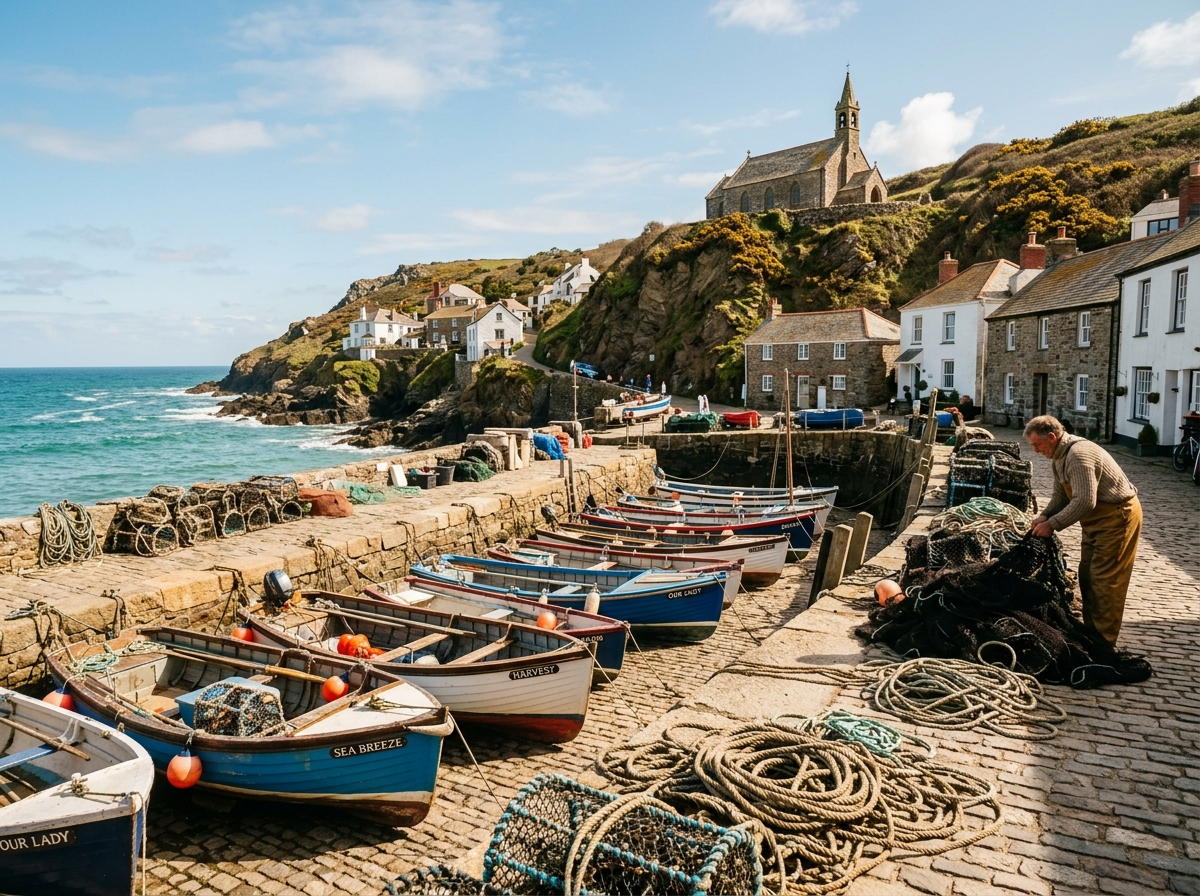
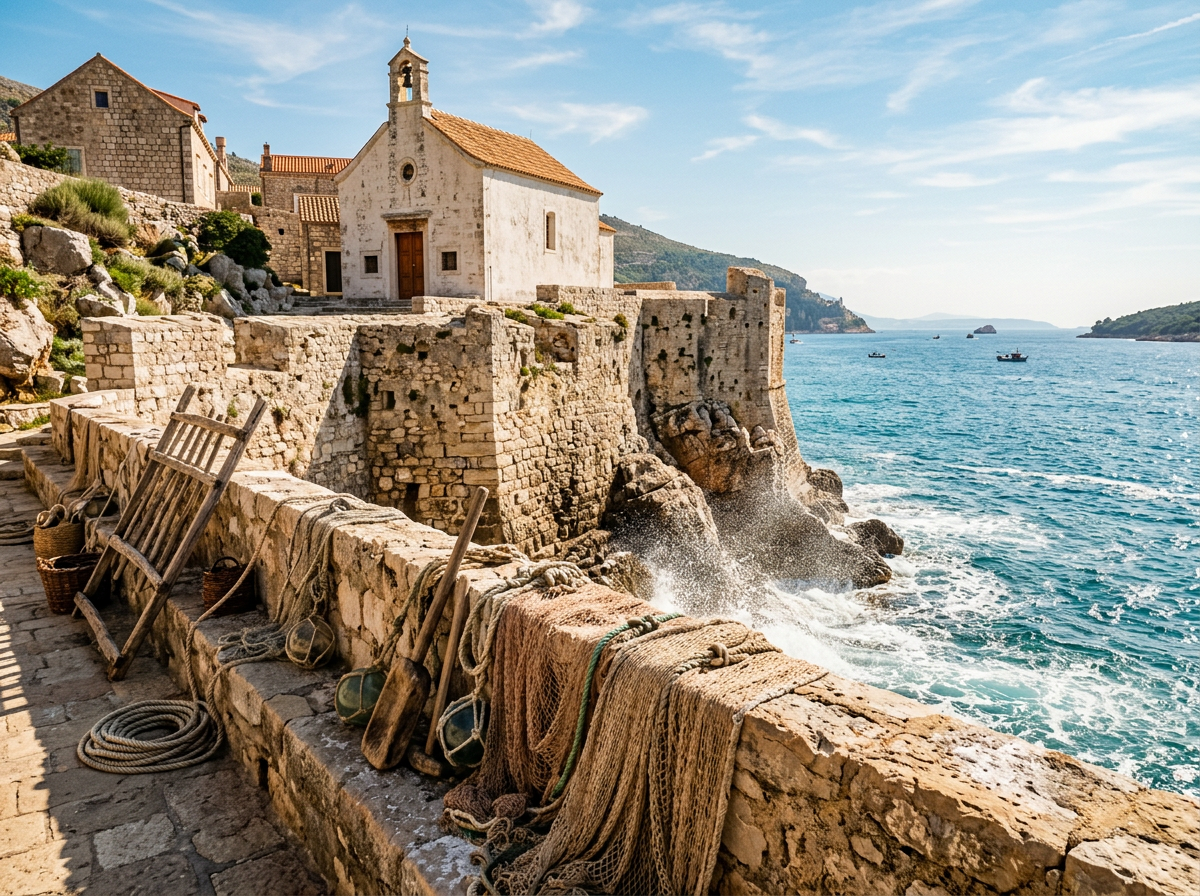
Once you are standing by Capela de Santo António, it is worth pausing before you take any photographs or check your phone. This is one of those places where a little context deepens the experience enormously. The chapel is small, but the story around it reaches out into centuries of coastal life.
It was built on the old fortress walls overlooking the sea. That detail matters because it tells you the site was significant even before the chapel itself became the focus. Along this coast, high points and exposed edges were never neutral ground. They were places from which people watched the horizon, guarded the shoreline and measured the changing moods of the sea.
There is something deeply moving about the way defence and devotion overlap here. A fortress wall suggests vigilance, danger and the need to protect. A chapel suggests prayer, hope and the admission that some things remain beyond human control. On a windy day, with the Atlantic stretching out in front of you, that combination feels entirely understandable.
The chapel in the fort is the Capela de Santo António, also called Nossa Senhora dos Aflitos.
Here in Armação de Pêra, the chapel was associated with those heading out to the cod fisheries. It is difficult to hear that phrase without feeling the weight of it. These were not casual fishing trips but long, uncertain journeys connected to one of the most important ingredients in Portuguese food culture: bacalhau.
To many visitors, cod on a menu is simply a national classic. To older coastal communities, it also carried memories of hard work, long absences and the emotional strain of leaving home by sea. When you think of men departing under the gaze of this little chapel, the distance between daily life and wider history collapses in a powerful way.
The emotional life of a fishing town
What I find most affecting is not only the outward history, but the inward one. Imagine the town in earlier centuries: families gathered near the shore, women and children watching departures, older relatives crossing themselves, the horizon both livelihood and threat. A chapel like this would have been woven into those moments of fear, habit, gratitude and waiting.
In such communities, faith was not abstract. It sat beside nets, weather, boats and bills. It accompanied the practical realities of a fishing life in which good catches mattered, storms could arrive suddenly and news from those at sea was never guaranteed.
This is one reason the chapel feels so emotionally legible even now. You do not need detailed archives to understand why it mattered. The setting explains much of it for you. One glance at the exposed coast below, and you can sense why sailors wanted a sacred place watching over them before they vanished beyond the line of the sea.
I sometimes think these small coastal chapels hold a kind of concentrated memory. Grand churches can impress, but a modest chapel on a working shoreline often speaks more directly to ordinary life. It tells you where hope lived when circumstances were precarious and routines were shaped by forces far larger than the individual.
Local insight: If you have eaten bacalhau in Portugal and loved it, this is a good place to remember the deeper human story behind that tradition. The chapel helps turn a familiar dish into a piece of lived history.
The old fortress walls add another layer. Coastal settlements in the Algarve were always vulnerable to more than rough weather. Watchfulness formed part of life. So the chapel's placement on those walls feels symbolically perfect: one structure guarding bodies, the other guarding spirits, both facing the same sea.
There is also a beautifully Portuguese quality to this joining of practicality and piety. The same culture that gave us working harbours and robust fishing traditions also filled the landscape with shrines, chapels and festivals of devotion. In the Algarve, these things were never separate worlds.
That helps explain why a place like this still matters to the town's identity. Even if many visitors now arrive for beach holidays rather than fishing, the memory of maritime life remains. The chapel quietly preserves that inheritance without needing fanfare.
The chapel in the wider culture of the Algarve
It would be easy to treat Capela de Santo António as an isolated curiosity, but it makes more sense when you place it inside the wider culture of the region. The Algarve may be famous for sunshine, cliffs and summer ease, yet much of its older character comes from the sea and from communities that learned to live closely with its generosity and its danger.
That character still appears in local food. Try a plate of sardinhas assadas or a fragrant cataplana, and you taste an Algarve shaped by fishing knowledge, seasonal rhythms and the confidence to let good ingredients speak for themselves. The chapel's history turns these dishes into more than restaurant choices; they become part of the same story.
It appears in music and image as well. Even if you hear fado elsewhere in Portugal rather than here on the beach, its currents of longing, distance and return make emotional sense after a visit to this chapel. In nearby streets, decorative azulejos and simple façades carry the visual grammar of a country where faith, home and seafaring memory have long coexisted.
And it appears in the rhythm of local celebrations. Coastal towns in Portugal have always marked their calendars with religious feasts and community gatherings, sometimes joyful, sometimes solemn, often both. The chapel belongs to that world of shared memory, where ritual helped communities face uncertainty together.
When travellers understand that, the Algarve becomes richer. It is no longer only a region of beaches, but also of stories layered beneath the sand. A small chapel on old walls can open that understanding more effectively than a museum label ever could.
- Faith gave meaning and comfort to departures and returns.
- Fishing shaped livelihoods, diets and family life.
- Fortification reminds us that the coast required vigilance as well as courage.
- Memory links today's holiday town to generations who lived from the sea.
- Place explains everything, because the chapel's position above the water still tells the story at a glance.
I always encourage visitors to let themselves imagine the site in layers. See the chapel as it is now, but also as a lookout over a working shore, a place of prayer before departure, a point of gratitude after safe return, and a witness to all the ordinary lives history books rarely capture. Suddenly, the visit feels far bigger than the building itself.
That is one of the quiet miracles of travel in southern Portugal. A simple walk can become a lesson in resilience, appetite, devotion and landscape, all without losing the pleasure of the sea breeze on your face.
What to Notice When You Arrive
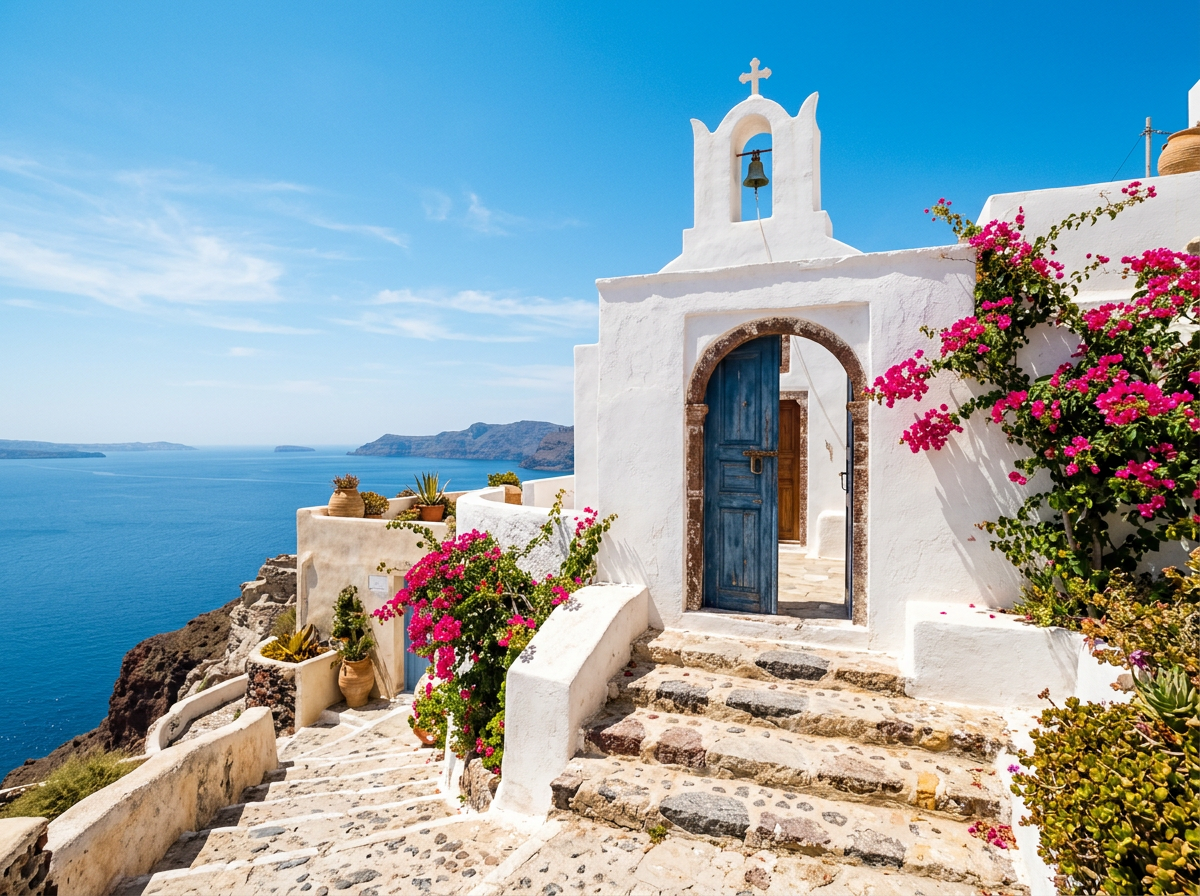
When you finally stand beside Capela de Santo António, try not to rush straight into taking photographs. Give the place a minute. Some sites are most eloquent in the first few seconds of stillness, and this is one of them.
The first thing many people notice is scale. The chapel does not loom. Its power comes from proportion and position rather than size. Because it is set above Praia dos Pescadores and tied to the old fortress walls, it feels rooted rather than dominant, as though it has grown out of the edge of the town.
Look carefully at the relationship between stone, sand and sea. Beneath the chapel's devotional identity there is still the trace of defence, the memory of watchfulness written into the site itself. Even if you know very little architecture, you can feel that this was a place chosen for more than convenience.
Then turn towards the water. The view opens in a way that helps you understand why this chapel could become a guardian point in local imagination. The sea is not a backdrop here. It is the entire reason for the chapel's emotional force.
The view over Praia dos Pescadores
From this position, Praia dos Pescadores looks both beautiful and practical. You see a beach that welcomes holidaymakers today, but you can also read it as a working shore. The long sweep of sand, the open horizon and the exposure to weather all speak to lives shaped by the Atlantic.
On clear days, the light can be extraordinary. Morning gives you softness and freshness. Late afternoon brings warmth and longer shadows. Near sunset, the chapel seems to gather the gold tones of the coast and turn them into something almost reflective.
Do not be surprised if you spend longer here than planned. The viewpoint encourages lingering. People often arrive thinking they will stay five minutes and end up remaining for half an hour, simply because the combination of sea air and history slows them down.
I especially like looking back from the chapel towards the town as well as out to sea. That reverse view is part of the story. It shows how closely Armação de Pêra is tied to the shoreline, and how naturally the chapel links the settlement behind you with the open water ahead.
Photography tip: If you want photographs that feel atmospheric rather than flat, come early or late. The midday sun can be dazzling, but lower light gives shape to the walls, the beach and the texture of the old stone beneath the chapel.
If you find the chapel open
Depending on the day and local circumstances, the chapel may or may not be open. That is worth keeping in mind so you do not arrive with the wrong expectations. The exterior, setting and view are already reason enough to make the visit, and any chance to step inside should be treated as a welcome extra rather than a guarantee.
If the door is open, enter quietly and with the same respect you would offer any active place of devotion. Small chapels are often most moving precisely because they are intimate. Even when simple, they hold a palpable sense of prayer and continuity.
Rather than expecting grandeur, look for atmosphere. In places like this, the power often lies in modest details: the hush, the filtered light, the sense that many generations have stood in the same small space carrying very human hopes. A chapel tied to sailors and fishermen rarely needs ornament to be eloquent.
- Lower your voice and pause before moving around.
- Avoid blocking any area if local people are praying.
- Be discreet with photographs and do not assume they are always appropriate.
- Notice the mood of the place rather than only the visual details.
- Leave as gently as you entered, giving the chapel the dignity of unhurried attention.
If the chapel is closed, do not feel disappointed. In some ways, the most powerful part of the visit is outside anyway. The setting above the sea, the old walls and the fishermen's beach below tell the core of the story in full view.
I often tell guests that this is not a place to conquer. It is a place to absorb. Let your eyes travel from stone to surf, from chapel to horizon, and then back to the town. That simple movement of attention does a surprising amount of work.
How to let the place sink in
One of my favourite ways to experience the chapel is simply to stay put for a while. Find a comfortable place nearby, stand or sit quietly, and let the soundtrack settle around you. Gulls, breeze, surf and distant voices from the beach combine into something that feels both lively and contemplative.
If you come alone, this is a lovely place for a few private thoughts. If you come with someone else, it often creates the sort of shared silence that good travel occasionally gives us. You do not need to fill the moment. The chapel and its setting do that for you.
Watch the changing activity below. Holidaymakers move along the sand, children run, beach umbrellas shift in the breeze, and perhaps a fishing boat or local worker reminds you that this coast still has uses beyond leisure. The chapel seems to hold all those layers without strain.
That is what I admire most here. The place does not ask you to choose between beauty and history, or between a holiday mood and serious memory. It allows them to coexist, which feels very true to the Algarve itself.
Before you leave, take one last slow look at the horizon. Imagine, just for a moment, the generations who did the same before a departure, after a storm, or in the hope of seeing someone return. The visit deepens enormously when you carry that image with you.
Making a Morning or Sunset of the Visit
A walk to Capela de Santo António is satisfying on its own, but it becomes even lovelier if you fold it into the shape of a wider morning or evening in Armação de Pêra. This is not a place that needs heavy planning. In fact, it rewards a lightly held itinerary.
My favourite version is an early start. Walk down while the day still feels fresh, spend time at the chapel, and then wander back along the beachfront for coffee and something sweet. There are few holiday rituals better than a seaside stroll followed by a proper Portuguese coffee and a warm pastel de nata.
The other excellent option is to go later in the day, when the heat softens and the beach begins to glow. The return walk after sunset can be particularly lovely, with the sea darkening, the promenade slowly filling and restaurants beginning to send out those irresistible dinner scents.
Best times for the walk
If you value peace, aim for early morning. The beach is calmer, the light is gentler and you are more likely to feel that reflective side of the chapel without distraction. It is also the best option in summer if you want to avoid the strongest sun.
Late afternoon and early evening are ideal for atmosphere. The town feels sociable without being frantic, and the colours over the water can be beautiful. This is the moment for travellers who enjoy photographs, slow conversation and the sense that the day is settling into itself.
In spring and autumn, almost any time can work, and these seasons are wonderful for walking. The air is often clearer, the pace a little gentler and the whole seafront more spacious. For many people, those shoulder months show the Algarve at its most comfortable.
Local tip: If your holiday style is slow and unforced, try this outing on your first full day. It gives you a strong feel for the town, and the rest of your stay tends to unfold more easily afterwards.
What to eat before or after
A chapel visit tied to a fishing town naturally leads to thoughts of food. After all, the story of sailors leaving for the cod fisheries is part of the bigger story of what ends up on Portuguese tables. Once you have made the walk, local dishes feel more connected to place.
For a light start, coffee and a pastel de nata are hard to beat. The contrast between the flaky sweetness of the pastry and the briny air from the beach is part of the pleasure. It feels simple, local and exactly right after a seafront walk.
If the visit leads into lunch, consider something from the sea. A plate of sardinhas assadas is beautifully direct, especially in warmer months, and a proper cataplana makes a satisfying, generous meal if you want to linger. Both dishes belong naturally to a day spent thinking about the maritime life of the Algarve.
Later in the evening, if you enjoy trying regional flavours, you might finish dinner with a small taste of medronho. It has a stronger personality than the chapel, certainly, but there is something appealing about ending a day of old coastal stories with a spirit that still tastes of local tradition.
- Morning plan: chapel walk, coffee, pastel de nata, beach time.
- Midday plan: chapel visit, leisurely lunch of cataplana, then a quiet afternoon by the sea.
- Evening plan: late walk to the chapel, sunset, dinner of grilled fish or sardinhas assadas, then a slow stroll back.
Other nearby ideas for the same day
The beauty of this outing is that it leaves room for more without exhausting you. After the chapel, you can continue enjoying Armação de Pêra at a relaxed pace, whether that means a swim, an hour reading on the beach, or a wander through nearby streets. The point is not to cram the day but to let one meaningful stop set the tone.
If you are in the mood for wider exploring on another day, the chapel can act as a lovely introduction to the region's many coastal contrasts. You may find yourself wanting to compare this intimate fishermen's chapel with the drama of Senhora da Rocha, the rocky beauty around Carvoeiro, the sculpted formations of Algar Seco or the famous sea cave scenery near Benagil. They are very different experiences, but the chapel sharpens your eye for how the sea shapes identity across the Algarve.
For inland history, a trip to Silves and Castelo de Silves offers a completely different chapter of the region's past. After the small devotional scale of the chapel, the red stone of the castle and the older inland power of Silves feel especially striking. It is a wonderful contrast between coast and interior.
If you are staying longer, you could also pair your chapel walk with broader Algarve outings later in the week: the wetlands around the Ria de Alvor, the far-west drama of Cabo de São Vicente, or a scenic wander along another section of coast. A small place can often be the doorway to a bigger understanding of a region.
Season matters too. If your stay coincides with the Festival da Sardinha or with a visit to the FIESA sand sculpture festival, the cultural picture becomes richer still. Those events are very different in mood, but both help show how food, craft and community continue to shape the Algarve beyond its beaches.
And if one evening on your trip includes live fado, do go. Even though the music may not belong specifically to this chapel, its themes of longing, distance and return resonate beautifully after a day spent thinking about sailors, departures and the life of the coast.
Gentle advice: Do not over-schedule the day of your chapel walk. Leave room for aimless moments, because this is one of those experiences that works best when it is allowed to breathe.
Practical tips for a smooth visit
Although the walk is easy, a little preparation makes it more enjoyable. The seafront can be bright and exposed, especially from late spring into early autumn, so shade and water matter. Comfortable shoes are useful too, not because the route is difficult but because old surfaces and sandy edges are easier to enjoy when you are not worrying about your footing.
- Bring water, especially in warm weather.
- Wear a hat and consider sun cream for midday visits.
- Use comfortable shoes rather than flimsy sandals if you plan to explore slowly.
- Assume the chapel may be closed and enjoy the exterior setting as the main experience.
- Be respectful if locals are visiting for prayer or quiet reflection.
Wind can also change the feel of the visit. A breezy day often makes the site feel dramatic in the best way, but it can also make the exposed viewpoint cooler than expected. A light layer in the evening is sometimes worth having, even after a hot afternoon.
For photographers, this is a lovely place to work with wide views as well as small details. Try framing the chapel with the beach below, but also look for the subtler relationship between stone, sea and sky. Not every good photograph needs a broad panorama.
For families, I would keep the storytelling simple. Tell children that this little chapel once watched over sailors and fishermen, then let them look out to sea and imagine it. That usually does more than a long explanation.
Most of all, resist the temptation to rush on immediately to the next thing. A chapel like this gives back more when you stay an extra ten minutes. In travel, that is often where the real value lies.
Why I Always Return
There are places in the Algarve I visit for drama, others for food, and others simply for the pleasure of a good walk. Capela de Santo António is one I return to because it gathers several of those pleasures into one small, deeply grounded experience. Every time I go, it reminds me what I love most about Armação de Pêra.
I love that it is beautiful without trying too hard. I love that it reveals history without feeling like a history lesson. I love that the route there is easy enough to fit into almost any holiday day, yet meaningful enough to become a memory that lasts.
Most of all, I love how clearly it explains the town. In one short walk and one modest chapel, you meet the beach, the fishermen's heritage, the old defensive edge of the settlement, the devotional life of the community and the endless presence of the sea. That is an impressive amount of truth packed into a very small place.
A walk best enjoyed when you are staying nearby
This is also exactly the kind of experience that becomes easier and more rewarding when you stay close enough to enjoy the town on foot. There is something special about leaving your apartment in the morning, wandering to the shore at your own pace, and finding a place like this without any rush. It turns sightseeing into something much more like everyday living by the sea.
If you are planning a stay in Armação de Pêra, Caravelis holiday homes are wonderfully well placed for these kinds of simple pleasures. Penthouse 1 on Rua das Caravelas gives you a stylish base near the beach, with its private sea-view terrace, jacuzzi and BBQ making it especially tempting after a day of walking. Beachfront Apartment 4F on Avenida do Rio is ideal if you want to be steps from the sand, with a sea-view balcony that keeps the coast in sight even when you are back indoors.
Beach Apartment 7G on Av. General Humberto Delgado is another easy choice for beach lovers, with its sunny seventh-floor setting and straightforward access to the shore. All three apartments make it easy to enjoy the best kind of Algarve holiday: one with slow mornings, sea air, short scenic walks and places like this chapel woven naturally into your day.
- Penthouse 1: sleeps 5, sea-view terrace, jacuzzi, BBQ, secure garage and easy beach access.
- Beachfront Apartment 4F: sleeps 4, one bedroom, sea-view balcony and around a minute from the sand.
- Beach Apartment 7G: sleeps 4, sunny balcony, private gated parking and a little over 200 metres from the beach.
So if the idea of wandering down to Praia dos Pescadores, discovering Capela de Santo António, and returning to your own comfortable apartment by the sea sounds like your kind of holiday, take a look at Caravelis. We would love to welcome you for a stay in Armação de Pêra, Algarve, and help you enjoy the town at the gentle, memorable pace it deserves.
Planning your Algarve holiday?
Browse our properties in Armação de Pêra and book direct for the best rates.