Forte de São João: The Hidden Story of Armação de Pêra
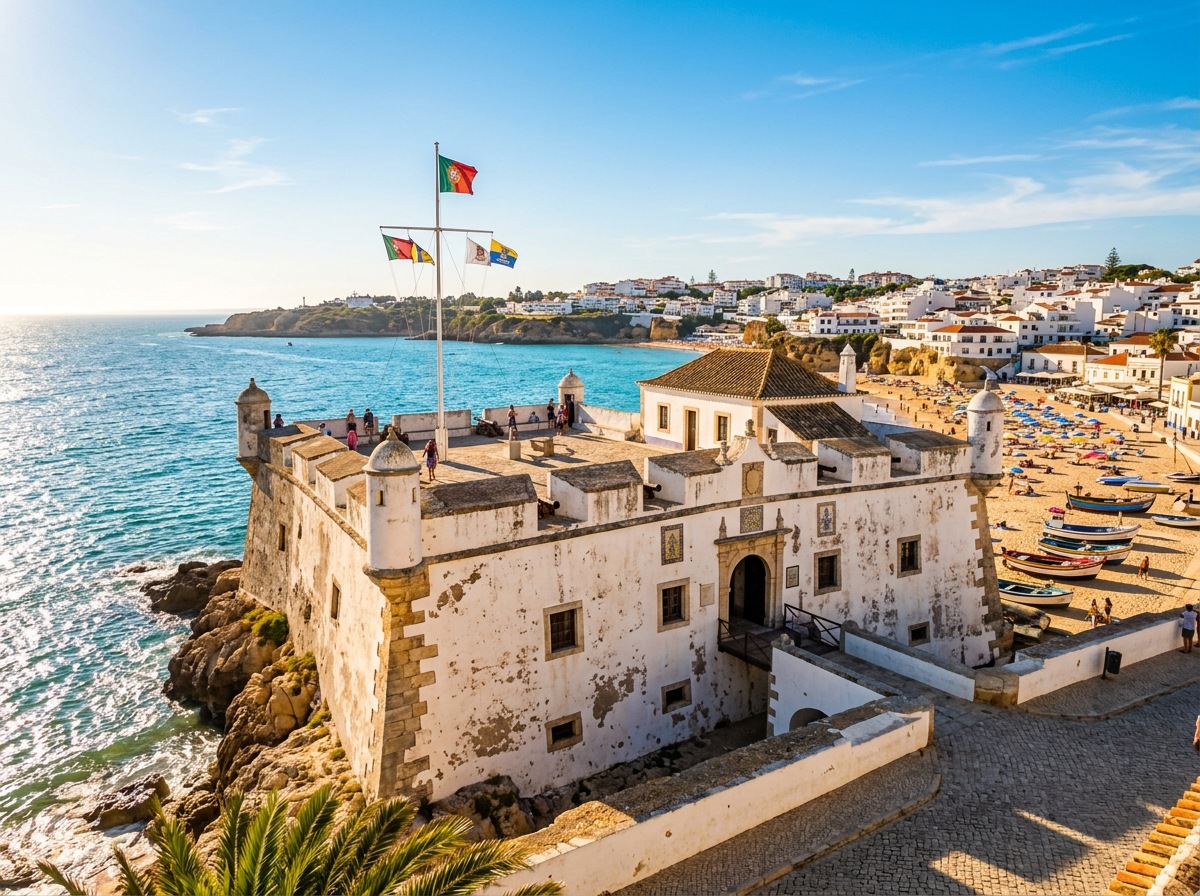
The fort most people walk past too quickly
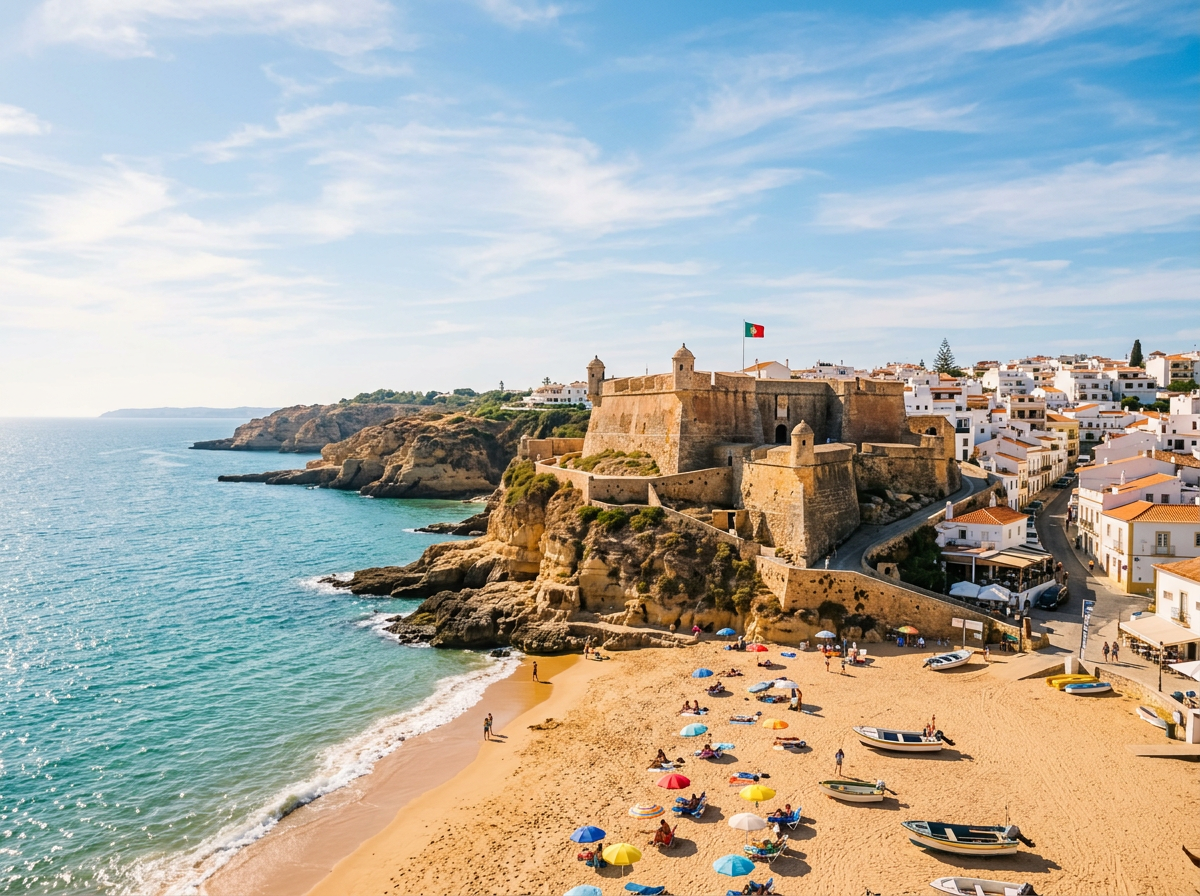
There are places in the Algarve that announce themselves loudly. Benagil has its cave, Carvoeiro has its dramatic cliffs, and Cabo de São Vicente has that unforgettable feeling of standing at the edge of Europe. Then there are places like Forte de São João, which ask for something quieter from you: a slower look, a little curiosity, and a willingness to imagine the lives that once depended on a wall above the sand.
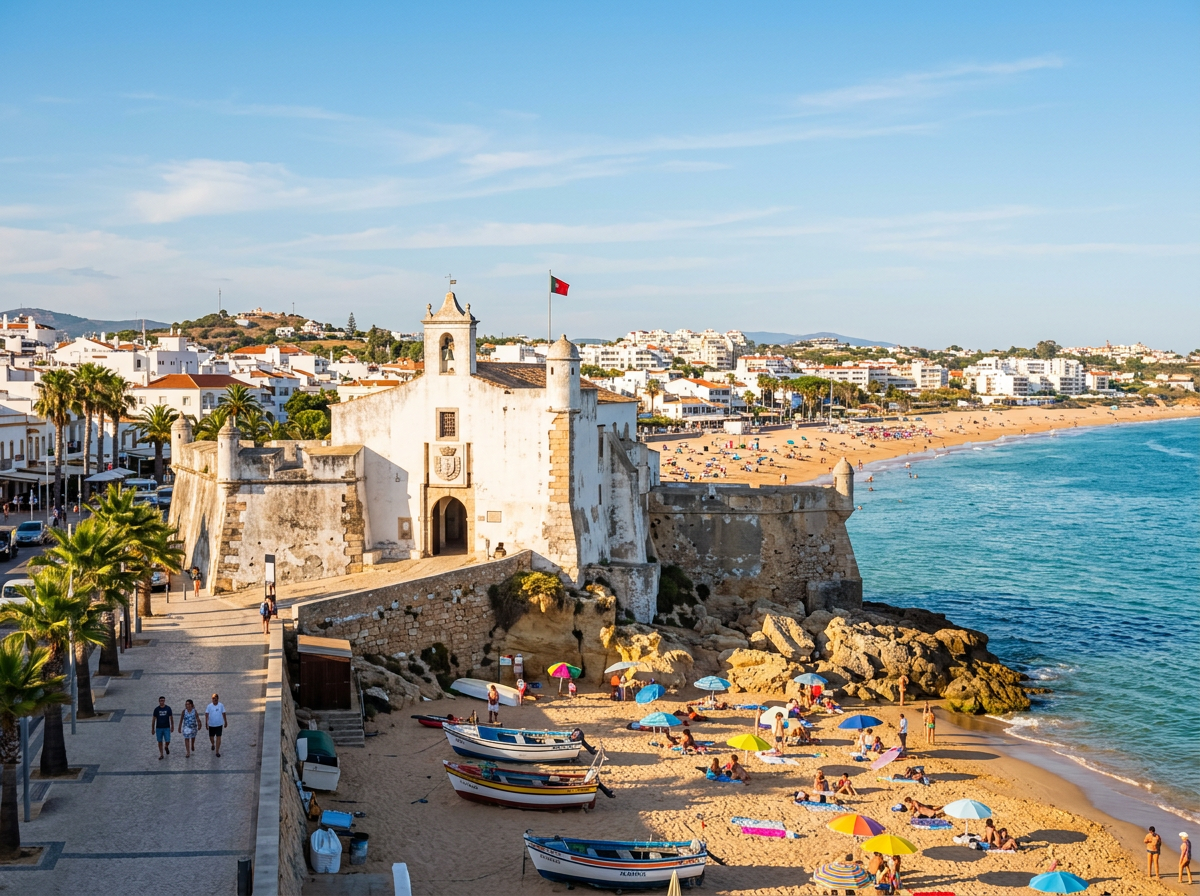
If you are strolling along the seafront in Armação de Pêra, it is easy to admire the beach first. The sweep of pale sand is broad, the light is generous, and on a bright day the sea seems to flatten into a band of silver-blue. Many visitors glance up at the fort, take a photograph, and carry on towards coffee, lunch, or another stretch of promenade.
I understand why. At first glance, it is not a giant fortress in the theatrical sense. It does not loom over the town in the way Castelo de Silves dominates the skyline inland. It feels smaller, more intimate, almost folded into the everyday life of the place.
And yet that is exactly why I love it. Forte de São João is one of those sites that makes more sense the longer you stand still. Once you stop seeing it as a scenic backdrop and start seeing it as a response to danger, uncertainty and resilience, the whole beach below begins to look different.
More than a pretty viewpoint
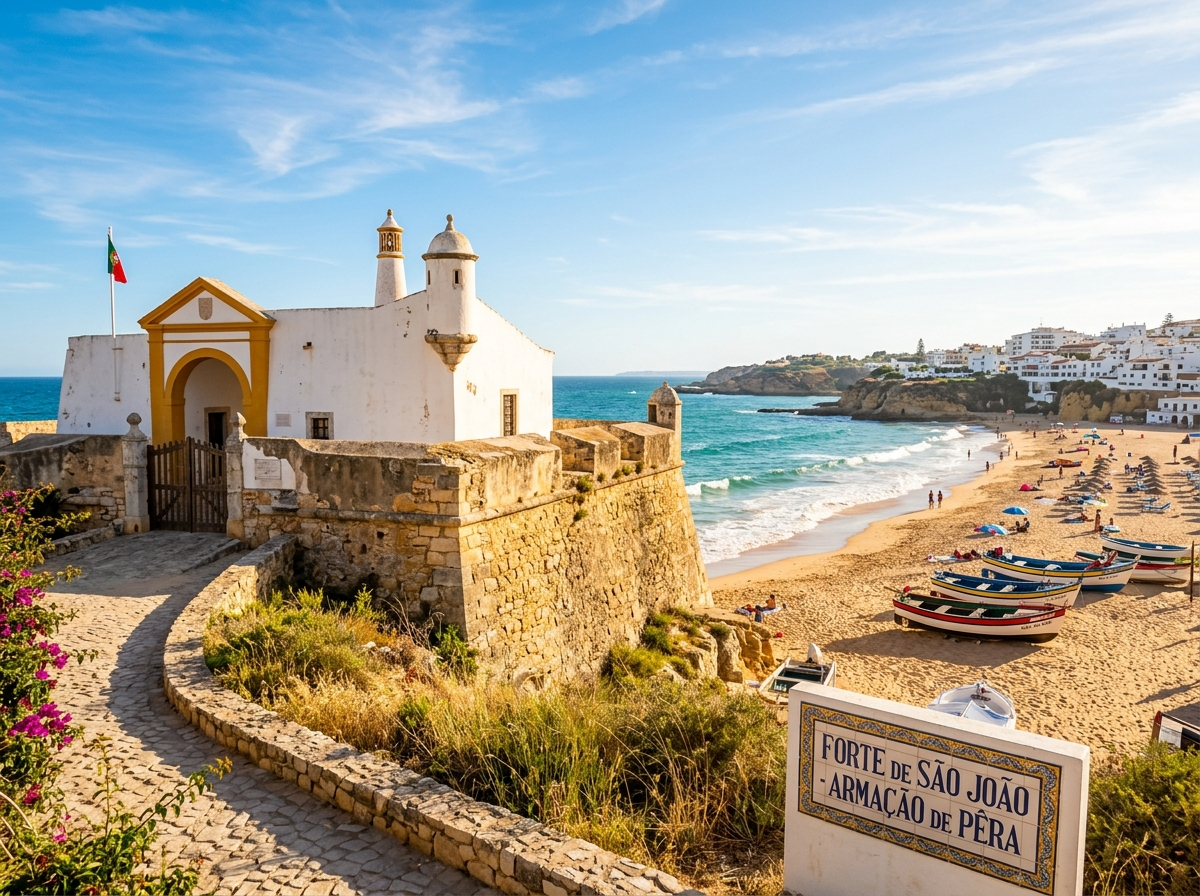
The first thing the fort gives you today is perspective. From above the old beach, you can read the shape of Armação de Pêra in a way you cannot from street level. You notice the curve of the shoreline, the line of buildings behind it, the older part of town tucked closer to the sand, and the simple truth that this community has always lived in a direct conversation with the sea.
That conversation was not always gentle. Modern guidebooks are understandably fond of adjectives like sunny, relaxed and family-friendly, but older coastal life here came with a constant undertone of exposure. A beach that makes holidaymakers happy is also a beach that once made defenders nervous, because open sand is easy to land on.
When you stand by the fort, the obvious beauty of the scene is still there. What changes is the mood beneath it. You begin to sense why a settlement would need to watch the horizon, why a raised position mattered, and why a structure like this could be both practical and deeply symbolic.
- It watched the sea for danger as well as weather.
- It reassured the village below that they were not entirely defenceless.
- It linked the beach to wider Algarve history, where coastlines were both lifelines and weak points.
- It turned a beautiful view into a strategic one.
That, to me, is the story many guidebooks miss. They tell you where to stand for the best photograph, but not always why anyone built a fort in such a lovely place in the first place. The real answer is not romance. It is fear, vigilance, and the stubborn determination of a seaside community to stay where it belonged.
Local tip: Visit the fort early in the morning or in the hour before sunset. The light is softer, the beach feels calmer, and it is easier to imagine the site as part of an older fishing village rather than just a busy resort scene.
Why small fortifications matter
Big monuments often get the headlines, but smaller fortifications can tell us more about daily life. A grand castle usually speaks of kings, nobles and regional power. A coastal fort like Forte de São João speaks of people who needed to protect boats, catches, stores, families and the right to go on living by the sea.
You may see the site folded into broader references to the old fortifications of Armação de Pêra. Names can shift in local memory, and guidebooks are not always consistent, but the core story remains the same. In the 17th century, this stretch of coast needed stronger protection because raids along the Algarve were not an abstract possibility; they were a lived reality.
What survives today may look modest, but modest is not the same as unimportant. In fact, the fort's scale is part of its honesty. It was not designed to impress outsiders. It was designed to do a job above the old beach, and the job was urgent enough that the village could not ignore it.
Whenever I bring guests here, I encourage them not to ask only, what is this building? I ask them to try a different question: what kind of life creates the need for this building? Once you think that way, the fort opens up. It stops being a picturesque object and becomes a witness.
And what it witnessed, over many seasons and many generations, was a coastal town balancing beauty with vulnerability. That is the version of Armação de Pêra I think is worth knowing before you head back down to the beach for a swim.
When the Algarve lived with one eye on the horizon
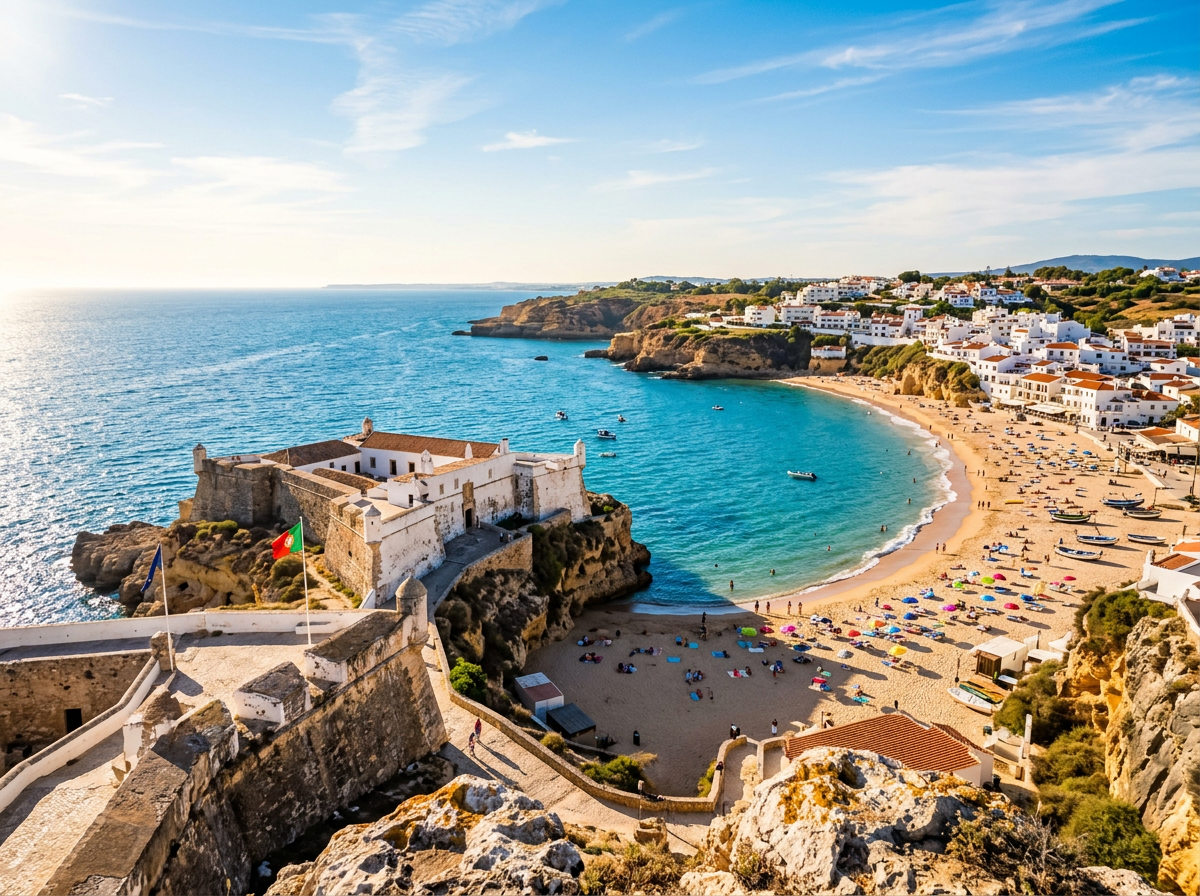
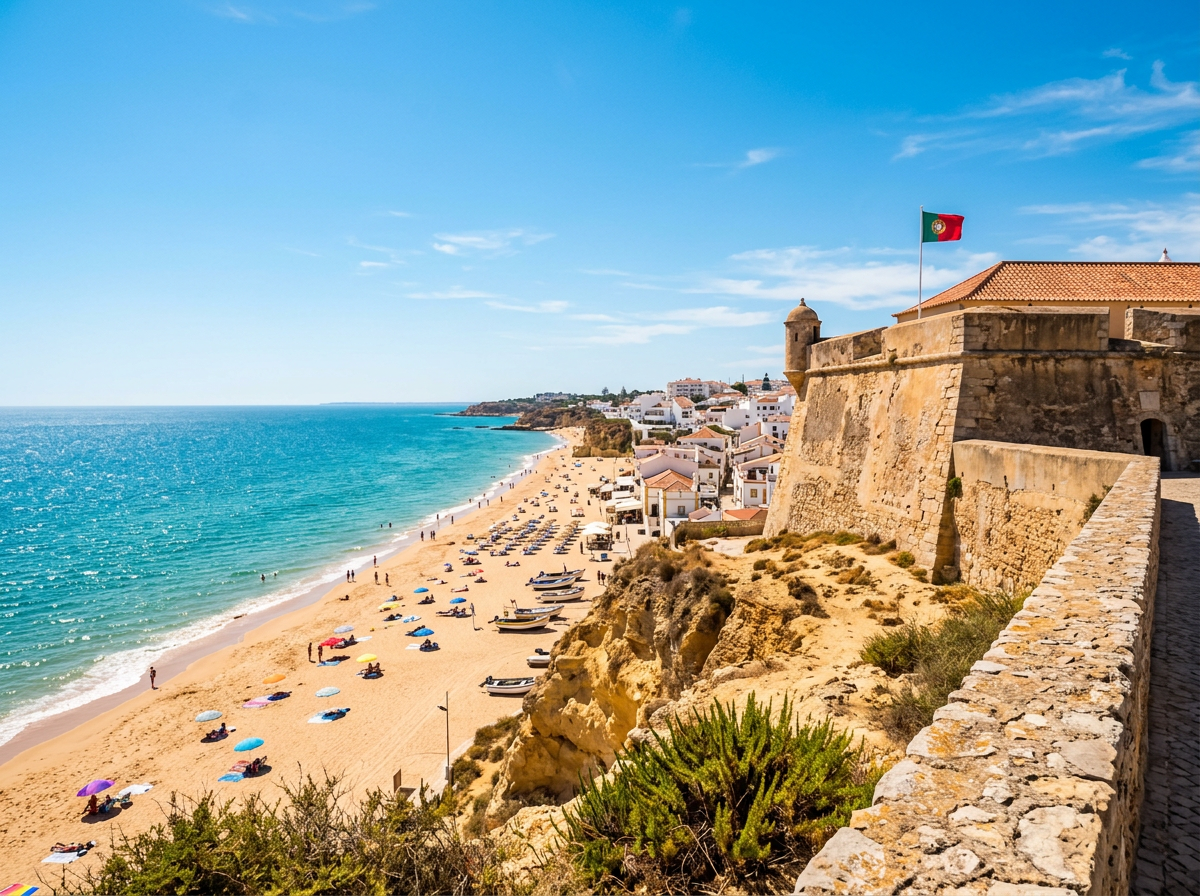
To understand Forte de São João, it helps to set aside the modern Algarve for a moment. Forget the shaded cafés, the apartment balconies, the holiday laughter and the tidy rows of parasols. Imagine instead a coastline with scattered settlements, fishing gear drying in the sun, precious catches laid out on shore, and communities that knew a boat on the horizon could be either ordinary or catastrophic.
The term you will often find in older histories is Barbary pirates. Many historians today prefer Barbary corsairs, because the story involved not only piracy in the popular sense, but wider patterns of privateering, warfare, captivity and Mediterranean politics. Whichever term you use, the effect on coastal villages was brutally simple: raids were feared, and not without reason.
The danger was real, not legendary
The Algarve's southern coast was rich in what raiders valued. There were fish, boats, coastal trade routes, salt, and small settlements that were difficult to defend on open beaches. Fishing communities were particularly exposed because their working lives took them right to the water's edge and often far from inland shelter.
In the early modern centuries, especially from the 16th to the 18th century, parts of the Portuguese coast lived with the persistent risk of attack from the sea. Raids could involve theft, arson and, most traumatically, the capture of local people who might be ransomed or forced into slavery. This was not unique to Armação de Pêra; it was part of a larger coastal pattern stretching across the Iberian south.
That larger pattern matters because it stops the fort from seeming random. Forte de São João was not built because someone fancied a defensive flourish above the beach. It belonged to a wider world in which communities had to think practically about warning systems, raised positions, armed responses and the layout of settlements near the sea.
Even now, when the coast looks so inviting, it is not hard to see why it was vulnerable. The shoreline here is open, the beaches broad, and the sea gives long sight lines in every direction. That same openness which makes the place feel expansive on holiday would once have felt unsettling if you were responsible for the safety of a village.
Why Armação de Pêra needed protection
Armação de Pêra was not simply a pretty settlement with boats pulled onto sand. It was a working place, and work drew people and goods towards the beach. The very name armação is tied to large fishing apparatus once used along this coast, which gives you a clue to how deeply the village was shaped by the sea and by organised fishing activity.
That mattered because fishing communities accumulate what raiders look for: timber, rope, provisions, catches, small craft, and people whose routines are predictable. A settlement connected to the beach is easier to reach than one tucked high inland behind thick walls. In peaceful times, that nearness to the water is prosperity. In dangerous times, it is exposure.
So the fort's position above the old beach makes perfect sense. It offers visibility, a line of observation, and a defensible point tied directly to the place that needed guarding most urgently. Rather than protecting a remote headland for prestige, it protected a lived-in shore where people worked, launched boats, mended nets and raised families.
That is another detail many quick summaries skip. The fort was not just about defending stone. It was about defending routines. It guarded mornings when boats went out, afternoons when catches came in, and evenings when the village needed to sleep without total helplessness.
- Open sand made landing easier for hostile parties.
- Fishing activity concentrated people and equipment close to the water.
- Small coastal settlements often lacked the natural protection of inland sites.
- A raised defensive point gave warning time, sight lines and some deterrence.
There is something very moving in that practical logic. Forts can seem abstract in textbooks, but when you link them to the exact beach below, they become human. You start to picture not generals and maps, but neighbours trying to make sure tomorrow still looked ordinary.
The 17th century response
By the 17th century, strengthening vulnerable coastal points was an urgent matter in many parts of Portugal. That century was full of political strain, maritime competition and regional insecurity. Along the Algarve, old anxieties did not vanish simply because the scenery was idyllic.
In that context, the construction of a fort above Armação de Pêra's old beach was both local and strategic. Local, because it answered the immediate needs of the village. Strategic, because every defended landing place was part of a broader coastal logic: watch, warn, resist, and make raids harder and less rewarding.
A structure like Forte de São João did not need to rival a great citadel to be useful. Its strength lay in its placement and purpose. It could provide surveillance, create a stronger defensive presence at the shoreline, and remind anyone approaching by sea that the village below was not entirely undefended.
Deterrence is easy to overlook from a holiday perspective, but it matters. A fort does not have to fight every battle to justify its existence. Sometimes its value lies in changing the calculations of those at sea, buying time for the community, or reducing the chance of an easy attack.
That is why I always think of Forte de São João less as a leftover and more as a statement. It said, in stone, that this village intended to remain here. The people below would fish, trade, pray, raise children and keep working the beach, but they would do so with at least some line of defence behind them.
Historical note: If you picture the fort only as a battlefield, you miss half the point. Its real value was often in watchfulness, warning and reassurance long before any direct clash happened.
Life lived on alert
It is easy for modern travellers to underestimate what constant alertness does to a place. Not panic every day, of course, but readiness. Readiness changes the way communities organise work, choose where to build, and decide what can safely remain near the shore after dark.
Imagine women on the beach glancing up from sorting fish. Imagine men at sea wanting the reassurance of a defended shoreline when they returned. Imagine children growing up with stories of sudden bells, shouted warnings, smoke on the horizon, or news from another part of the coast. Forts become less picturesque when you remember that they answered those kinds of fears.
The Algarve has several ways of preserving memory. Some are monumental, like a castle. Some are geological, like a cliff face at Algar Seco. And some are quieter, held in habit, in local stories, in names and in the placement of buildings. Forte de São João belongs to that quieter category. It is a record of danger written into the shape of the seafront.
I think this is why the place affects me more than some larger monuments. It brings history down to the scale of ordinary vulnerability. The old beach below was not a theatre for heroic myths. It was a workplace and a home, and the fort existed because home needed help.
Once you feel that, the whole setting deepens. The sea remains beautiful, but it is no longer only beautiful. It becomes historical again, and that is one of the most rewarding things any traveller can experience in Armação de Pêra.
The village the fort was built to protect
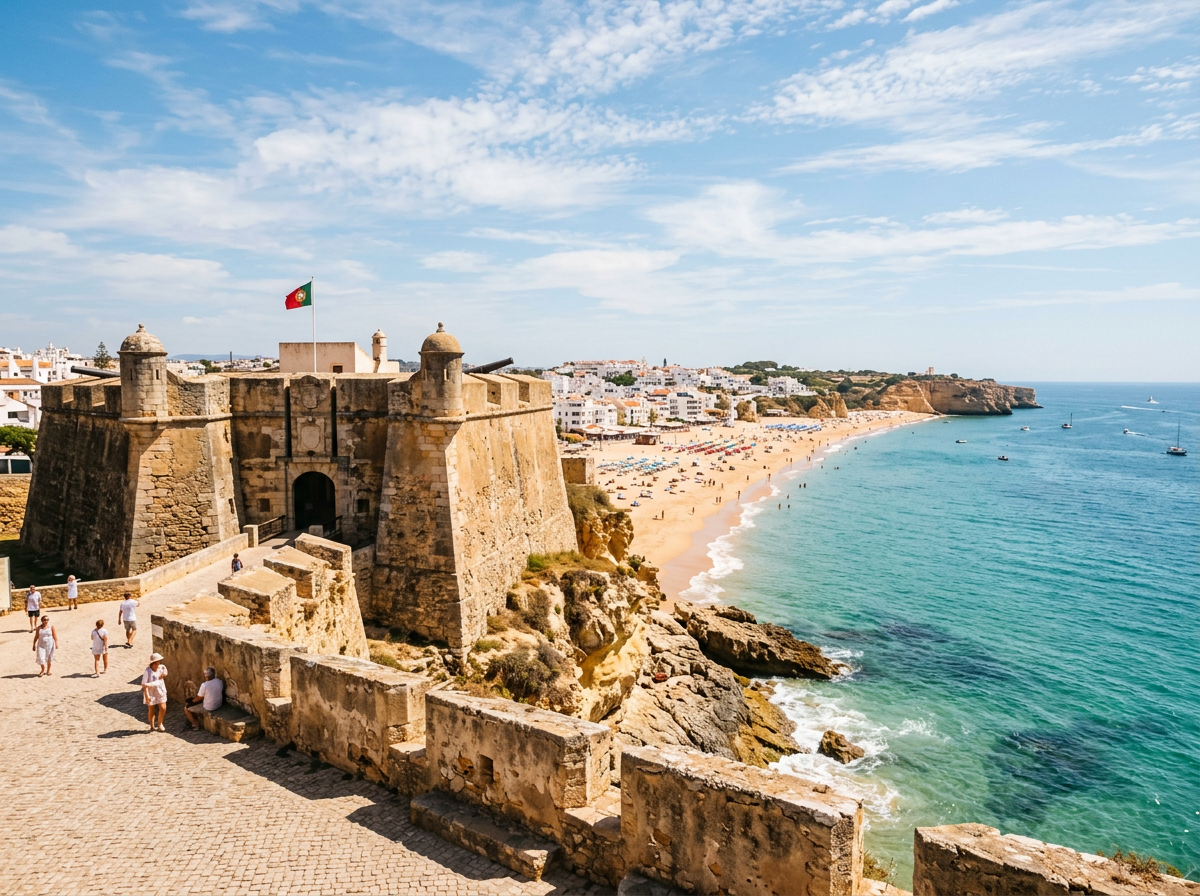
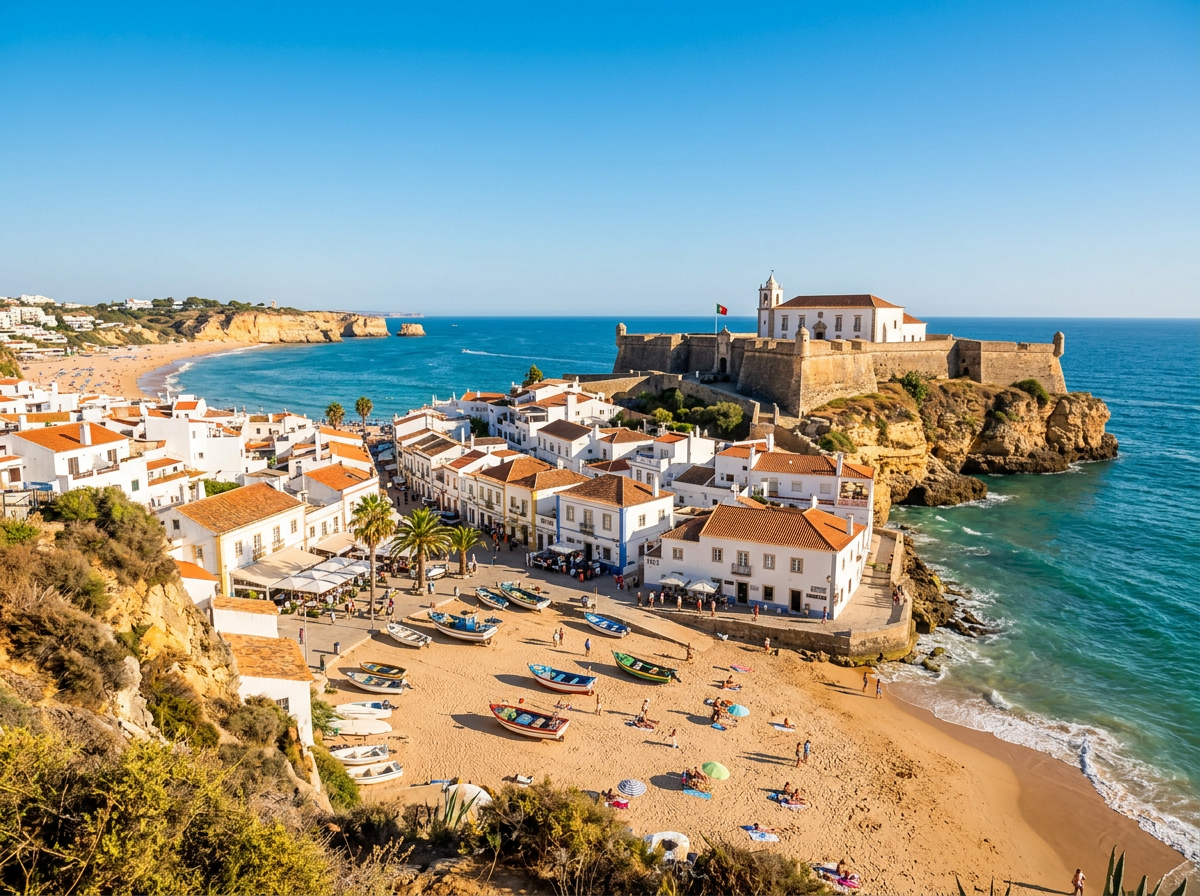
One of the simplest ways to read Forte de São João is to look down. Not out to sea for a moment, but down towards the beach and the town. The fort makes sense because of the village beneath it, and the village makes sense because of the work that once centred on this stretch of coast.
Long before Armação de Pêra became known to visitors for broad sands and easy beach days, it was shaped by fishing. That older identity still lingers if you know where to look. You see it in the names, in the older streets, in the memory of boats pulled onto the shore, and in the local pride around seafood that tastes of place rather than fashion.
From fishing settlement to seaside town
The older part of Armação de Pêra is the key to understanding the fort. This was not a settlement perched safely inland with an occasional relationship to the sea. It was a settlement attached to the beach, economically and physically. The sea fed it, but also exposed it.
The word armação is often linked to the fishing gear once set up along the coast, especially in relation to large-scale tuna fishing systems used historically in southern Portugal. You do not need to be a specialist in maritime history to feel what the word suggests: organisation, labour, equipment, seasonal rhythms and a whole economy arranged around the shoreline.
That is important because a fort above the old beach was protecting more than houses. It was helping protect an entire coastal way of life. Boats, nets, catches, storage, labour, trade and the fragile continuity of the community all depended on relative safety at the water's edge.
When I stand there, I often imagine the beach before the apartment blocks, before the steady tide of summer visitors, before the ease of the promenade. I picture a more uneven shoreline of work and weather, where every return from sea mattered and every rumour from another port could unsettle the village.
Praia dos Pescadores and the working beach
Today, Praia dos Pescadores is a lovely phrase for travellers to learn because it keeps the older identity of the place visible. Even if the beach day you enjoy is peaceful, the name carries labour in it. It reminds you that this was, above all, a fishermen's beach.
On a modern visit, it is easy to focus on towels, umbrellas and children making sandcastles. But imagine the same sand marked by hauled boats, stacked nets, baskets, fish laid out to sort, and the constant practical energy of people whose working lives depended on tides, weather and catch. The fort looked down on that reality, not on a postcard.
That is why I think the fort and the beach should always be understood together. One without the other becomes incomplete. The fort without the beach is just masonry. The beach without the fort becomes too innocent, stripped of the history that made defence necessary.
There is also a social story here. Beaches like this were not divided neatly into scenic space and working space. They were shared, negotiated and busy. News travelled through them, goods moved through them, and danger would have arrived through them too.
- Fishing boats needed a protected community to return to.
- Nets and gear represented labour and investment that could be lost.
- Families lived close enough to the shore to feel every shift in fortune.
- The fort stood as a practical answer to a very local vulnerability.
That practical connection is one of my favourite things about the site. It does not ask you to separate grand history from ordinary life. It insists that they are the same story.
Fear and routine lived side by side
There is a temptation, when talking about raids and coastal danger, to imagine life as one long state of alarm. Real life is almost never like that. People still had to mend things, trade, cook, clean, pray, argue, laugh and go on with the day. The remarkable thing about places like Armação de Pêra is not that fear existed, but that daily life continued beside it.
This is where the fort becomes especially powerful in the imagination. It stood over routine. Children would have grown up with it in view. Adults would have worked under its gaze. It would have been part of the visual grammar of the town, as ordinary in some ways as the beach itself, yet loaded with meaning when danger felt near.
That balance between ordinary and fragile still comes through if you slow down enough. Watch the movement of people along the seafront today, then imagine the same path centuries ago carrying gossip, supplies, fish, rope and the latest word from neighbouring stretches of coast. The fort turns movement into history.
Even the saint's name tells you something. Coastal defence in Portugal was often intertwined with religious language and local devotion. A fort named for São João sits comfortably in a world where faith, fear and daily labour were not separate compartments, but part of one lived reality.
Local insight: If you hear older residents talk about the beach as a working place rather than only a leisure place, listen closely. Those memories are the bridge between the fort's history and the town you see today.
The flavours of continuity
One of the nicest ways to connect the fort's history to the present is through food. After all, fishing towns remember themselves through what they cook as much as through what they build. If you visit the fort and then sit down to a good cataplana, you are not just having lunch; you are taking part in a long coastal continuity shaped by the sea.
Sardinhas assadas are another perfect example. In summer, the scent of grilled sardines can feel inseparable from the Algarve itself. They are simple, direct and proudly local, exactly the sort of food that makes sense in a place whose identity was built on fishing rather than courtly elegance.
Then there are the smaller rituals that round off a day: a coffee and pastel de nata after a beach walk, perhaps a tiny glass of medronho later in the evening, and somewhere nearby the possibility of music that carries memory in its voice. You may not find formal fado every night in town, but the emotional register of Portuguese coastal life is never very far from it.
And do not overlook the visual culture either. The Algarve is full of details that soften stone and domestic space, especially in older buildings where touches of azulejos catch the light and hold onto a certain Portuguese intimacy. These are not separate from the fort's world. They belong to the same long story of how people made beauty while living with uncertainty.
That, to me, is the real charm of Armação de Pêra. It is not just beach beauty. It is beauty with roots, and Forte de São João helps you see those roots more clearly.
How to visit Forte de São João without rushing it
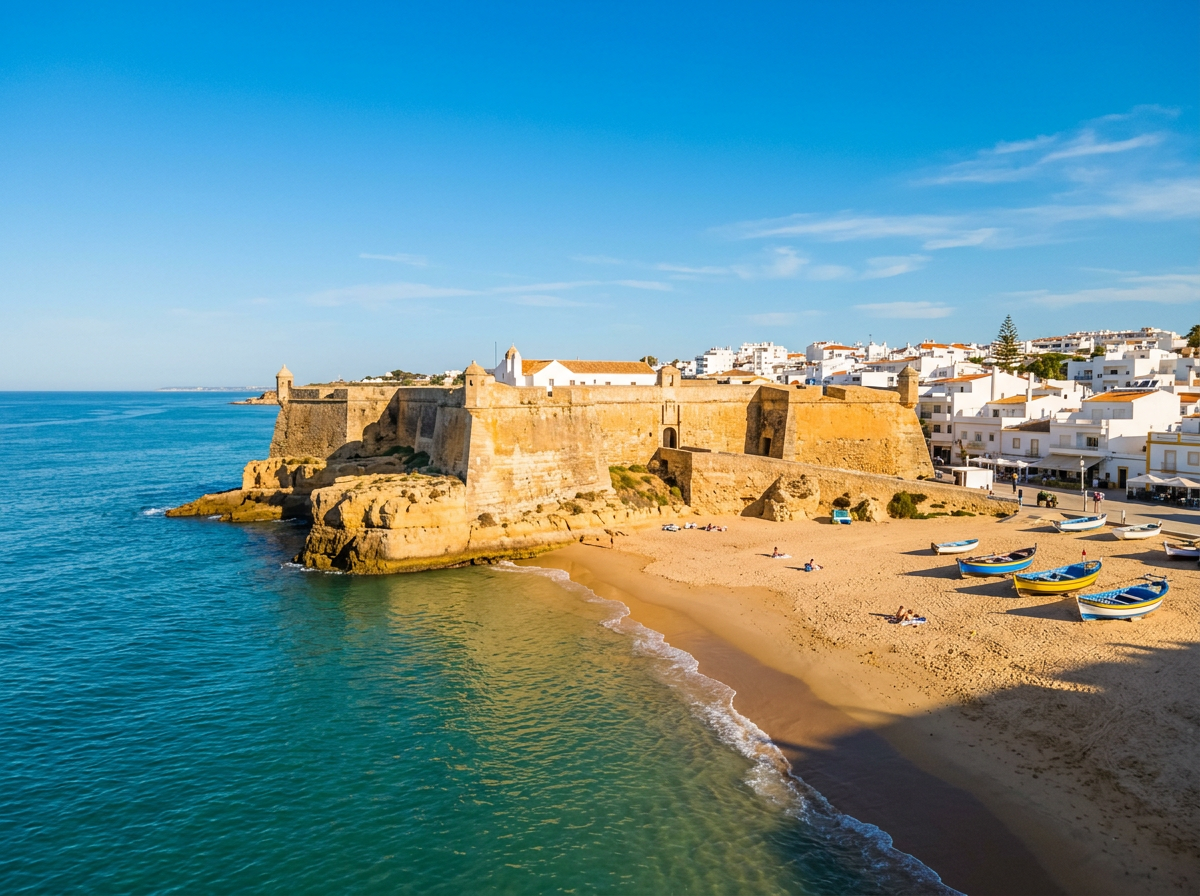
The best way to visit Forte de São João is not to treat it as a quick tick on a list between sunbathing and dinner. Give it an hour, even if the fort itself looks modest. Let the approach matter, let the views settle, and allow time for the place to connect itself to the beach and streets around it.
If you are staying in town, one of the pleasures of Armação de Pêra is that the fort feels close to everyday life rather than isolated from it. You can reach it as part of a morning walk, a slow afternoon wander, or the sort of golden-hour stroll that makes everything on this coast glow a little more warmly.
A simple walking route I always recommend
If you want to experience the fort in a way that feels natural and local, start by coming through the seafront rather than arriving with your eyes fixed only on the destination. The walk helps the story make sense.
- Begin near Avenida do Rio, where the beachfront opens itself to the sea and the rhythm of the promenade becomes clear.
- Walk slowly along the sand-facing side, letting the scale of the beach register before history enters the picture.
- Pass the area around Praia dos Pescadores and pay attention to how the older beach identity still shapes the feel of the place.
- As you move towards the old quarter, look up and start reading the fort as a defensive position rather than a viewpoint.
- Pause below it first, then climb or approach more closely so that you understand the relationship between wall, beach and settlement.
- Finish with coffee or lunch in town, ideally choosing something local so the visit ends with flavour as well as history.
If you are based nearby on Rua das Caravelas or walking over from the area around Edifício Marany, the route is just as enjoyable. The key thing is not the exact starting point, but the fact that you approach through lived town space rather than treating the fort as an isolated monument detached from its context.
What I like about this walk is that it teaches you the fort in the right order. First comes the beach, then the vulnerability of the beach, then the answer to that vulnerability. By the time you reach Forte de São João, the site already makes emotional sense.
What to look for when you get there
You do not need specialist training to read a fort. You simply need to ask a few practical questions. Why here? What can be seen from this position? What part of the shoreline does it command? How quickly could warning spread from this point to the homes and working spaces below?
Start with the position. That is the most eloquent feature of all. The fort sits high enough to oversee the old beach and to turn the coastline into a visible field rather than a blind edge. Once you understand that, the rest of the site falls into place.
Then notice its scale. This is not overblown architecture trying to dominate the region. It is compact and purposeful, the sort of structure that tells you it was built for local necessity. The modest footprint is almost a clue to the kind of threat it answered: sudden, coastal and direct.
Look too at the relationship between built form and horizon. On one side is the settlement, on the other the sea. In between stands a defensive statement. That middle position is the whole point.
- The height above the sand is a strategic clue.
- The sight lines along the shore explain the fort better than any plaque can.
- The closeness to the old beach shows that this was about protecting daily life, not remote prestige.
- The compact design suggests practicality over spectacle.
If the interior is not open when you visit, do not feel short-changed. Some places speak most clearly from the outside. With Forte de São João, the essential lesson is already visible in its position over the beach.
Pro tip: Stand with your back to the town and face the sea for a minute, then turn around and face the beach below. That single movement tells the whole story of the fort: danger in one direction, community in the other.
Best times, best light, best mood
Midday can be lovely in Armação de Pêra, but for a fort visit I prefer the edges of the day. Morning light gives the seafront a gentler, more reflective mood. Late afternoon and sunset bring colour, shadow and a stronger sense of texture in the stone and the town.
Summer is of course the busiest season, and that has its own energy. The contrast between today's cheerful beach scene and the fort's older purpose can be quite striking. Still, if you want the strongest sense of atmosphere, come outside peak hours when there is a little more quiet around you.
Windy days are also surprisingly good here. They remind you that this coast is not only decorative. The sound of the gusts, the movement on the sea and the changing light all make it easier to imagine the fort as part of a working, watching shoreline.
If you are travelling with children, this is a good stop precisely because it does not require a huge time commitment. The trick is to turn it into a story rather than a lesson. Ask them why people built a fort above a beach, and they usually understand the logic straight away.
Pairing the fort with a slow day in town
One of my favourite low-key itineraries in Armação de Pêra begins with the fort and ends with lunch. Start with a walk, spend time at the viewpoint, then head back down for seafood or something simple and local. If you still have energy, continue with a beach afternoon rather than rushing off to the next famous stop on the map.
This is also a lovely way to balance the Algarve's more dramatic headline sights. If you have already done the caves, cliffs and boat trips, the fort gives you something different: scale, stillness and context. It grounds the coast in human history.
And if you have not yet explored further afield, all the better. Let Forte de São João be your introduction to the region's deeper story before you move on to places like Senhora da Rocha, Benagil or Algar Seco. Once you have looked at one defensive coastal site properly, the whole Algarve starts to read differently.
That is the quiet magic of the visit. It changes not only how you see one fort, but how you see the shore itself.
One fort, many Algarve stories
The Algarve is often marketed as a string of beaches, coves and scenic drives, and of course that is part of its appeal. But it is also a region of linked histories. Once you understand Forte de São João, you begin to notice how many other places in the Algarve are also shaped by exposure, defence, fishing, faith and the need to read the sea carefully.
That is why I think this fort is such a good starting point for exploring beyond Armação de Pêra. It gives you a lens. Instead of collecting sights, you begin connecting them.
Along the coast: cliffs, chapels and watchful places
Head east or west from town and you find the Algarve revealing itself in layers. Senhora da Rocha, for example, is beloved for its tiny clifftop chapel and magnificent outlook. Most people respond first to the beauty, as they should, but after visiting Forte de São João you may also start to notice the strategic logic of elevated coastal places.
Benagil is a different sort of icon altogether, shaped by geology and the sea's slow drama rather than military architecture. Yet even there, the relationship between coast and vulnerability is impossible to ignore. The same sea that carved those luminous spaces also made these shores unpredictable, difficult and historically exposed.
In Carvoeiro and around Algar Seco, you see how cliffs could protect and isolate in equal measure. The rock formations are theatrical, but they are also reminders that this coast has always been a terrain to interpret carefully. Beauty here is inseparable from edges, lookout points and the practical question of where one can safely land or move.
Then there is the far southwestern drama of Cabo de São Vicente, where the scale of the Atlantic feels almost overwhelming. Visit that headland after spending time at the fort in Armação de Pêra and the regional picture sharpens. You begin to feel how exposed southern Portugal could be, and how much it mattered for communities to maintain points of watchfulness along the coast.
- Senhora da Rocha shows how sacred and strategic coastal places often overlap.
- Benagil reminds you that the sea shapes history as well as scenery.
- Carvoeiro and Algar Seco reveal a coast of beauty, edges and constant interpretation.
- Cabo de São Vicente expands the story from one village to the wider Atlantic frontier.
Even the quieter environments tell part of this story. A place like the Ria de Alvor offers a gentler, lagoon-like rhythm, but it too teaches you how coastal communities depended on reading tides, channels and changing conditions. Once the fort has tuned your eye, every shoreline starts to feel more historical.
Inland answers: Silves and the long view of power
If the fort shows you the vulnerability of the shore, Silves shows you the older power of the interior. The contrast between the two is one of my favourite day-trip combinations in the region. Spend a morning with the sea at Forte de São João, then drive inland to Castelo de Silves and you will feel how different kinds of defence shaped the Algarve.
Castelo de Silves is larger, more monumental and more obviously political. It speaks of medieval power, conquest, administration and the command of territory. The fort above the beach in Armação de Pêra, by contrast, speaks of local protection and the fragility of coastal life.
Together, the two make a wonderful pair. One tells you how rulers defended a regional centre. The other tells you how ordinary people defended a shoreline community. Both are necessary if you want more than a surface impression of the Algarve.
I often suggest this pairing to guests because it breaks the false divide between beach holiday and cultural holiday. In this part of Portugal, the two belong together. You can spend the morning in sandals near the sea and the afternoon among red castle walls in Silves, and both experiences deepen each other.
Travel idea: If you only choose one inland history stop during your stay, make it Castelo de Silves. It gives invaluable context to coastal places like Forte de São João and helps the whole region make more sense.
Living culture, not museum culture
One reason the fort matters is that it connects so naturally to living Algarve culture. This is not history sealed behind glass. It survives in food, festivals, music, humour and local rhythms. The coast is still a place of gathering and shared identity, even if the threats are different now.
If you are here in season, events like the Festival da Sardinha further along the coast and the FIESA sand sculpture festival near Pêra add their own texture to a stay. They are very different kinds of event, of course, but both show how strongly the region continues to turn beach, craft and maritime memory into communal experience.
I also love how Portuguese culture lets seriousness and pleasure sit side by side. You can spend an hour thinking about raids, coastal defence and historical vulnerability, then spend the evening sharing grilled fish, admiring a wall of azulejos and listening to a voice somewhere carry the melancholy depth that people often associate with fado. None of that feels contradictory. It feels Portuguese.
That is perhaps the best reason not to skip the fort. It is not there to darken your holiday. It is there to enrich it. A place becomes more beautiful, not less, when you understand what it has survived.
And Armação de Pêra has survived a great deal: weather, change, economic shifts, the fading of old fishing systems, the rise of tourism, and the transformation from working shore to holiday destination. Forte de São João stands quietly at the edge of all that, refusing to let the older story disappear.
Why this story stays with you after the beach
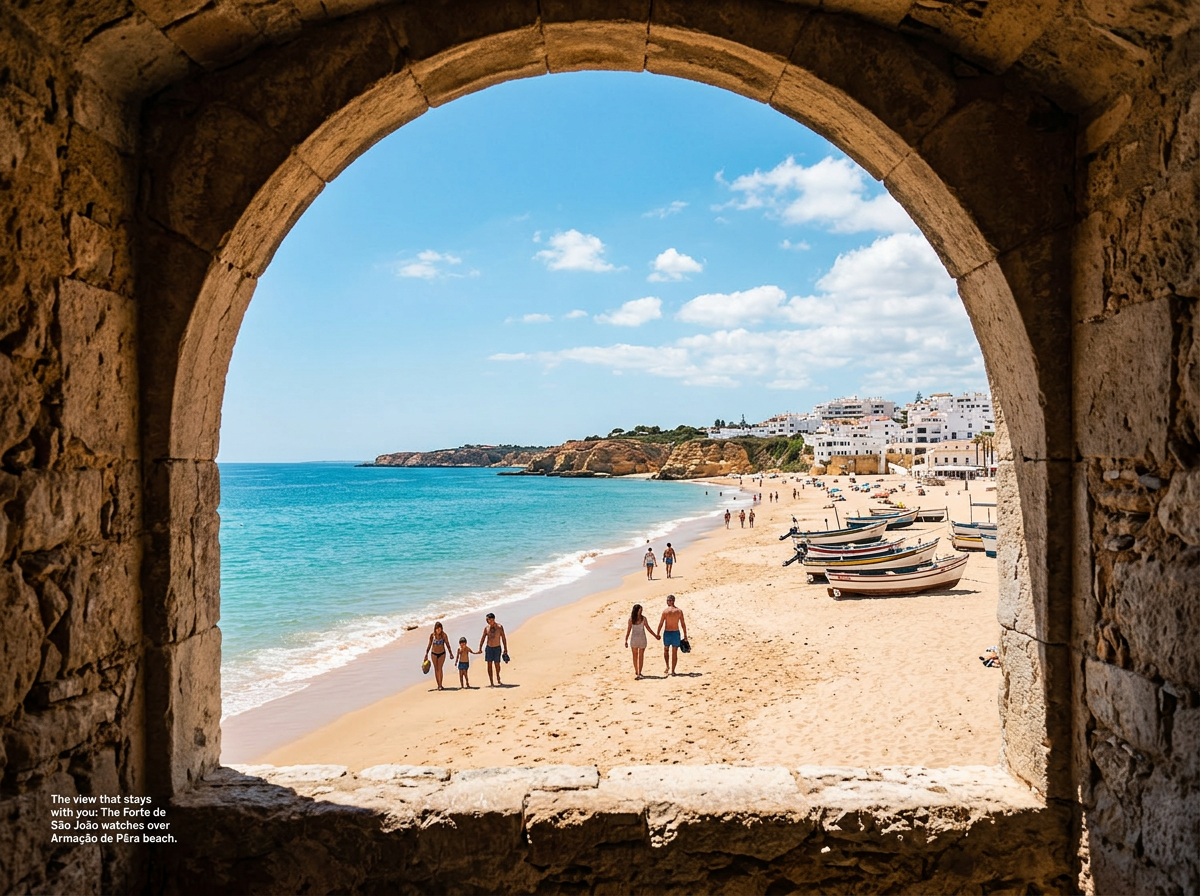
Some sights impress you in the moment and then slip away. Others continue to work on you after you have left. Forte de São João belongs firmly to the second category. Not because it is the biggest monument you will see in the Algarve, but because it changes the emotional texture of the town around it.
After visiting, the beach is still beautiful, but it is no longer only leisure. The old quarter still feels charming, but it also feels earned. The promenade still invites a lazy evening stroll, but now there is a thread running through it all: the knowledge that this easy atmosphere rests on a much longer story of effort, risk and endurance.
The value of places that do not shout
I think travellers often remember the places that trusted them to notice. Forte de São João does not overwhelm you with spectacle. It asks you to bring imagination, empathy and patience. In return, it gives you a much richer version of Armação de Pêra than the average beach guide ever could.
It also reminds us that small places can hold large truths. A compact fort above an old beach can tell us about maritime insecurity, local economy, communal resilience, the geography of fear, and the stubborn continuity of everyday life. That is a remarkable amount of history for one quiet stop.
If you are the sort of traveller who loves finding the layer beneath the obvious one, this is exactly the kind of place worth your time. The guidebook version is fine. The lived version is better.
And that lived version is still available to anyone willing to stand still for a while. Watch the sea, watch the town, feel the wind, and let the place explain itself. In my experience, it always does.
Stay close enough to enjoy it properly
If you would like to explore places like Forte de São João at a slower pace, staying in Armação de Pêra makes all the difference. It lets you visit in the soft morning light, return at sunset, and weave the fort naturally into beach time, seafood lunches and easy evening walks rather than squeezing it into a rushed day trip.
At Caravelis, our holiday homes are designed for exactly that kind of stay. Penthouse 1 on Rua das Caravelas has a private sea-view terrace with a jacuzzi and BBQ, Beachfront Apartment 4F on Avenida do Rio has a sea-view balcony just moments from the sand, and Beach Apartment 7G offers a sunny 7th-floor base near the beach with private gated parking.
If that sounds like your kind of Algarve break, we would love to host you. Book your stay with Caravelis holiday homes in Armação de Pêra, Algarve and discover the beach, the history and the quieter stories in between.
Planning your Algarve holiday?
Browse our properties in Armação de Pêra and book direct for the best rates.